2026 Best Laminating Adhesive Guide for Your Projects?
Choosing the right laminating adhesive can make or break your projects. In 2026, many options flood the market, each boasting its unique strengths. This guide aims to navigate the myriad choices, helping you find the best adhesive for your needs.
Laminating adhesive is vital in preserving designs and documents. It secures items against damage and enhances their appearance. However, not all adhesives work the same. The wrong choice can lead to bubbling or peeling. It can be frustrating when projects don’t meet expectations.
Understanding the properties of different laminating adhesives is crucial. Some are water-based, while others are solvent-based. Each type offers different benefits. The goal is to find what works best for your project. Sometimes, trial and error is necessary. Don't be discouraged if your first choice isn't perfect. With this guide, you’ll be better equipped to make an informed decision.
Understanding Laminating Adhesives: Types and Applications
Laminating adhesives play a vital role in various projects. Understanding the types and their applications is essential to achieve optimal results. There are generally four types: pressure-sensitive, heat-activated, moisture-activated, and solvent-based adhesives. Each has unique characteristics suited for different materials and processes.
Pressure-sensitive adhesives offer ease of use. They stick quickly and can be repositioned. However, they may not provide long-lasting bonds in high-temperature settings. Heat-activated adhesives, on the other hand, require a heat source for activation. They create durable bonds but demand precise application techniques.
Tip: Always test a small area before fully committing to an adhesive type. Moisture-activated adhesives are favored for paper-based projects. They activate with water, allowing for repositioning during the application. Solvent-based adhesives offer strong bonds but come with health risks. Proper ventilation is necessary when using them.
When choosing an adhesive, consider the project’s specific needs. Industry reports show that improper adhesive selection can lead to project failure. Pay attention to drying times and bonding strength. Often, trial and error will lead to the best results. Be prepared for some learning curves as you navigate through different adhesives.
2026 Best Laminating Adhesive Types and Their Applications
Key Factors to Consider When Choosing Laminating Adhesives
Choosing the right laminating adhesive is crucial for your projects. It can greatly impact the durability and appearance of your finished pieces. When selecting an adhesive, consider the materials you are laminating. Some adhesives work best with paper, while others are suitable for plastic or fabric. Understanding compatibility will help you avoid mishaps.
Texture and finish matter too. Decide whether you want a glossy or matte finish. Glossy can enhance colors but may show fingerprints. Matte hides smudges better, but could dull vibrant colors. Explore samples before committing to a large batch. You might be surprised by how different treatments look on your materials.
Tips: Always test your adhesive on a small section first. This can prevent large-scale errors. Clean surfaces thoroughly to improve bonding. Take time here. Also, factor in drying time. Rushing this can lead to unintentional peeling or bubbling. Remember, the right choice today can save you from revisions tomorrow.
Top Brands and Products in Laminating Adhesives for 2026
When it comes to laminating adhesives, choosing the right product can make a significant difference in your projects. In 2026, many options are on the market, each with unique features. Some adhesives dry quickly, while others offer stronger bonds. Understanding your specific needs is crucial.
Consider how the adhesive interacts with the materials you plan to laminate. For instance, some adhesives work better on paper, while others suit plastic or fabric. Mixing these materials can lead to unexpected results. Testing different adhesives will help you find the best match for your projects.
Tips: Always check the drying time. This can impact your workflow. A quick-drying adhesive can save you time, but ensure it allows for repositioning. Also, consider the finish. Some adhesives leave a glossy appearance, while others dry matte. Experimenting can enhance your results significantly.
Step-by-Step Guide to Applying Laminating Adhesives
Applying laminating adhesives can be straightforward if you follow a clear process. Begin by preparing your materials. Clean surfaces are crucial for effective adhesion. Dust and dirt can interfere. Ensure you have scissors, a roller, and the adhesive ready.
Next, apply the adhesive. Use the roller for even, thin layers. Avoid excess; too much can lead to bubbling. This step requires patience. If you rush, mistakes happen. Allow the adhesive to sit briefly but not too long, as drying can start prematurely.
Position your materials carefully. Misalignment can ruin your project. Press down firmly but gently. Check for air bubbles. If you spot them, smooth them out with your fingers. It’s okay if you encounter challenges. Each attempt is a chance to improve. Your next project will benefit from your growing experience.
Common Mistakes to Avoid When Using Laminating Adhesives
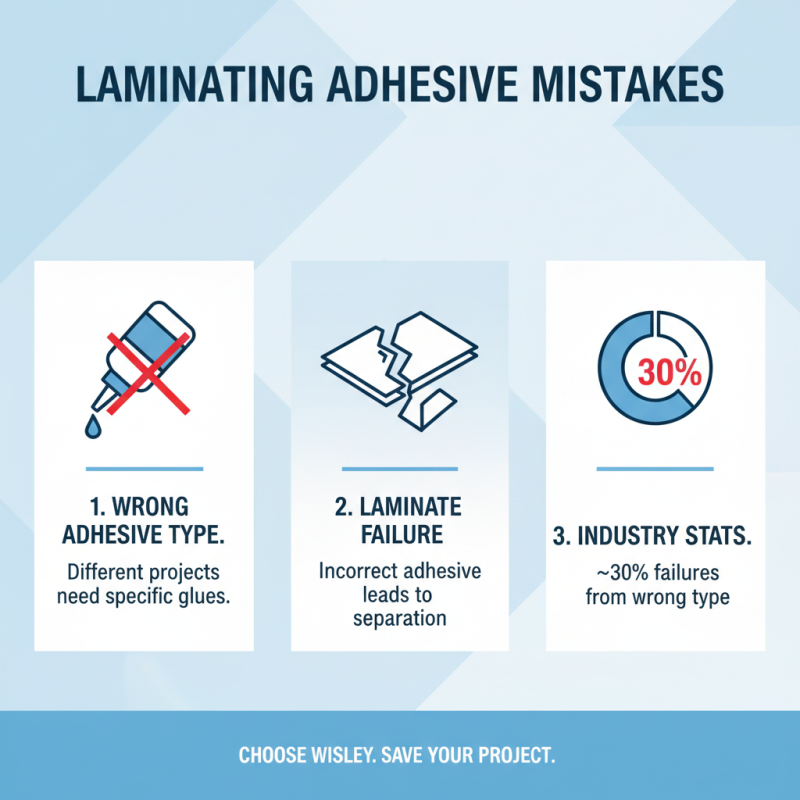
When working with laminating adhesives, several common mistakes can derail your project. One frequent error is using the wrong adhesive type. Each application has specific requirements. Using the incorrect type can lead to laminate failure. According to industry reports, around 30% of laminating failures stem from this oversight.
Another mistake is improper surface preparation. Surfaces should be clean and dry. Any dust or grease can compromise adhesion. In fact, studies have shown that a well-prepared surface can improve adhesion strength by up to 50%. Many users overlook this step, resulting in disappointment later on.
**Tip:** Always test a small area before proceeding with the full application. This can save you time and materials.
Some users also forget about curing time. Rushing the process can lead to errors. Adhesives need time to set properly for optimal bonding. In some cases, inadequate curing can weaken the final product significantly.
**Tip:** Follow the manufacturer’s guidelines on curing times. This ensures the best results for your project. It's worth taking the extra time to ensure a durable bond.