2026 Best Laminating Adhesive Options for Your Projects?
When embarking on projects that require durability and a professional finish, selecting the right Laminating Adhesive becomes crucial. The global adhesive market is projected to reach $70 billion by 2026, which highlights the growing demand for effective bonding solutions. Among laminating adhesives, various options cater to distinct needs in industries such as packaging, automotive, and electronics.
Choosing a laminating adhesive involves understanding its properties. High-quality adhesive can ensure that materials bond firmly, resist environmental factors, and maintain their appearance over time. Data from the Adhesive and Sealant Council indicates that water-based laminating adhesives are gaining popularity due to their eco-friendliness and ease of use. However, not all adhesives offer the same level of performance.
It's essential to reflect on the specific requirements of your project before making a decision. Are you looking for heat-resistance or quick-drying options? Many users have faced challenges when mismatching their laminating adhesive to project needs. Therefore, thorough research and understanding of the characteristics of various laminating adhesives are vital for achieving success in your endeavors.
Overview of Laminating Adhesives and Their Applications
Laminating adhesives play a crucial role in various projects. They protect important documents, preserve artwork, and enhance the durability of materials. Choosing the right adhesive can be tricky. Some options may not stick well on specific surfaces, leading to frustrating results.
Many applications involve using laminating adhesives. They are common in schools, offices, and creative studios. For instance, educators often laminate teaching tools to prolong their use. However, not all adhesives work equally well with different laminates. Consider factors like the temperature and humidity of your workspace.
Sometimes, the choice can feel overwhelming. Many adhesives might seem effective at first glance, but their performance can vary over time. It's easy to make mistakes in selection. Trying out a few different types can lead to unexpected results. Understanding your project's specific needs is vital for success. Many users find that frequent reflection on their choices leads to better outcomes in the long run.
Types of Laminating Adhesives: Strengths and Weaknesses
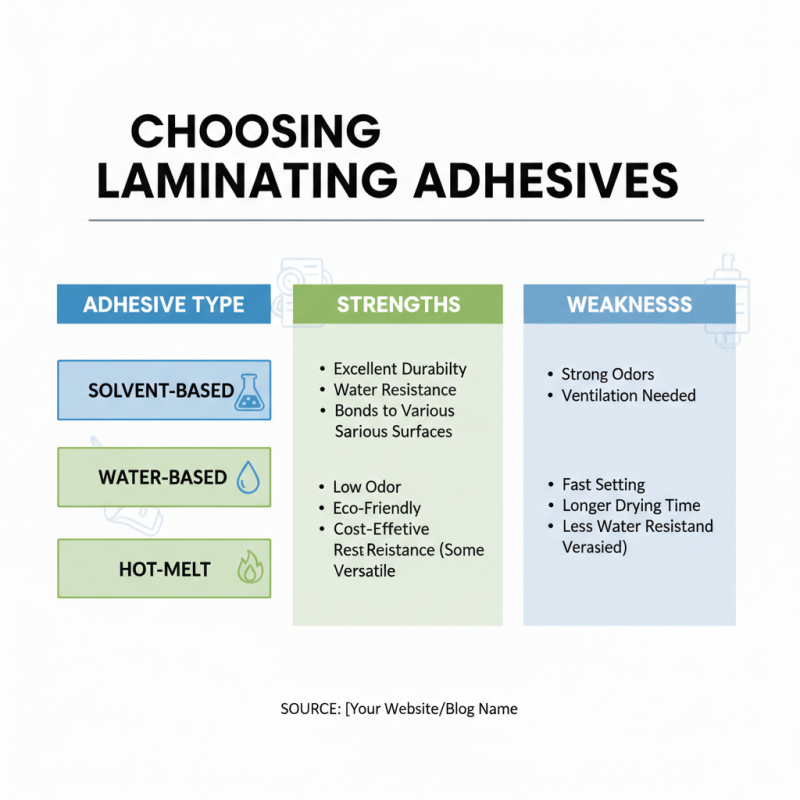
When choosing the right laminating adhesive, it's essential to understand the various types available. Each type offers unique strengths and weaknesses that can significantly affect your projects. For instance, solvent-based adhesives provide excellent durability and water resistance. They bond well to various surfaces but can emit strong odors. This can be a downside if ventilation is an issue in your workspace.
On the other hand, water-based adhesives are user-friendly. They are less toxic and easy to clean up, but may not be as strong as their solvent-based counterparts. This can lead to issues with longevity and performance, especially in high-humidity environments. Hot melt adhesives are quick to apply and set rapidly. However, they might not adhere well to all materials, requiring users to test compatibility first. Sometimes, you compromise on versatility for efficiency.
Consider your project's specific needs. Think about the materials you are laminating and the environment in which they will be used. Mistakes can happen if you overlook these details. Experimentation might be necessary to find the best fit for your project. Each adhesive has its quirks. Be prepared for trial and error along the way.
Key Factors to Consider When Choosing Laminating Adhesives
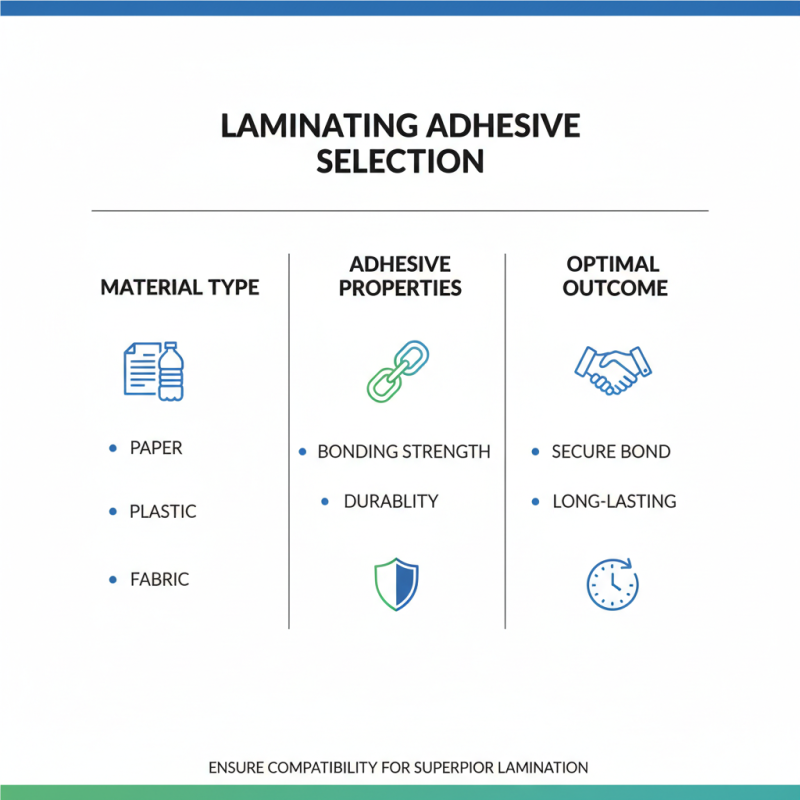
When selecting laminating adhesives, several key factors are crucial. The type of material being laminated plays a significant role. For instance, paper, plastic, and fabrics each require different adhesive properties. Understanding these distinctions ensures optimal bonding and durability.
Viscosity is another critical factor. High-viscosity adhesives are better for more textured surfaces. Low-viscosity options work well on smooth surfaces. The choice here affects application ease and final results. A recent industry report indicates that nearly 30% of project failures stem from improper adhesive selection based on viscosity.
Tips: Always test the adhesive on a small area first. This step helps identify any potential issues before scaling up the project. Also, consider the environmental conditions of your workspace; humidity and temperature can drastically influence adhesive performance.
Some adhesives may not perform well in extreme environments. It’s essential to check manufacturer specifications for temperature resistance and moisture tolerance. Cognitive dissonance arises when users assume all adhesives work universally. Recognizing limitations will lead to more successful projects.
Top 2026 Laminating Adhesive Products Reviewed
When it comes to laminating adhesive, various options exist for different projects. Choosing the right product can greatly impact the durability and finish of your work. There are adhesives specifically designed for paper, while others are great for plastic or fabric. Some adhesives offer a glossy finish, while others provide a matte look. You should always check the compatibility with your materials.
Many users often overlook the drying time. It’s a crucial factor. Some products need a longer curing period, which can delay your project. Others might become tacky too quickly, making application difficult. Testing a small area before full application is always a wise move.
Some products might feel great initially but degrade over time. This can be disheartening, especially after investing time in a project. Maintaining a balance between adhesion strength and flexibility is essential. Not every adhesive suits every project, and sometimes, there are unexpected results. Careful consideration and experimentation can guide you toward the best choice.
Tips for Effectively Using Laminating Adhesives in Projects
Using laminating adhesives effectively is crucial for achieving durable and professional results. Start by preparing your surfaces. They must be clean, dry, and free from dust. Any residue can affect the adhesion. When applying the adhesive, consider a thin and even layer. Avoid globs; they can create bubbles that ruin the finish. Use a brush or a roller for a consistent application.
Pay attention to drying times. Each adhesive has its own requirements. Rushing the process can lead to peeling or bubbling. Be patient and let the adhesive cure fully. If you're handling larger projects, work in sections. This allows you to focus on each part without feeling overwhelmed.
Mechanical techniques also play a role. Use a squeegee to eliminate air pockets and ensure good contact between layers. Don't forget the edges; they often need extra attention. Practice on scrap materials before moving to your final piece. Mistakes can provide valuable lessons. Always be ready to refine your methods for better outcomes.
2026 Best Laminating Adhesive Options for Your Projects
| Adhesive Type |
Best Use Cases |
Drying Time |
Viscosity |
Notes |
| Hot Liquid Adhesive |
General laminating |
1-2 minutes |
High |
Ideal for heat-sensitive projects |
| Cold Laminating Adhesive |
Sensitive materials |
Up to 24 hours |
Medium |
No heat required |
| Pressure-Sensitive Adhesive |
Quick applications |
Immediate |
Low |
User-friendly and versatile |
| PVA (Polyvinyl Acetate) |
Paper and crafts |
30 minutes |
Medium to high |
Non-toxic and dries clear |