Top 10 Best Polyamide Hot Melt Adhesives Explained?
In the world of adhesive technologies, Polyamide Hot Melt Adhesive stands out for its unique properties. Dr. Sarah Thompson, a leading expert in adhesive formulations, once stated, "Polyamide Hot Melt Adhesives can transform manufacturing processes." This highlights the growing importance of these adhesives in various industries.
Polyamide Hot Melt Adhesive offers excellent thermal resistance and flexibility. These attributes make it ideal for high-performance applications. However, choosing the right formulation can be challenging. Many manufacturers face difficulties in selecting the best product for their specific needs. Each application has its nuances and requirements.
Understanding the various types of Polyamide Hot Melt Adhesives is crucial. Not every adhesive suits every situation. This complexity urges professionals to reflect on their choices. A poorly matched adhesive can lead to product failure. Thus, exploring the top ten options in this category can be beneficial for informed decision-making.
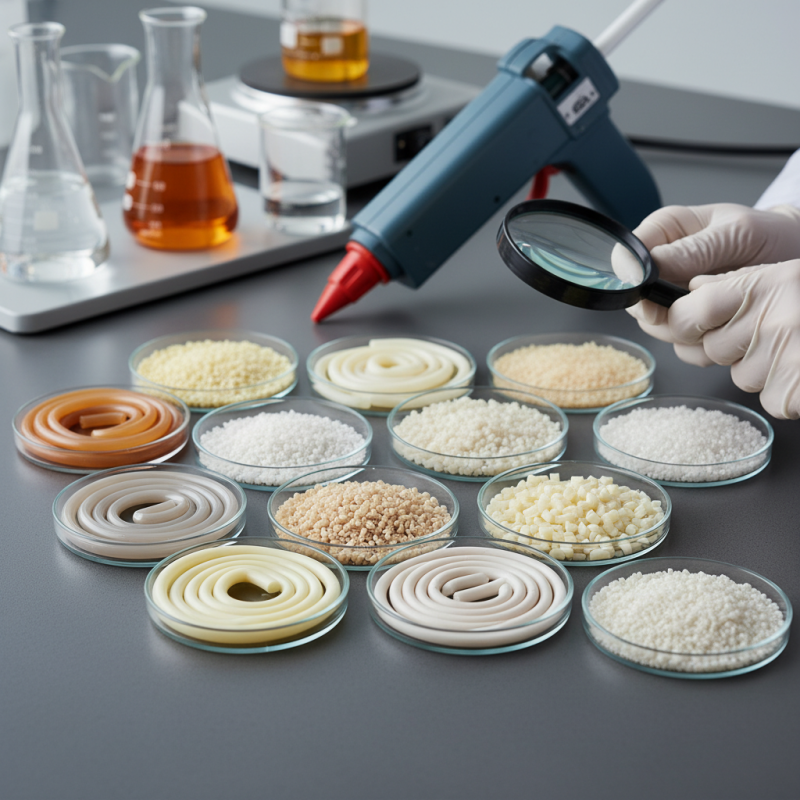
Understanding Polyamide Hot Melt Adhesives: An Overview
Polyamide hot melt adhesives have distinct properties that make them suitable for various applications. These adhesives are known for their strong bonding capabilities, especially in challenging environments. They offer good resistance to heat and chemicals, making them popular in automotive and industrial sectors. The versatility of polyamide adhesives makes them ideal for bonding dissimilar materials.
Their usage is not without challenges. For instance, the application process can be tricky. Temperature control is crucial; applying too hot can lead to damage. Incomplete melting can also result in weak bonds. Moreover, the curing time can vary, which may affect production timelines. It's essential to consider these factors carefully to achieve optimal results.
Understanding these nuances helps users make informed decisions. Polyamide hot melt adhesives can be an excellent choice when used correctly. Experimentation and feedback from actual use can provide insights into their performance. Continuous learning and adjustments can lead to successful applications. Embracing imperfections may pave the way for improvements and innovations in bonding solutions.
Key Properties and Benefits of Polyamide Hot Melt Adhesives
Polyamide hot melt adhesives are gaining popularity in various industries. Their unique properties contribute significantly to their effectiveness. According to recent industry reports, these adhesives provide exceptional thermal stability. This makes them ideal for applications where heat resistance is crucial. Their adhesion capabilities on challenging substrates are impressive, outperforming many alternatives.
One key benefit of polyamide adhesives is their versatility. They bond well to a range of materials, including plastics, textiles, and metals. The report indicated that nearly 70% of manufacturers prefer polyamide for automotive applications due to this adaptability. The adhesives can also maintain performance under varying climatic conditions, which is essential for outdoor products. However, some users have noted issues with the curing time.
Another advantage is their durability. Polyamide hot melts are known for their resistance to chemical exposure and moisture. Studies reveal that these adhesives can withstand contact with solvents and oils, extending the lifespan of bonded products. Despite these benefits, users occasionally report challenges in the application process, such as nozzle clogging. This is a concern that needs attention. Understanding these challenges will help manufacturers refine these adhesives further.
Top 10 Polyamide Hot Melt Adhesives: Features and Applications
Polyamide hot melt adhesives are essential in various industries, from automotive to electronics. Their thermal stability and chemical resistance make them ideal for demanding applications. A recent industry report highlighted that the demand for polyamide adhesives is expected to grow at a CAGR of 5.5% through 2027. This growth indicates their increasing usage in modern manufacturing processes.
These adhesives bond well to different substrates. They are particularly effective on metals, plastics, and rubber. This versatility allows manufacturers to use them in diverse settings. For example, they are instrumental in assembling lightweight structures in the automotive industry. In electronics, they ensure durable connections in complex assemblies. However, the need for precise temperature control during application must not be overlooked.
**Tip**: Always test your adhesive choice on materials before full-scale application. Variations in temperature can impact bond strength. Remember, not every adhesive suits every project; knowing the material is crucial. Experimentation can lead to better outcomes, yet caution is advised. Not all practices yield perfect results—learn from unsuccessful attempts. Understanding your process can lead to innovation in application methods.
Top 10 Polyamide Hot Melt Adhesives: Performance Characteristics
Comparative Analysis: Polyamide vs Other Hot Melt Adhesives
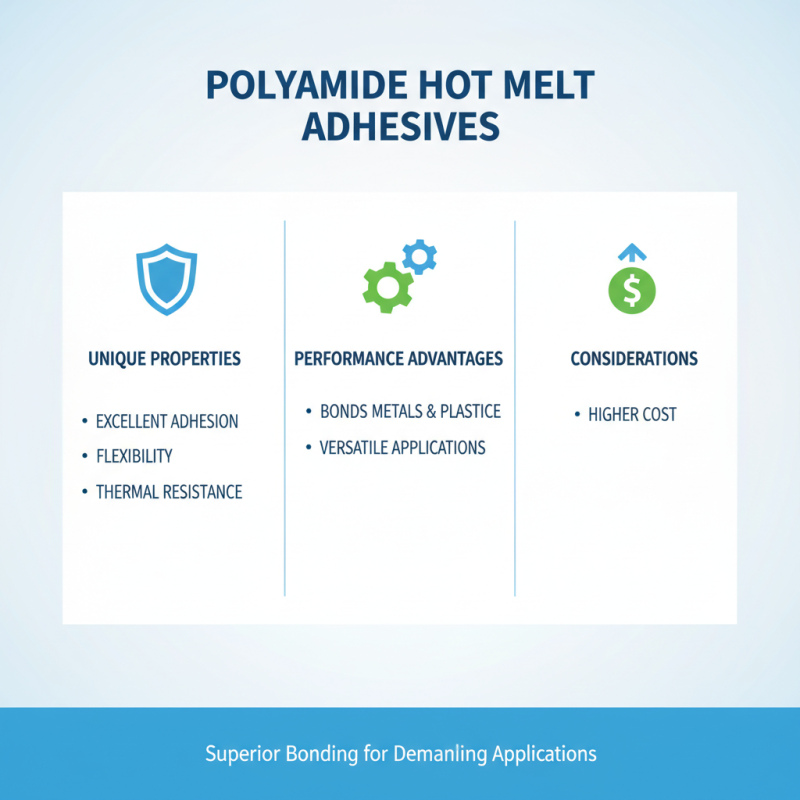
Polyamide hot melt adhesives are gaining traction due to their unique properties. They offer excellent adhesion, flexibility, and thermal resistance. When comparing polyamide to other hot melt adhesives, their performance stands out in various applications. For instance, they bond well with materials like metals and plastics, which is crucial in many industries. However, their cost can be a concern compared to alternatives.
In contrast, other hot melt adhesives, such as ethylene-vinyl acetate (EVA), may be more affordable. EVA is often favored for lighter applications. But it lacks the high-temperature resistance that polyamide provides. The choice between these materials depends on specific project needs. Some users might overlook polyamide's higher initial investment due to immediate cost concerns. Yet, long-term durability and performance should be prioritized.
While polyamide adhesives excel in demanding environments, they are not without limitations. For example, they can be harder to work with, requiring careful handling. Users new to hot melt technologies may find the learning curve steep. This underscores the need for thorough training and experimentation to fully grasp the advantages and challenges of polyamide over others.
Guidelines for Selecting the Right Polyamide Hot Melt Adhesive
When selecting the right polyamide hot melt adhesive, consider your project's specific needs. The adhesive's viscosity greatly impacts application. A thicker adhesive provides better bonding in vertical applications. Thin adhesive options work well for intricate assemblies. Evaluate the temperature resistance, too. Some adhesives perform better in high temperatures while others excel in lower settings.
Another factor to think about is open time. This refers to how long the adhesive remains workable after application. A longer open time can reduce the pressure on your assembly process. Be cautious, though. Too long an open time might lead to positioning errors. Testing small samples can help avoid larger mistakes later.
Lastly, examine the adhesion properties. Some polyamide adhesives work better on certain substrates. Fabrics and plastics often need different formulations. The right adhesive will enhance durability and overall strength. Always consider the environmental conditions your product will face. Humidity, temperature fluctuations, and exposure to chemicals can affect performance.