How to Choose the Best Modified Acrylate Adhesive for Your Needs?
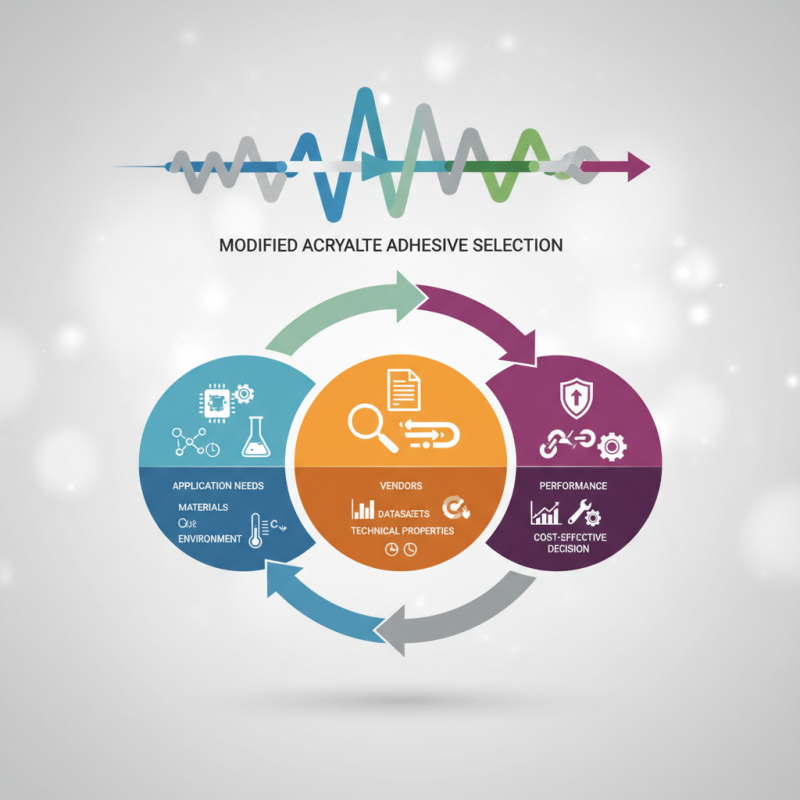
Choosing the right Modified Acrylate Adhesive can be a daunting task, particularly for industries that demand high performance and reliability. Dr. Emily Carter, a leader in adhesive technology, emphasizes, "Selecting the correct adhesive means understanding your specific application needs." This insight provides a solid foundation when navigating the vast choices available.
Modified Acrylate Adhesives are renowned for their versatility and strong bonding capabilities. They are suitable for various materials, such as plastics, metals, and composites. However, users often overlook critical factors that affect performance, like curing time, temperature resistance, and environmental exposure. It’s essential to assess both the materials involved and the conditions they will face.
Many factors complicate the selection process. Different vendors offer similar products, and not all provide comprehensive data. Users must analyze technical datasheets carefully. Understanding the unique properties, potential drawbacks, and application techniques is crucial. Therefore, a well-informed decision can prevent costly mistakes in future projects. Reflecting on these aspects can lead to a more successful adhesive application.
Understanding Modified Acrylate Adhesives and Their Properties
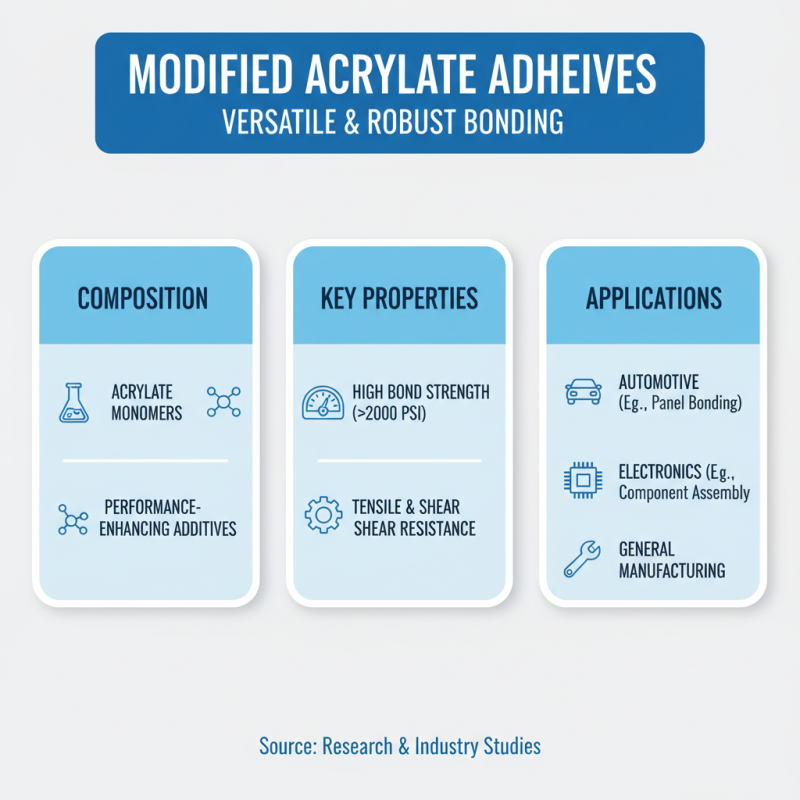
Modified acrylate adhesives are widely recognized for their versatility and robust bonding capabilities. These adhesives typically consist of acrylate monomers and other additives that enhance their performance. Studies show that modified acrylate adhesives can achieve bond strengths exceeding 2,000 psi in tensile tests, making them suitable for various applications, from automotive to electronics.
One of the distinctive properties of modified acrylate adhesives is their excellent resistance to environmental factors. They often maintain adhesion in conditions involving high humidity, UV exposure, and temperature extremes. Research indicates that these adhesives retain over 90% of their original bond strength after prolonged exposure to moisture. This makes them a valuable choice in outdoor applications.
Yet, the selection process for the right modified acrylate adhesive can be complex. Users must consider cure time, viscosity, and substrate compatibility. Notably, some formulations may exhibit slower cure rates, requiring careful planning for assembly. Additionally, while these adhesives offer strong bonds, they may not perform equally well on all surfaces. Testing on actual materials before full-scale application is essential to ensure optimal performance and durability, highlighting the need for thorough evaluation and reflection on specific project requirements.
Identifying Your Specific Bonding Requirements and Applications
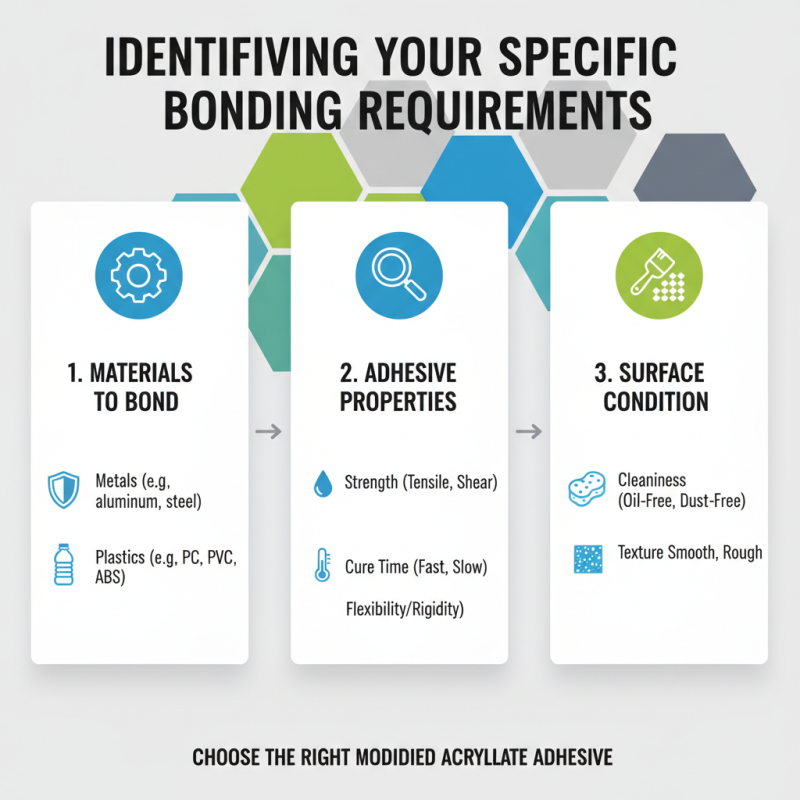
When selecting a modified acrylate adhesive, identifying your specific bonding requirements is crucial. Consider the materials you aim to bond. Different materials require different adhesive properties. For example, metal bonds differ significantly from plastics. The surface condition, such as cleanliness and texture, also impacts adhesion.
Evaluate the environmental conditions where the adhesive will be used. Temperature fluctuations and moisture exposure can weaken bonds. If the application is outdoors, resistance to UV light is important. Think about how quickly you need the bond to set. Some jobs require immediate stability, while others may allow for more flexible setting times.
Reflect on the longevity of the bond you need. Will it face stress over time? Deterioration might occur if not chosen carefully. A well-suited adhesive enables strong bonds while accommodating the intricacies of specific applications. Don’t overlook small details in your project. Every factor can affect the final bond strength and performance.
Comparing Different Types of Modified Acrylate Adhesives
When selecting a modified acrylate adhesive, understanding different types is crucial. These adhesives can be categorized based on their composition and properties. For instance, methacrylate-based adhesives offer exceptional bond strength and durability. A report by the Adhesive and Sealant Council indicated that these adhesives can develop strengths exceeding 3,000 psi in tensile testing.
Conversely, ethyl acrylate formulations provide flexibility and impact resistance. They are often favored in applications like automotive assembly where movement and vibration are prevalent. Data from the Journal of Adhesion Science and Technology highlights that ethyl acrylates exhibit a 30% improvement in flexibility compared to rigid formulations, adapting better to varying conditions.
Despite their advantages, modified acrylate adhesives present challenges. For example, moisture sensitivity can weaken some formulations. Users may notice a decline in adhesion when exposed to high humidity. Thorough testing under actual service conditions is essential. Proper application technique also plays a role in performance, indicating that attention to detail can significantly impact results. This reflects the importance of tailoring adhesive choice to specific needs and environments.
Evaluating Performance Factors: Strength, Flexibility, and Cure Time
When selecting a modified acrylate adhesive, understanding performance factors is crucial. Strength, flexibility, and cure time dictate how well an adhesive will perform in various applications. Research indicates that structural adhesives need tensile strength values above 20 MPa for optimal performance in demanding environments. A higher strength rating suggests that the adhesive can withstand significant stress, making it appropriate for bonding materials subjected to heavy loads.
Flexibility also plays a vital role in adhesive choice. A flexible adhesive can absorb shocks and accommodate movement between bonded surfaces. According to industry studies, adhesives with elongation at break values above 200% tend to perform better in applications where substrates may expand or contract. However, choosing solely based on flexibility can lead to issues like insufficient bond strength in rigid environments.
Cure time is the final performance factor to consider. Different applications may require varying cure times, which can range from a few minutes to several hours. Fast curing adhesives can be beneficial for high-volume manufacturing, while slower curing options may allow for adjustments during assembly. It's essential to evaluate your specific needs for cure time, balancing production efficiency with the necessary working time for proper application. Understanding these factors can significantly impact the effectiveness of your adhesive choice.
How to Choose the Best Modified Acrylate Adhesive for Your Needs?
| Adhesive Type |
Strength (psi) |
Flexibility (Shore A) |
Cure Time (minutes) |
| Standard Modified Acrylate |
2500 |
60 |
10 |
| High Strength Modified Acrylate |
3500 |
50 |
15 |
| Flexible Modified Acrylate |
2000 |
70 |
20 |
| Fast Cure Modified Acrylate |
3000 |
55 |
5 |
| High Temperature Resistant Modified Acrylate |
2800 |
65 |
12 |
Consulting Manufacturer Guidelines and Technical Data Sheets
When selecting a modified acrylate adhesive for your specific needs, consulting manufacturer guidelines and technical data sheets is crucial. These documents often provide detailed information about performance characteristics, chemical resistance, and curing times. According to a recent industry report by the Adhesive and Sealant Council, over 30% of adhesive failures can be traced back to improper material selection.
Adhesive formulations can vary significantly, affecting bonding strength and durability. Pay attention to the recommended substrates, as some adhesives perform better on specific materials. Consider environmental factors, like temperature and humidity, which affect curing and performance. Technical data sheets typically include adhesion values measured under various conditions, giving you insights into reliability.
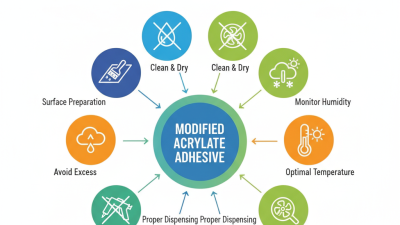
Tip: Always check for certifications like ISO or ASTM to ensure you’re choosing a trustworthy product. Also, consider requesting samples to conduct in-house tests, as real-world conditions can reveal potential weaknesses that data sheets may not fully capture. Be wary of overestimating an adhesive’s capabilities based solely on marketing material; real-world testing is essential for validating performance.
Comparison of Performance Characteristics of Modified Acrylate Adhesives
This chart illustrates the performance characteristics of modified acrylate adhesives, comparing shear strength, temperature resistance, viscosity, and curing time. These metrics are essential when selecting the appropriate adhesive for your application needs.