Why Choose PUR Hot Melt Adhesive for Your Bonding Needs?
When selecting an adhesive for bonding, many options exist. PUR Hot Melt Adhesive stands out due to its exceptional performance and versatility. This adhesive type effectively bonds various materials, making it suitable for numerous applications in industries like packaging and construction.
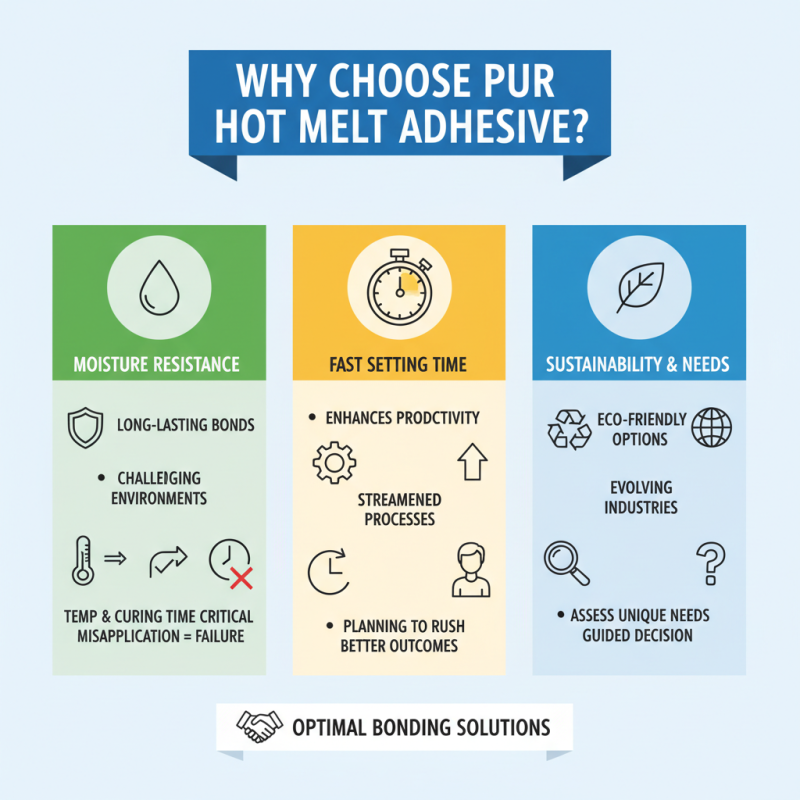
One significant benefit of PUR Hot Melt Adhesive is its moisture resistance. This quality ensures long-lasting bonds, even in challenging environments. However, it is essential to apply it correctly. Users must heed the temperature and curing time to achieve optimal results. Misapplication can lead to bond failure, which is frustrating.
Furthermore, PUR Hot Melt Adhesive offers a fast setting time, enhancing productivity. This efficiency can be appealing to businesses seeking to streamline their processes. Still, it can create pressure to rush applications. Taking time to plan can lead to better outcomes. Exploring PUR Hot Melt Adhesive can also prompt reflection on sustainability. As industries evolve, seeking eco-friendly options becomes crucial. Ultimately, assessing the unique bonding needs can guide the decision to choose PUR Hot Melt Adhesive.
Understanding PUR Hot Melt Adhesive: A Comprehensive Overview
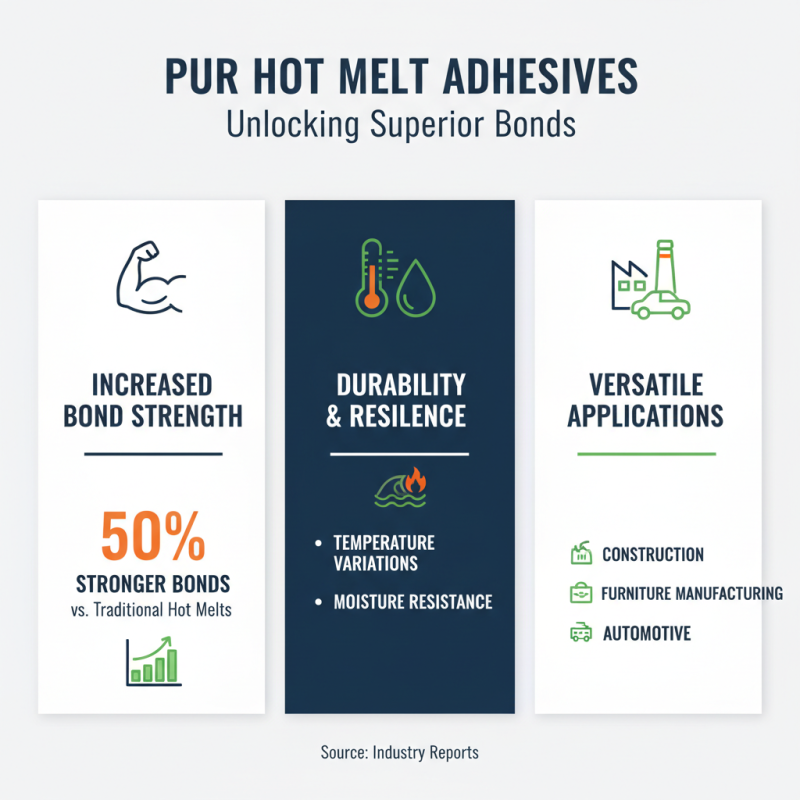
PUR hot melt adhesive offers several key advantages for various bonding applications. It provides strong, durable bonds that withstand temperature variations and moisture. Industry reports indicate that PUR adhesives can yield a bond strength increase of up to 50% compared to traditional hot melts. This makes them ideal for construction, furniture manufacturing, and automotive industries.
While PUR adhesives are highly effective, they do require careful handling. Improper application can lead to weak bonds or material damage. Ensure that your surfaces are clean and dry before application. Maintaining optimal temperature during the melting process is crucial. Not achieving the right temperature can compromise the adhesive's performance.
**Tips:** Always conduct a bond strength test on scrap materials before full-scale application. Additionally, consider the working time of the adhesive, as it varies with temperature. This is especially important for larger projects. Recognizing these factors can help avoid costly mistakes in your bonding application.
Key Advantages of PUR Hot Melt Adhesive in Bonding Applications
PUR hot melt adhesive is gaining popularity in various bonding applications. Its unique formulation offers several key advantages. One major benefit is its exceptional thermal stability. A study by the Institute of Adhesion and Bonding reported that PUR adhesives maintain performance even at high temperatures. This makes them suitable for demanding environments, such as automotive and construction.
Another advantage is their moisture resistance. Unlike traditional adhesives, PUR hot melts can withstand exposure to water. According to a report from Adhesive & Sealant Council, these adhesives have a higher bond strength in humid conditions, reducing the risk of failure. This feature is crucial for outdoor applications, where weather can impact adhesion quality.
Tips: When selecting PUR adhesives, consider the specific materials you are bonding. Not all PUR adhesives work equally with every substrate. Perform tests to ensure compatibility. Additionally, proper application techniques are essential. Follow manufacturer guidelines for optimal performance. Even the best adhesive can fail if not applied correctly. Aim for uniform coverage to maximize bond strength.
Applications of PUR Hot Melt Adhesive Across Various Industries
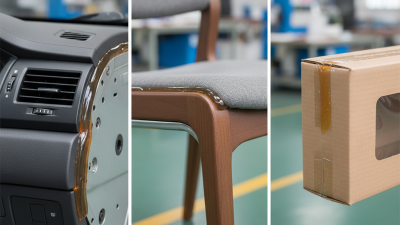
PUR hot melt adhesive finds its place in various industries due to its unique properties. It’s known for exceptional bonding strength, ideal for challenging materials. Manufacturers in the furniture industry often rely on PUR adhesives for laminating surfaces. The strong bonds formed can withstand temperature fluctuations and moisture. This ensures durability in products like kitchen cabinets and tables.
In packaging, PUR hot melt adhesives are used extensively. They provide robust seals that keep products secure during shipping. This adhesive performs well in different environments. However, application challenges can arise. For instance, surface preparation is crucial. Any dust or grease can compromise the bond. It's important to ensure surfaces are clean and dry for optimal results.
The automotive sector also benefits from PUR adhesives. These adhesives are used in assembly processes, attaching various components. The ability to bond dissimilar materials can lead to lighter and more fuel-efficient vehicles. Yet, some users find that curing times can be a bit tricky. Too quick or too slow can lead to inconsistencies in bonding quality. Balancing these factors is vital for achieving a reliable product.
Why Choose PUR Hot Melt Adhesive for Your Bonding Needs?
| Industry |
Application |
Key Benefits |
| Furniture |
Bonding wood and laminated materials |
High initial tack and durability |
| Automotive |
Assembly of interior components |
Strong bonding under various conditions |
| Construction |
Sealing and insulating materials |
Moisture resistance and thermal stability |
| Packaging |
Sealing boxes and cartons |
Quick setting and reliable seals |
| Textiles |
Laminating fabrics |
Flexible bonds and wash resistance |
Comparing PUR Hot Melt Adhesive with Other Adhesive Types
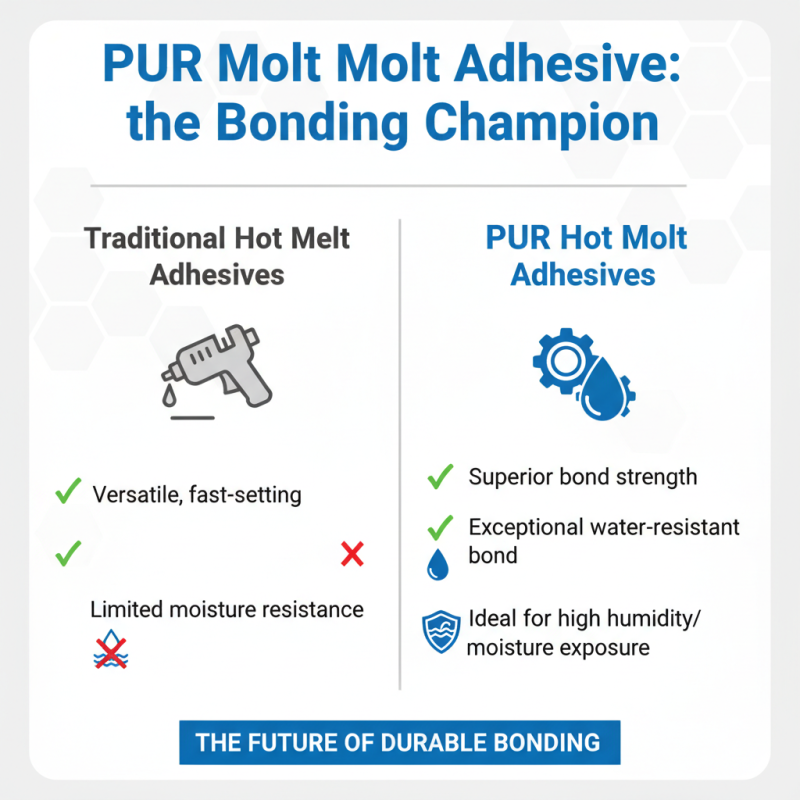
PUR hot melt adhesive stands out in the bonding arena. It offers unique benefits compared to traditional adhesive types. While standard hot melts are versatile, they often lack moisture resistance. PUR adhesives, however, cure to form a strong, water-resistant bond. This makes them ideal for applications exposed to high humidity or direct moisture.
Traditional adhesives may require longer curing times and specific temperatures. PUR hot melts, in contrast, provide a rapid setup. This speed can improve production efficiency significantly. However, users must handle them cautiously due to their sensitivity to moisture before curing. Not everyone is aware of this aspect. Inaccurate storage can lead to issues down the line.
Additionally, while solvent-based adhesives can produce strong bonds, they often release harmful fumes. PUR adhesives offer a more environmentally friendly option. Yet, it’s crucial to note that their initial cost might be higher. This could result in hesitation for some users considering the switch. It's essential to weigh the long-term benefits against initial expenditures.
Best Practices for Using PUR Hot Melt Adhesive Effectively
When using PUR hot melt adhesive, preparation is key. Ensure surfaces are clean and dry. Any debris can interfere with adhesion. A clean surface means a stronger bond. If you’re unsure about cleanliness, wipe surfaces with a suitable solvent. Don't skip this step, as it sets the foundation for the entire process.
Temperature control is also essential. The adhesive must reach the recommended application temperature. Too low, and it won’t flow properly. Too high, and it may degrade. Use a reliable thermometer to monitor this. Experimentation may be necessary. Sometimes, it takes multiple tries to find that perfect temperature. Be patient; it pays off in the end.
Finally, clamp the bonded parts after application. This ensures proper contact and curing. However, be cautious. Excessive pressure can squeeze out the adhesive, weakening the bond. Find the right balance here. Take notes on your process. Reflection on what worked and what didn’t can lead to future improvements. Every project offers valuable lessons.
Performance Comparison of Different Adhesive Types
This chart illustrates the performance metrics of various types of adhesives, focusing on bond strength, drying time, and temperature resistance, highlighting why PUR hot melt adhesive is a preferred choice for bonding needs.