How to Choose the Best Laminating Adhesive for Your Projects?
Choosing the right laminating adhesive is crucial for any project. This adhesive serves as the backbone of lamination, ensuring durability and protection. A quality laminating adhesive enhances the life of documents, artwork, and other materials. However, not all adhesives are created equal.
When selecting a laminating adhesive, consider its intended use. Different projects require different levels of adhesion and flexibility. For instance, photo lamination needs a strong bond to prevent lifting edges. In contrast, a more flexible adhesive may be ideal for packaging or craft projects. Understanding these nuances can make a significant difference in the outcome of your work.
In practice, many users struggle with their choice of laminating adhesive. They often overlook the specific properties needed for their projects. Experimentation may be necessary to find the perfect match. This trial-and-error approach, while time-consuming, ultimately provides valuable insights into the best products for your needs. Making an informed choice will lead to successful results.

Understanding Laminating Adhesives: Types and Properties
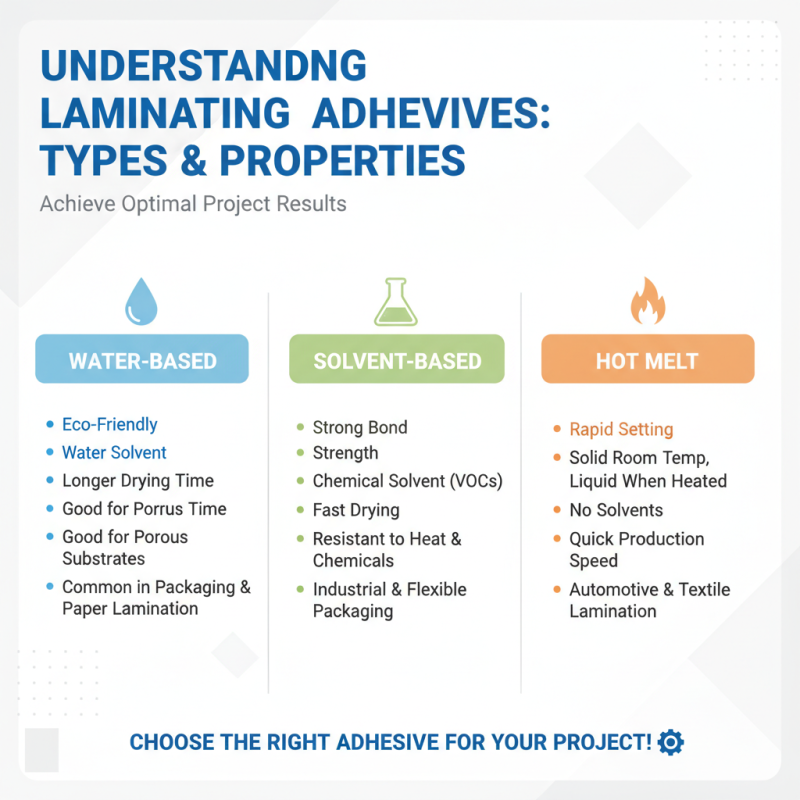
Laminating adhesives come in various types, each with unique properties. Understanding them is crucial for achieving the best results in your projects. There are three main types of laminating adhesives: water-based, solvent-based, and hot melt. Each type has different characteristics, affecting application methods and drying times.
Water-based adhesives are often user-friendly. They are low in volatile organic compounds (VOCs), making them safer for indoor use. However, they can take longer to dry. Solvent-based adhesives offer a strong bond and faster drying time, but they can emit stronger odors and require more caution during application. On the other hand, hot melt adhesives provide instant bonding but may be challenging to control.
**Tips:** Choose an adhesive based on your project's specific needs.
Take note of your working environment. You might find that weather affects drying times. Sometimes, it’s essential to experiment with different types to find what works best. Also, consider that storage conditions can influence the longevity of adhesives.
If you’re unsure, consult professionals or experienced users before selecting your adhesive. Learning from mistakes can significantly enhance your skills.
Factors to Consider When Choosing Laminating Adhesive
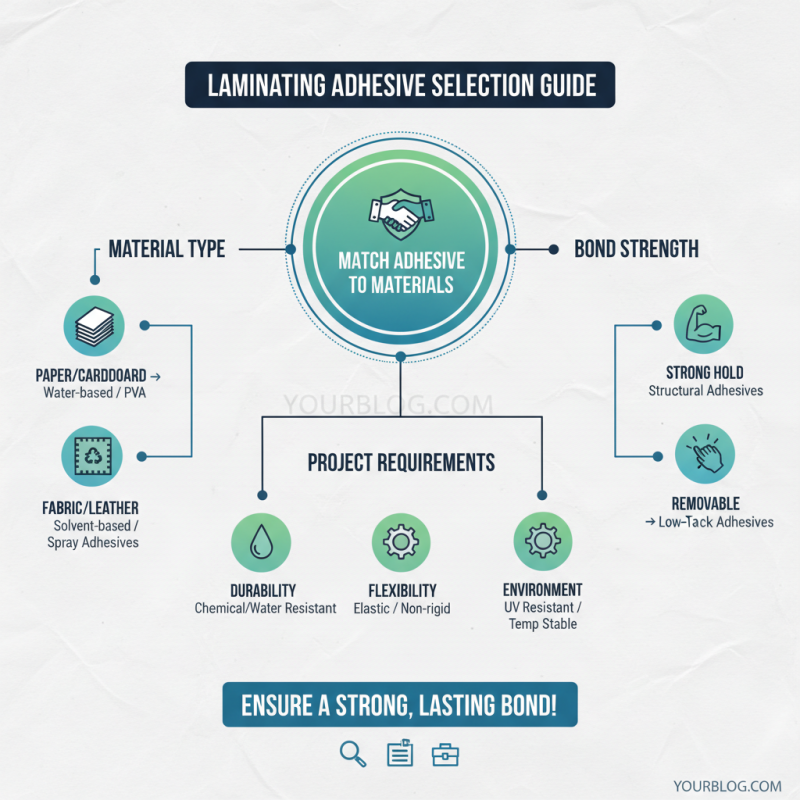
Choosing the right laminating adhesive is essential for achieving durable and professional results. Several factors should be considered when making your selection. First, the type of materials you will laminate significantly impacts adhesive choice. Different materials like paper, plastic, or cardstock may respond differently to various adhesives, affecting adhesion quality and durability.
Another important consideration is the adhesive's thickness. Thicker adhesives generally provide a stronger bond, but they may also lead to a less flexible finish. Industry reports indicate that a balance between adhesive thickness and flexibility can enhance the longevity of laminated projects. When working with sensitive materials, opt for a low-temperature adhesive to prevent damage during the lamination process.
Tip: Conduct a small test on your chosen material with the adhesive before committing to a large project. This way, you can evaluate the performance without wasting resources.
Also, pay attention to the drying time. Some adhesives require long drying periods which can delay your project. Research shows that faster-drying adhesives can improve workflow efficiency. However, these often require specific conditions to adhere properly.
Tip: Ensure proper ventilation and temperature control in your workspace to optimize adhesive performance. This can make a substantial difference in your lamination results. Your choice of laminating adhesive will directly influence the quality and durability of your projects.
Matching Adhesive to Project Materials and Requirements
Choosing the right laminating adhesive can elevate your projects. It's crucial to match the adhesive type to the materials you use. For instance, paper requires a different adhesive than plastic or fabric. Knowing your project's material helps ensure a strong bond.
Consider the project’s requirements too. Does it need to be water-resistant? If so, select a waterproof adhesive. For items that will be handled frequently, opt for a durable option. Test the adhesive on a small area first. This prevents mistakes with costly materials. It’s also important to check drying times and application methods.
Misjudgments can happen. You might assume all adhesives work similarly, but they don’t. The wrong choice can lead to peeling or bubbling. After the project, reflect on the outcomes. Did the adhesive perform as expected? Gather insights for future projects to refine your process.
Testing and Evaluating Adhesive Performance
Choosing the right laminating adhesive is crucial for successful projects. The adhesive's performance directly affects the durability and appearance of your finished product. Testing is an essential step in evaluating how well an adhesive meets your needs.
Start by conducting small-scale tests. Apply the adhesive to different materials and let it set. Observe the bond strength and clarity. Look for bubbles or unevenness. These factors can reveal the adhesive's overall quality. Perform peel tests, where you gently pull apart the laminated pieces. This will help you gauge adhesion strength and durability over time.
Tip: Always read product specifications and user reviews. Seeking advice from professionals can offer valuable insights. Consider the environment where your project will be used, as humidity and temperature can impact adhesive performance. Adjust your choices based on these tests for the best results.
Best Practices for Application and Usage of Laminating Adhesives
When selecting a laminating adhesive, application is key. Understanding the surface to be laminated is crucial. For instance, smooth surfaces often require different adhesives than textured ones. Take time to test on small areas to prevent costly mistakes.
Tips: Always ensure your workspace is clean. Dust or debris can ruin the finish. Additionally, consider the thickness of the laminate. A heavier laminate might need a stronger adhesive to ensure durability.
Proper usage techniques matter as well. Applying adhesive evenly prevents bubbles and ensures a smooth application. A roller or brush can help achieve this uniform distribution. If you notice imperfections after application, don’t hesitate to peel back and reapply properly. Adjust your technique with each project to enhance your results over time.