10 Essential Tips for Choosing the Right SBS Adhesive
Choosing the right SBS adhesive can be a daunting task. The adhesive industry has experienced a growth rate of 5% annually over the past five years, according to a report by Global Market Insights. This increasing demand highlights the importance of selecting high-quality adhesives tailored to specific applications. Experts like Dr. Emily Hart, a leading figure in adhesive technology, emphasizes that "the right adhesive can make or break a project's success."
When considering SBS adhesives, factors such as bond strength, temperature resistance, and curing time are crucial. Surveys reveal that 70% of companies face challenges in selecting the correct adhesive for their needs. This underscores the necessity for detailed assessments of project requirements and adhesive properties.
Failures due to improper adhesive choices can lead to significant waste and increased costs. As industry standards evolve, staying informed is vital. Knowledge gaps often exist in understanding adhesive types and their applications. While selecting an SBS adhesive may seem straightforward, a careful and informed approach ensures optimal results and future-proofing for projects.

Understanding SBS Adhesive and Its Applications
SBS adhesive, or styrene-butadiene-styrene adhesive, is widely used in construction and manufacturing. Understanding its properties helps in selecting the right type for your project. These adhesives are known for their flexibility and toughness, making them ideal for various applications. They bond well to many surfaces, including wood, metal, and plastics.
When choosing an SBS adhesive, consider the environment it will be used in. Temperature fluctuations and moisture levels can affect adhesion. For exterior projects, opt for a more resilient formulation. Remember, surface preparation is key. Clean and dry surfaces lead to better adhesion.
It's important to test the adhesive on a sample surface before full application. This can uncover unexpected issues, like compatibility or drying time. Don’t skip this step; it saves time and materials. Lastly, ensure to review safety guidelines before use, as proper handling and ventilation are essential.
10 Essential Tips for Choosing the Right SBS Adhesive
| Tip Number |
Tip |
Application Area |
Curing Time |
Temperature Resistance |
| 1 |
Evaluate the Specific Application Requirements |
Construction |
24 hours |
-30°C to 80°C |
| 2 |
Check for Compatibility with Materials |
Manufacturing |
12 hours |
-20°C to 70°C |
| 3 |
Analyze the Required Strength of Bond |
Automotive |
48 hours |
-40°C to 90°C |
| 4 |
Consider Environmental Conditions |
Electronics |
2 hours |
0°C to 60°C |
| 5 |
Assess the Flexibility of the Adhesive |
Textiles |
30 hours |
-10°C to 65°C |
| 6 |
Review Safety Certifications |
Furniture |
24 hours |
-20°C to 70°C |
| 7 |
Establish the Cost-Effectiveness |
Packaging |
8 hours |
-15°C to 60°C |
| 8 |
Inquire About Processing Methods |
Arts and Crafts |
1 hour |
-10°C to 75°C |
| 9 |
Explore Cleanup and Maintenance Procedures |
Sports Equipment |
20 hours |
-15°C to 85°C |
| 10 |
Seek Expert Recommendations |
Medical Devices |
72 hours |
0°C to 80°C |
Key Factors to Consider When Selecting SBS Adhesives
When selecting the right SBS adhesive, key factors must be prioritized. Temperature resistance is crucial. Some reports indicate that SBS adhesives can maintain effectiveness even at temperatures exceeding 80°C. This is vital for applications in harsh environments. Additionally, the adhesive's curing time can impact project timelines. Faster curing means quicker results, enhancing productivity.
Another essential consideration is the adhesion strength required for your specific application. Different projects demand varying strengths. Industry studies show that certain SBS adhesives can provide shear strength exceeding 20 MPa. This level of durability is beneficial for both construction and automotive sectors. Testing in real-world conditions can reveal weaknesses.
Compatibility with surfaces is often overlooked. Not all adhesives work with every material. For example, SBS adhesives may bond well with plastics, but less so with untreated wood. Understanding material interactions can prevent future failures. Even the most skilled professionals can underestimate these factors. An adhesive might seem ideal but could perform poorly if misapplied. Always conduct preliminary tests to validate your choices.
10 Essential Tips for Choosing the Right SBS Adhesive
This chart illustrates the importance rating of various factors when selecting SBS adhesives. Each factor is rated on a scale from 1 to 10, highlighting the essential considerations for ensuring optimal adhesive performance.
Evaluating Performance Characteristics of SBS Adhesives
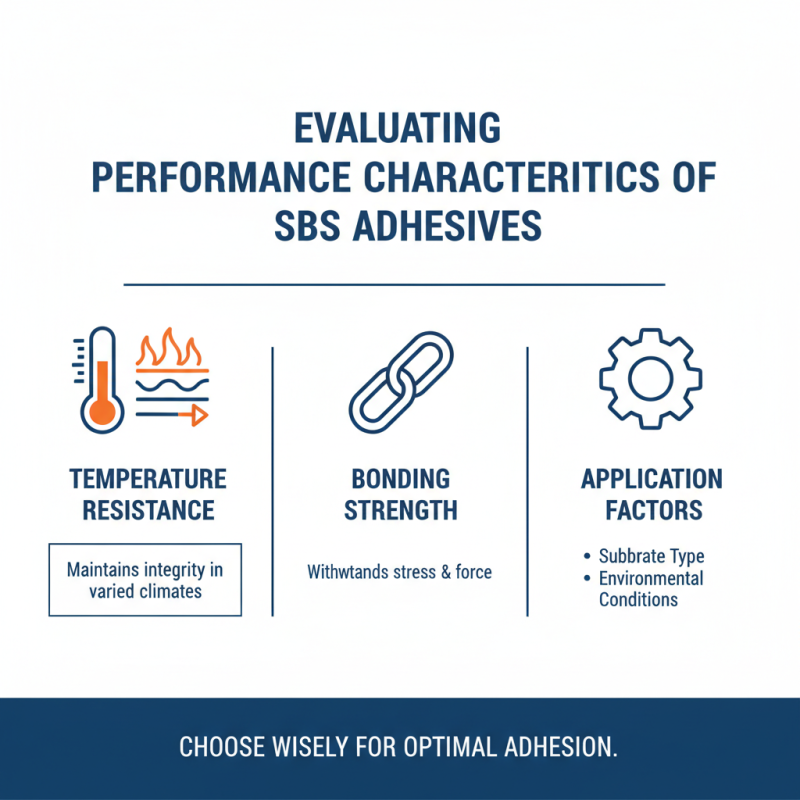
When selecting SBS adhesives, understanding their performance characteristics is vital. Different factors can influence how well an adhesive will work in your specific application. Pay attention to temperature resistance and bonding strength. These characteristics dictate how the adhesive behaves under stress or in varying environments.
Consider these tips when choosing your adhesive. Evaluate the viscosity to ensure it suits your application methods. A thicker adhesive can fill gaps better, while a thinner one may provide smoother application. Additionally, assess the cure time. Quick-drying adhesives can be advantageous in urgent projects, but they may require precise application.
Do not overlook the safety and environmental impact. Check the volatile organic compounds (VOCs) in the adhesive. Lower VOC levels reduce harmful emissions and improve indoor air quality. Be mindful of how easy the adhesive is to clean up. Some adhesives require solvents, which can present challenges in certain settings. Always make an informed choice based on your project needs and environmental considerations.
Safety and Environmental Considerations for SBS Adhesives
When selecting SBS adhesives, safety and environmental considerations are crucial. Numerous reports indicate that improper handling can lead to health risks. For instance, the National Institute for Occupational Safety and Health (NIOSH) notes that exposure to vapors can cause respiratory issues. Ensuring adequate ventilation during application reduces these risks significantly.
Consider the disposal of SBS adhesives. Many products can harm aquatic life if not disposed of properly. According to the Environmental Protection Agency (EPA), proper disposal methods minimize environmental impact. Choosing adhesives with eco-friendly certifications can enhance safety profiles.
Tip: Always refer to Material Safety Data Sheets (MSDS) for specific handling instructions. Knowledge is key to safe usage. Another helpful approach is to evaluate the adhesive's lifecycle, from production to disposal. This comprehensive view ensures responsible use. Remember, the goal is not just effective bonding, but also a commitment to safety and sustainability.
Common Mistakes to Avoid in Choosing SBS Adhesives
When selecting SBS adhesives, many make common mistakes that can lead to poor results. One frequent error is failing to analyze the surface materials. Each surface requires different adhesion properties. Ignoring this can lead to weak bonds. It's essential to assess the materials and their compatibility with the adhesive.
Another mistake is underestimating environmental conditions. Adverse temperatures and humidity can affect adhesive performance. Some users overlook how these factors impact curing times and end results. Testing the adhesive in actual conditions is crucial. Additionally, not considering the intended use of the adhesive can cause issues. Some products are designed for heavy loads while others are suitable only for lightweight applications.
Failing to follow the manufacturer's guidelines is another pitfall. Specifications on application thickness and curing time are vital for optimal performance. Rushing the process can lead to improper bonding. Taking time to read and understand these instructions is key. Each of these mistakes can have lasting effects on the efficacy of SBS adhesives. Careful consideration and attention to detail are essential for successful applications.