10 Essential Tips for Using Modified Acrylate Adhesive Effectively
In today's fast-paced manufacturing world, utilizing the right adhesive can make all the difference. Modified Acrylate Adhesive is a popular choice among professionals, praised for its strong bond and versatility. Dr. Anna Wells, a leading expert in adhesive technologies, once stated, "Understanding the nuances of Modified Acrylate Adhesive can elevate your applications."
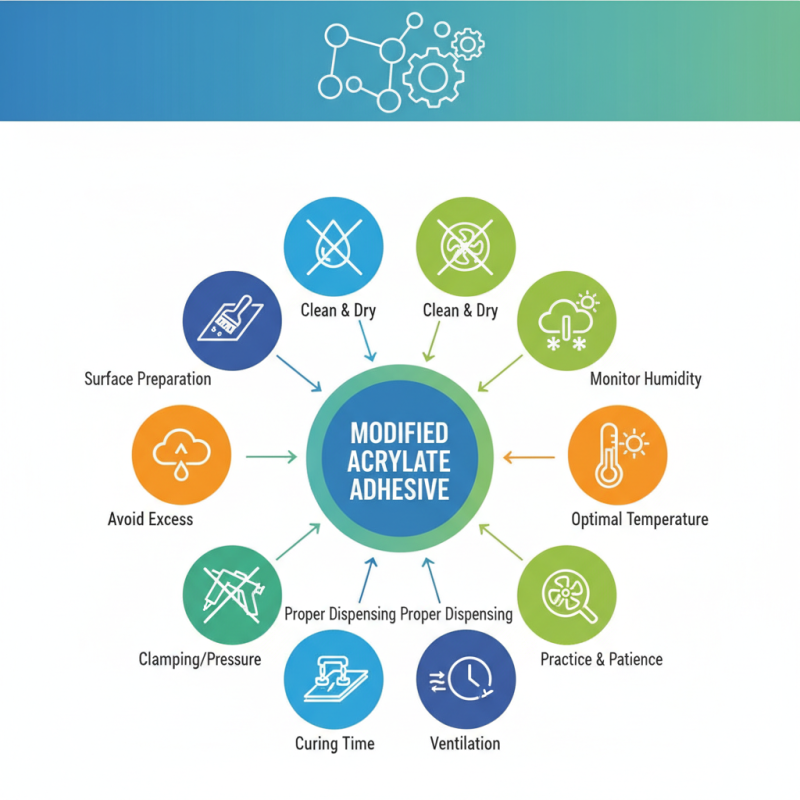
Effectively using Modified Acrylate Adhesive requires attention to detail. Many beginners overlook surface preparation, which is critical for strong adhesion. The adhesive forms a better bond on clean, dry surfaces. Humidity can affect the curing process, so environmental conditions should always be monitored.
Despite its advantages, users often encounter challenges. Some may apply too much adhesive, resulting in excess that can weaken the bond. There are always learning curves in adhesive applications. With practice, one can master the effective use of Modified Acrylate Adhesive and reap its full benefits.
Understanding Modified Acrylate Adhesives and Their Applications
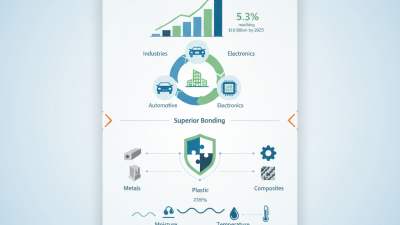
Modified acrylate adhesives are versatile and powerful bonding agents. They are used in various industries, especially for applications requiring flexibility and strength. These adhesives can bond different surfaces, including metal, wood, and plastic. Their fast curing times and durability make them suitable for both indoor and outdoor use. Understanding their properties helps in selecting the right adhesive for a task.
When using modified acrylate adhesives, proper surface preparation is key. Ensure surfaces are clean and dry to achieve the best bond. If the surfaces are rough, that’s even better, as this will improve adhesion. Apply the adhesive evenly, but don't overdo it. Too much adhesive can weaken the bond, leading to failures.
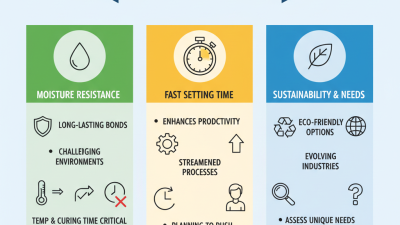
Applying the adhesive in the right conditions can make a significant difference. Temperature and humidity affect curing time and bond strength. Working in a controlled environment is ideal but often not feasible. Often, users find the results vary dramatically based on these factors. Knowing this can prepare you for unexpected outcomes and adjustments needed later.
Proper Surface Preparation for Best Adhesive Performance
Proper surface preparation is critical for maximizing the performance of modified acrylate adhesives. Many studies indicate that more than 70% of adhesive failures stem from inadequate surface treatment. This highlights the importance of attention to detail. Surfaces must be clean, dry, and free of contaminants. Grease, dust, or moisture can significantly weaken the bond. A thorough inspection of the substrate is essential before applying any adhesive.
For optimal results, consider using methods like sanding or chemical cleaning to prepare surfaces. Sanding increases the surface area, enhancing adhesion. Chemical cleaning can remove residues that may interfere with bonding. Reports show that properly prepared surfaces can improve bond strength by up to 50%. However, many neglect this crucial step. It is easy to overlook surface imperfections, yet they can lead to failures down the line.
Even the best adhesives can fail if the right conditions are not met. Some users may rush the process, assuming that a simple wipe-down is sufficient. However, this is often not the case. An improperly prepared surface can lead to costly mistakes. Reflecting on these practices can offer insights into improving application techniques for better durability and performance. The investment of time in surface preparation pays off in the long term.
Effectiveness of Surface Preparation Methods for Modified Acrylate Adhesive
Optimal Curing Conditions for Modified Acrylate Adhesives
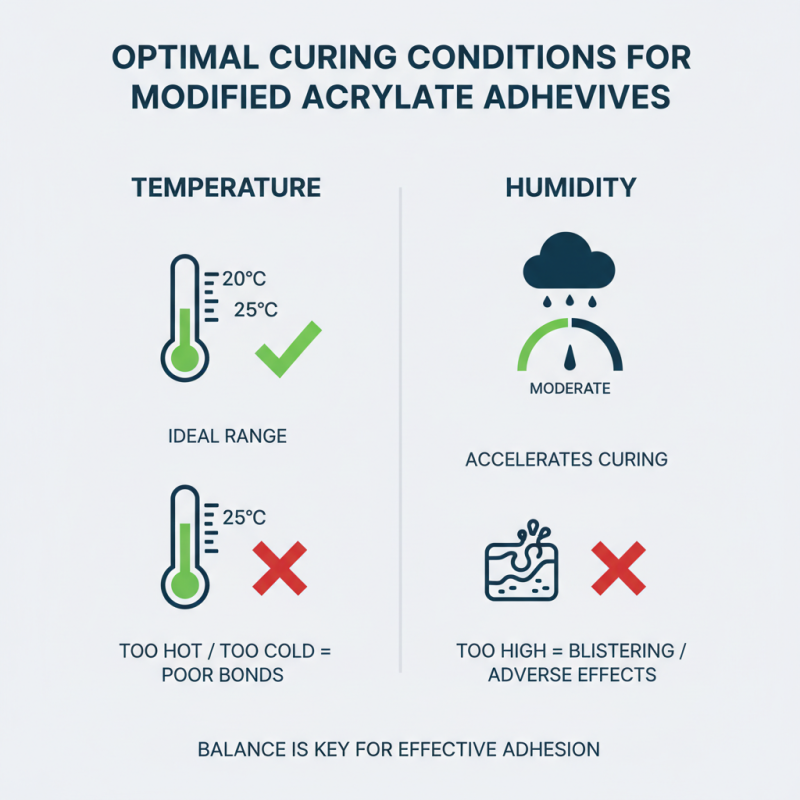
When working with modified acrylate adhesives, curing conditions significantly impact performance. The optimal temperature range for curing is typically between 20°C to 25°C. This range allows for effective adhesion, reducing the risk of poor bonds. Adjusting humidity levels also plays a crucial role. Studies show that higher humidity can accelerate curing, but too much can lead to adverse effects like blistering.
Moreover, light exposure is vital for certain modified acrylate adhesives. Reports indicate that UV light can enhance curing speed. However, overexposure can cause issues like brittleness. It's a delicate balance that needs careful monitoring in many applications. Heat may also be applied to improve bond strength. Yet, overheating can degrade the adhesive properties, resulting in failure.
In practice, maintaining consistent conditions is challenging. Variability can arise from differing ambient temperatures and humidity levels. Even slight fluctuations can lead to underperformance. That's why it's essential to measure these factors regularly. Proper equipment can help track these variables to ensure successful adhesive performance. In the realm of modified acrylate adhesives, every detail counts for achieving reliable results.
Techniques for Effective Adhesive Application
When applying modified acrylate adhesive, careful technique is crucial. Surface preparation plays a pivotal role. Clean surfaces remove contaminants. Dust, grease, or moisture can drastically reduce adhesion. According to a report from the Adhesive and Sealant Council, poor surface preparation can decrease bond strength by up to 40%. Ensuring a thorough cleaning protocol can mitigate this issue.
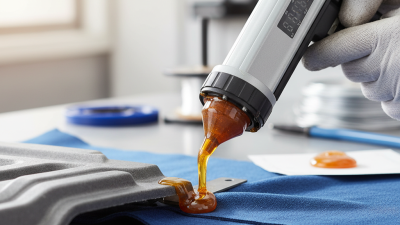
Proper application methods are just as vital. A consistent, even layer of adhesive leads to stronger bonds. Using a nozzle or a roller can help achieve this. Many users make the mistake of applying too much adhesive. This can cause the adhesive to ooze out and create unsightly marks. It’s also worth noting that excessive adhesive can change the cure time. Practicing on scrap materials can help reduce waste and improve application skills.
Temperature and humidity impact adhesion performance. Optimal conditions are often overlooked. Applying adhesive in extreme conditions can lead to failures. In a survey by the Institute of Materials, 30% of failures were attributed to incorrect application environments. Monitoring environmental factors can enhance adhesive performance and longevity.
Safety Precautions When Working with Modified Acrylate Adhesives
When working with modified acrylate adhesives, safety must come first. Always wear protective gear, such as gloves and goggles, to shield against potential skin and eye contact. Many people underestimate the importance of ventilation. Fumes can be harmful, so ensure you are in a well-ventilated area or use fans to circulate air. It’s easy to overlook this, but proper ventilation can prevent headaches and respiratory issues.
Another key aspect is storage. Keep adhesive containers tightly closed and in a cool, dry place. Failure to do this can lead to premature curing or loss of effectiveness. If spills occur, clean them immediately with appropriate solvents, as they can create slippery surfaces. Don’t forget to label your adhesives. Without proper labeling, it’s easy to confuse different types. Mistakes can lead to unexpected results, something no one wants in their projects. Always check expiry dates too; using old products might compromise your work.