10 Essential Tips for Using PUR Hot Melt Adhesive Effectively?
In the fast-evolving adhesive industry, PUR Hot Melt Adhesive has gained remarkable attention. According to a recent market report by Smithers Pira, the global hot melt adhesives market is expected to reach $9.9 billion by 2024. PUR adhesives play a significant role in this growth due to their versatility and superior bonding strength.
PUR Hot Melt Adhesive offers unique advantages, such as rapid setting times and excellent moisture resistance. These features make it ideal for various applications, from woodworking to packaging. However, many users may overlook essential techniques for maximizing its effectiveness. A survey conducted by Adhesives & Sealants Industry found that 62% of users do not optimize their adhesive application methods, leading to wasted materials and inconsistent results.
Implementing best practices can significantly enhance performance. Users should be aware of factors like temperature control and substrate preparation, which directly impact bonding quality. While PUR Hot Melt Adhesive is user-friendly, achieving optimal results requires a deeper understanding of its properties and application methods. This article will explore ten essential tips to help users make the most of their PUR adhesive, improving efficiency and reducing errors.
Understanding PUR Hot Melt Adhesive: Properties and Applications
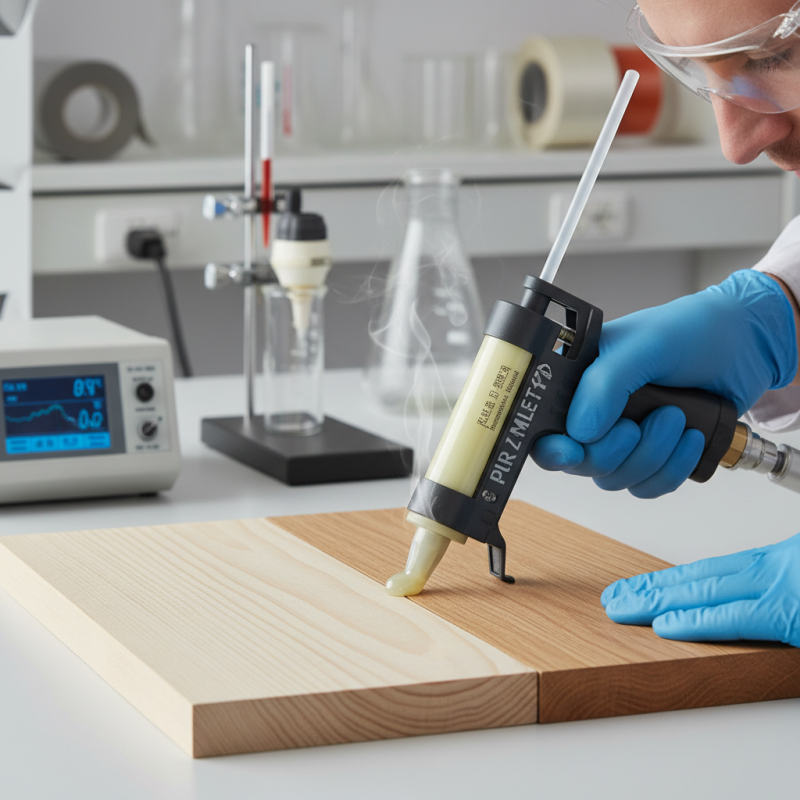
PUR hot melt adhesive is known for its strong bonding capabilities. It is particularly useful in industries that require durable and flexible joints, such as furniture manufacturing and packaging. This adhesive is moisture-sensitive, making it ideal for various applications. Understanding its properties is essential for effective use.
To work with PUR adhesive effectively, choose the right temperature setting. The adhesive reaches its optimal performance when melted at the correct range. Overheating can lead to degradation, impacting the bond strength. Make sure your application surfaces are clean and dry. Contaminants can weaken the adhesion, requiring extra care.
Another tip is to apply enough adhesive, but not too much. Too little leads to weak bonds, while excessive adhesive can cause overflow, making a mess. After application, allow sufficient time for curing. This time can vary based on temperature and humidity. In humid conditions, the bond may develop differently. Always test a small area before full application to confirm compatibility with materials.
10 Essential Tips for Using PUR Hot Melt Adhesive Effectively
| Tip Number |
Tip Description |
Recommended Application |
Temperature Range |
Cure Time |
| 1 |
Always preheat surfaces before application. |
Wood, Metal |
50-80°C |
30 seconds |
| 2 |
Control the adhesive temperature for optimal flow. |
Packaging, Assembly |
80-190°C |
1-5 minutes |
| 3 |
Use the right applicator for even coverage. |
Furniture, Automotive |
Over 100°C |
2-3 minutes |
| 4 |
Store adhesives in a cool, dry place. |
All industrial applications |
N/A |
N/A |
| 5 |
Minimize air exposure to avoid skin formation. |
Construction, DIY Projects |
Varies |
N/A |
| 6 |
Clean the nozzle regularly to ensure smooth flow. |
Manufacturing, Electronics |
N/A |
N/A |
| 7 |
Test the adhesive on a small area first. |
All materials |
N/A |
N/A |
| 8 |
Wear protective gear while using adhesives. |
Industrial settings |
N/A |
N/A |
| 9 |
Follow manufacturer guidelines for usage. |
All applications |
N/A |
N/A |
| 10 |
Ensure proper ventilation when applying adhesives. |
Indoor projects |
N/A |
N/A |
Preparing Surfaces for Optimal Adhesive Bonding
Preparing surfaces for optimal adhesive bonding is crucial when using PUR hot melt adhesive. A clean surface is paramount. Any dust, oil, or grease can compromise the bond. Wipe surfaces with a suitable cleaner before applying the adhesive. This simple step can significantly enhance bond strength, ensuring a more durable attachment.
Surface texture also plays a vital role. Rough surfaces often provide better adhesion than smooth ones. Consider using sandpaper or a suitable abrasive material to prepare the surface. However, too much abrasion can create inconsistencies. Striking a balance is essential for achieving the best results.
Environmental conditions matter as well. Temperature and humidity can affect how the adhesive performs. Applying adhesive in an ideal environment can lead to stronger bonds. You might find that moisture can alter the curing process. Testing in different conditions can help refine your technique. These details matter. Every step you take in preparation can lead to varying results. Pay attention to them.
Steps for Properly Heating and Applying PUR Hot Melt Adhesive
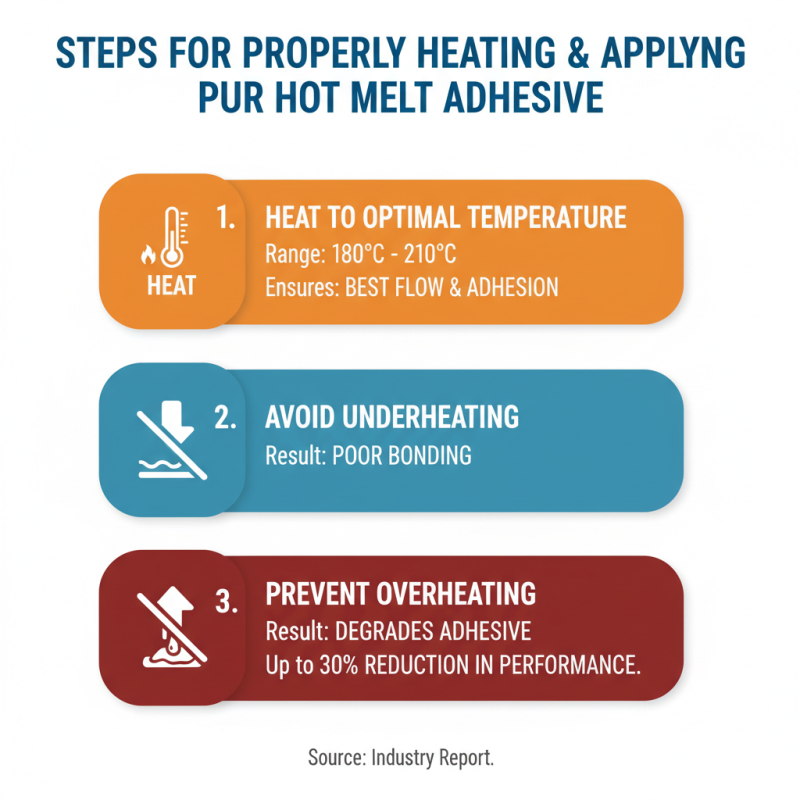
Heating and applying PUR hot melt adhesive requires attention to detail. The ideal melting temperature for PUR adhesives is typically between 180°C and 210°C. This range ensures optimal flow and adhesion. Overheating can degrade the adhesive, while underheating results in poor bonding. An industry report indicates that improper heating can reduce adhesive performance by up to 30%.
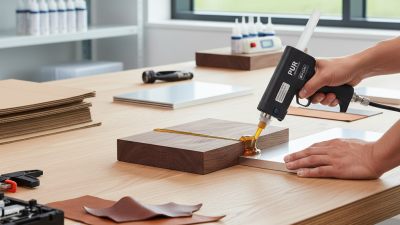
Before application, ensure the surfaces are clean and free from contaminants. Dust, grease, and moisture can weaken bonds. Use a heat gun or adhesive applicator designed for PUR to achieve uniform heating. Apply the adhesive quickly after heating, as it begins to cool immediately. The open time, defined as the time available for application, is critical. If not adhered to within this window, the adhesive becomes too viscous to bond effectively.
Practicing with small samples helps. Mistakes can lead to uneven adhesive distribution, affecting the bond strength. A survey showed that approximately 25% of users encounter issues due to application errors. Reflections on these challenges can lead to improvements in technique. Observing results and adjusting methods is essential for mastering PUR hot melt adhesive application.
Best Practices for Curing and Handling PUR Adhesive
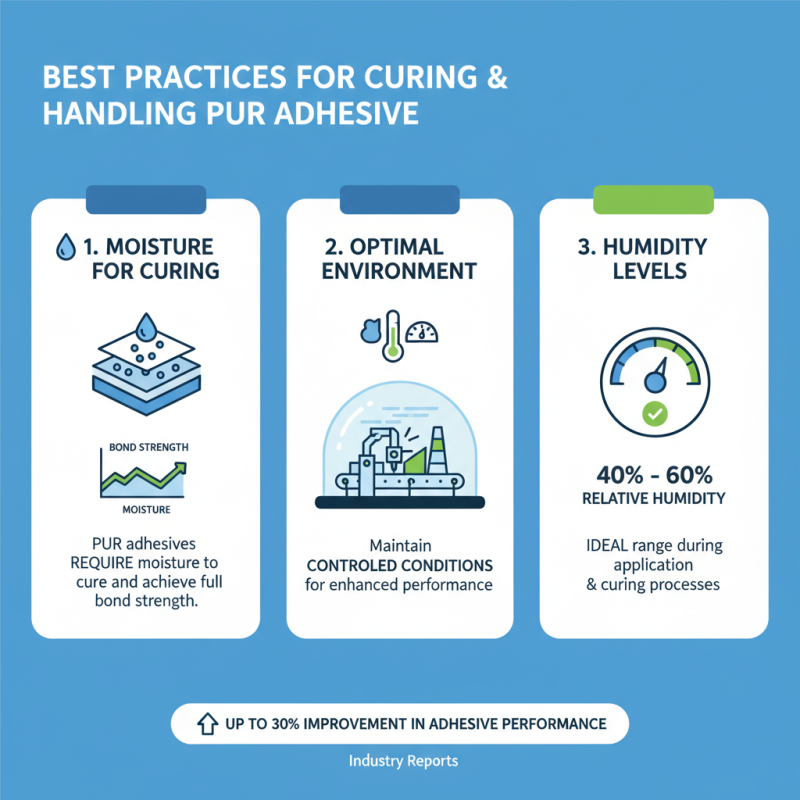
When working with PUR hot melt adhesive, proper curing and handling practices are crucial. PUR adhesives require moisture for curing, which can impact the final bond strength. According to industry reports, a well-controlled environment can enhance adhesive performance by up to 30%. This highlights the importance of maintaining optimal humidity levels. Ideally, humidity should range between 40% and 60% during application and curing processes.
Applying PUR adhesive in a clean, dust-free area further improves results. Contaminants can weaken the bond. Research indicates that even minor surface contaminants can reduce adhesive strength significantly. Operators should consider testing the adhesive bond on similar substrates before full-scale application. This step can uncover potential issues related to surface preparation.
Managing temperature during application is another critical aspect. PUR adhesives perform best when applied between 120°F and 160°F. However, overheating can lead to degradation. Continuous monitoring of applicator tools can prevent this risk. Using a thermometer can help ensure that temperatures stay within the ideal range. Regular maintenance of heating tools is equally important. It prevents fluctuations that could affect application quality.
Troubleshooting Common Issues with PUR Hot Melt Adhesive
When working with PUR hot melt adhesive, troubleshooting issues can significantly enhance effectiveness. One common problem is improper bonding. This often occurs when surfaces are not clean or adequately heated. Always ensure the materials are free from dust and grease. Sometimes, the adhesive itself may not reach the necessary temperature for optimal performance.
Temperature control is crucial. Make sure your melter is calibrated correctly. If you notice irregular bonding patterns, inspect the nozzle. Clogs can lead to inconsistent flow. Regular maintenance is key to preventing this. Test the adhesive on scrap material before full application. This helps identify potential issues early, saving time and resources later.
Another frequent issue is adhesive strength. Ensure you are using the right amount. Too little can lead to weak joints. Conversely, excess adhesive may create a mess and delay curing times.
Experiment with application techniques to find the right balance. Remember, practice makes perfect, and learning from mistakes is essential. It’s common to face challenges while improving your skills with PUR hot melt adhesive. Embrace the learning process.