2026 How to Choose Beer Bottle Labeling Adhesives for Your Brewery?
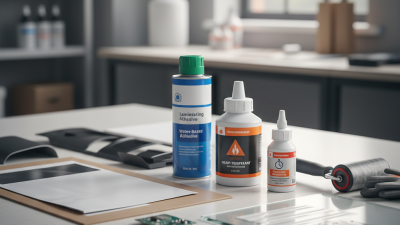
Choosing the right Beer Bottle Labeling Adhesives is crucial for any brewery. According to Dr. Emily Brewster, an expert in adhesive technologies, "The right adhesive can make a significant difference in product presentation and shelf life." Labeling is not just about aesthetics; it is about durability too.
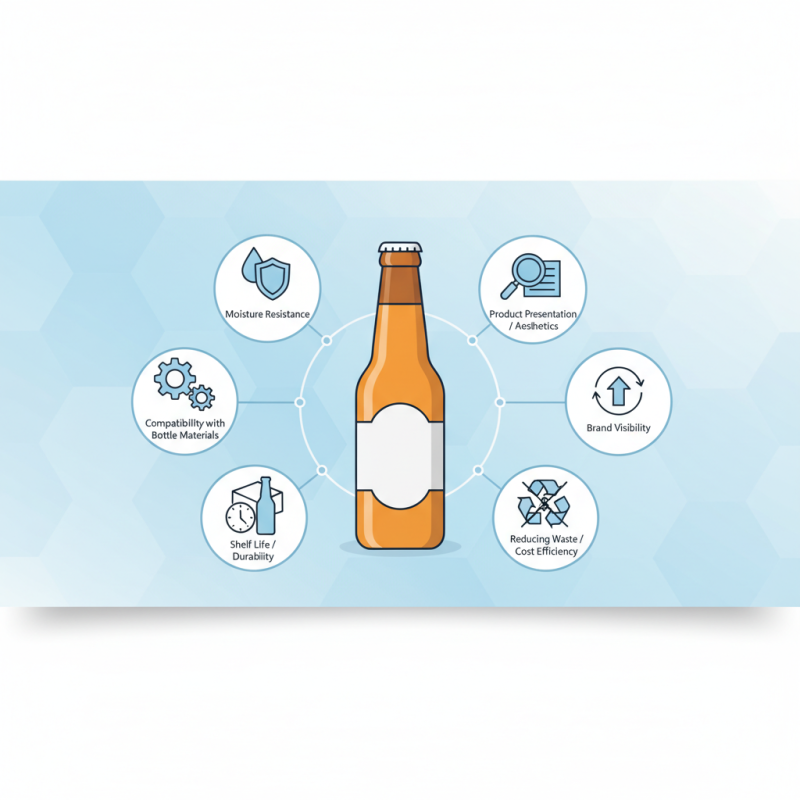
Many breweries overlook the importance of adhesives. They may choose the most available option rather than the best one. This can lead to labels peeling off or fading. A quality adhesive ensures that labels stay intact, enhancing brand visibility. Simple mistakes can result in wasted resources and lost sales.
To avoid pitfalls, breweries must consider various factors, such as moisture resistance and compatibility with bottle materials. Different beers may require different solutions. It is essential to assess all available options to find an adhesive that performs optimally. The right choice can elevate a brand and create lasting impressions.
Understanding the Different Types of Adhesives for Beer Bottle Labels
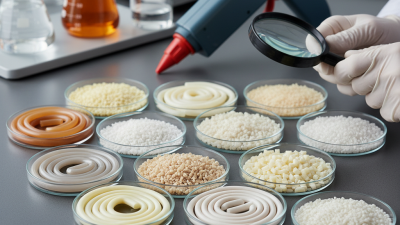
When choosing adhesives for beer bottle labels, it's crucial to understand the types available. Various adhesives offer unique benefits depending on your brewing environment and the conditions your bottles face. Pressure-sensitive adhesives (PSA) are popular due to their ease of application. They stick immediately upon contact, which speeds up the labeling process. However, PSAs might lose adhesion if exposed to extreme temperatures.
Another option is water-based adhesives. These can offer a more eco-friendly choice. They bond well but require careful handling during application. If your bottles are refrigerated or in humid locations, these adhesives may not perform effectively.
**Tips:** Test different adhesives to find the best fit for your brewery. The right adhesive should withstand your specific storage conditions. Also, consider the finish of your labels. Glossy finishes might behave differently with certain adhesives compared to matte ones. You may face challenges, such as labels peeling off in cool environments or during transport. Adjusting your adhesive selection based on feedback can enhance efficiency and presentation. Always keep an eye on how your labels perform over time. This constant evaluation can help refine your choices.
Evaluating Adhesive Performance Under Various Environmental Conditions
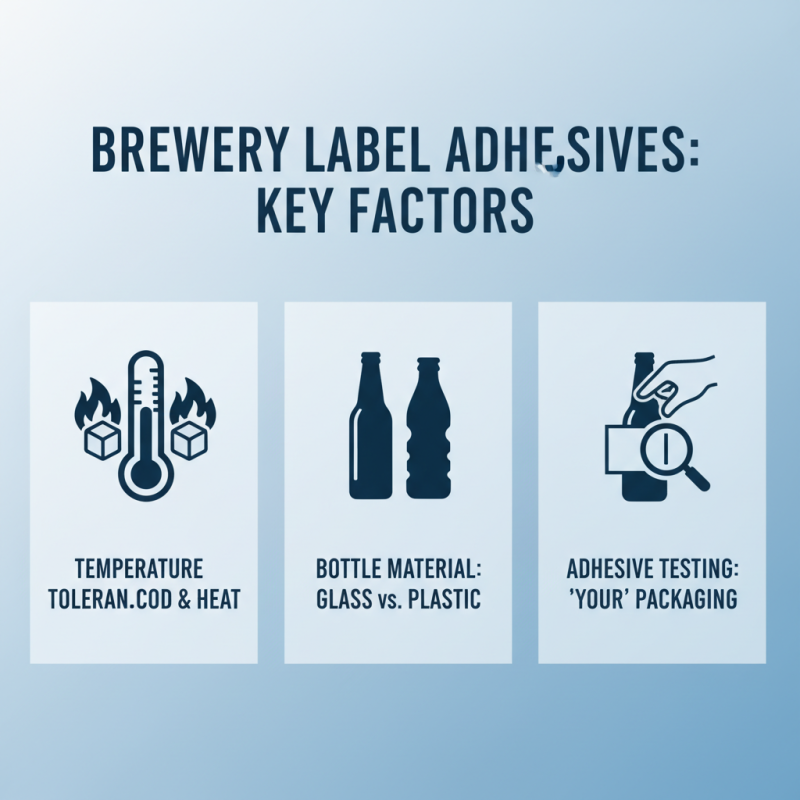
Choosing the right adhesive for beer bottle labeling is crucial. The performance of adhesives can vary greatly under different environmental conditions. According to industry reports, temperature and humidity can significantly affect adhesive strength. For instance, adhesives may perform poorly in high humidity, leading to label curling or detachment.
When evaluating adhesives, consider their resistance to temperature fluctuations. Some adhesives lose their grip in cold environments, while others may not adhere well in heat. Testing your adhesives under the specific conditions of your brewery can help mitigate issues.
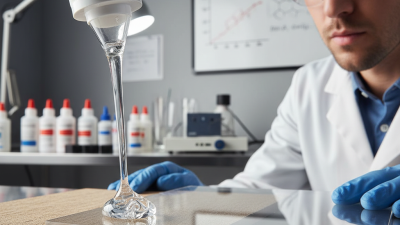
Tip: Always perform real-world tests. Stick labels on bottles and place them in various environmental settings. Observe their performance over time.
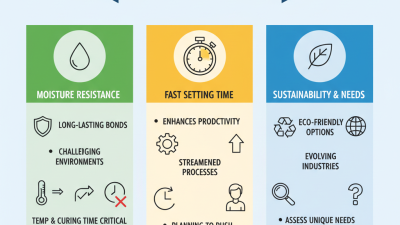
Water resistance is another key factor. Labels should withstand exposure to moisture without peeling. Reports suggest that adhesives with a higher solid content tend to resist water better.
Tip: Use moisture-resistant labels if your bottles are likely to encounter condensation. It can save you from potential labeling disasters later.
Remember, not all adhesives will perform equally. It’s important to reflect on your specific needs and test various options thoroughly.
Compliance and Safety Standards for Beer Labeling Adhesives
When selecting adhesives for beer bottle labeling, compliance and safety standards play a vital role. The adhesive must meet food safety regulations. According to market research, 45% of consumers are more likely to favor brands that prioritize safety in their packaging. It’s essential to choose adhesives that have been tested and certified. Many breweries overlook these standards. This can lead to costly recalls or even health risks.
Additionally, the European Union’s regulations on food contact materials emphasize the importance of safe adhesives. They limit hazardous substances that can migrate into beverages. Reports indicate that 30% of labeling adhesives fail to meet these safety standards. This creates significant risks for breweries. Proper compliance not only ensures safety but also enhances brand reputation.
Breweries should conduct regular audits of their adhesive materials. This can reveal potential safety violations. Understanding these guidelines can strengthen the brewery's position in the market. In a competitive industry, a commitment to compliance may pay off. Consumers are increasingly concerned about what touches their products. A thoughtful approach to adhesive selection aids in maintaining quality assurance.
Cost-Effectiveness: Balancing Quality and Budget in Adhesive Selection
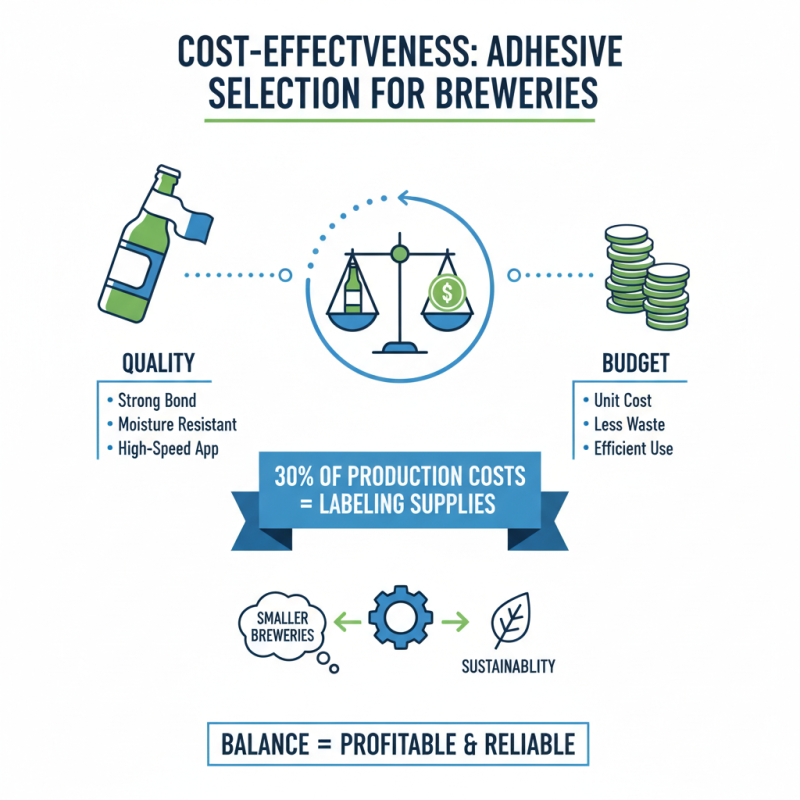
When choosing beer bottle labeling adhesives, cost-effectiveness is vital for breweries. A recent industry report indicated that nearly 30% of production costs arise from labeling supplies. Thus, balancing quality and budget becomes crucial for smaller breweries aiming for sustainability.
Selecting a budget-friendly adhesive doesn’t mean compromising on quality. Adhesives that work well in cold and wet environments can be pricier but ensure that labels stay intact. Data shows that a high-quality adhesive can reduce label peeling by up to 50%, minimizing losses. However, smaller breweries often feel the strain of costs. It’s a fine line to tread.
Experimenting with different adhesives can lead to unexpected outcomes. Some economical options may not bind well, resulting in messy labels. Investing time in testing is often overlooked. Many breweries may wish to quickly settle on an adhesive, but this could lead to regret later on. Establishing a balance is not just about price; it’s also about performance and reliability.