Top Polyurethane Adhesive Applications for Global Buyers?
Polyurethane Adhesive is a versatile bonding solution widely used across various industries. This material is known for its excellent adhesion properties and durability. Many global buyers are increasingly turning to polyurethane adhesive for its effectiveness in different applications.
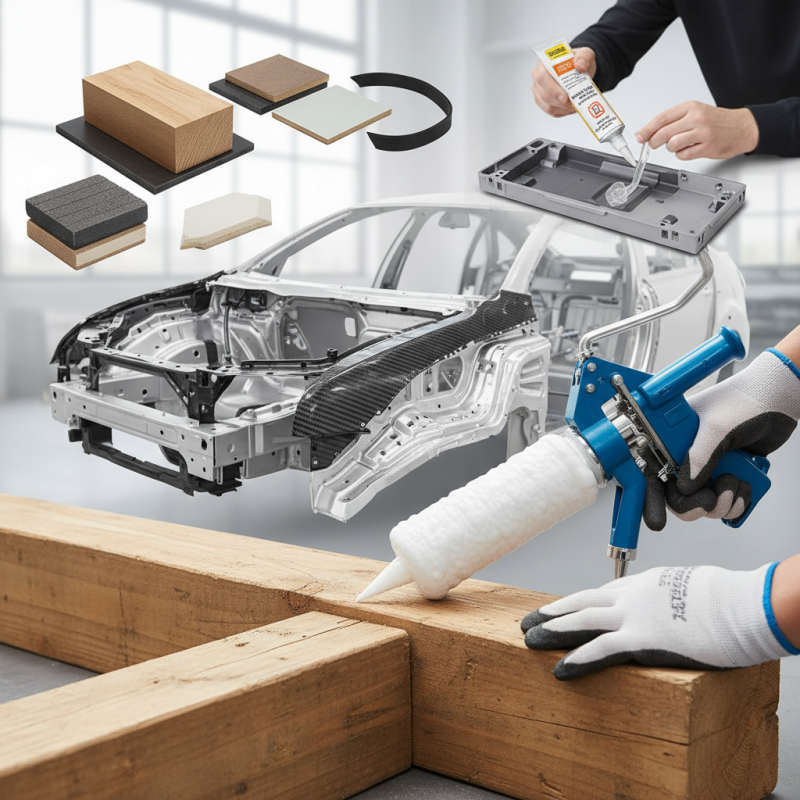
From construction to automotive manufacturing, this adhesive plays a crucial role. Its ability to bond diverse materials, such as wood, metal, and plastic, makes it essential for both production and repairs. However, choosing the right type of polyurethane adhesive can be challenging. The market is filled with options, and each type has unique strengths and weaknesses.
Understanding these applications helps buyers make informed choices. Attention to detail is crucial when selecting the suitable adhesive for specific needs. Polyurethane adhesive is not just a simple solution; it requires careful consideration of the environment and materials involved. As such, exploring top applications is vital for maximizing its benefits.
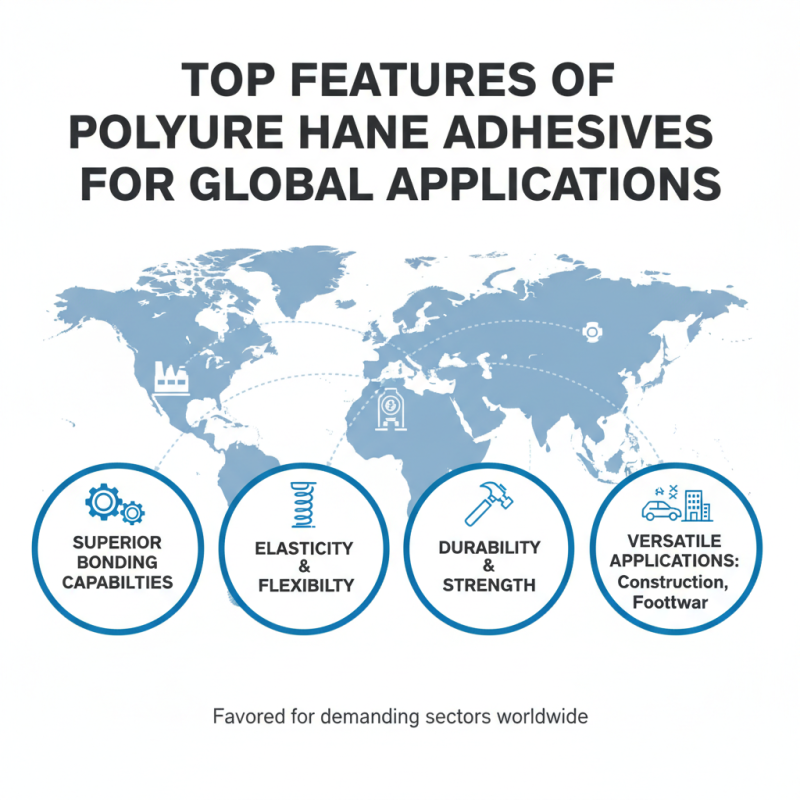
Top Features of Polyurethane Adhesives for Global Applications
Polyurethane adhesives stand out due to their versatility and durability. Recent industry reports indicate that these adhesives are increasingly favored for their superior bonding capabilities. Their elasticity and strong adhesive properties allow them to be used across various sectors, including automotive, construction, and footwear.
One noteworthy feature is their resistance to moisture and chemicals. This makes them suitable for outdoor applications where weather resistance is essential. According to a 2023 market analysis, polyurethane adhesive consumption is projected to grow at a CAGR of 5.2% over the next five years. The ability to bond dissimilar materials contributes significantly to this trend. Manufacturers appreciate how these adhesives effectively combine plastics, metals, and wood.
However, there are challenges. The curing time can vary based on environmental conditions. In humid environments, for instance, curing may take longer than anticipated. Users often struggle with application precision, which can affect the end product's quality. Ensuring the right surface preparation is key but can be overlooked, leading to weaker bonds. This area requires more attention and improvement from manufacturers and users alike.
Key Industries Benefiting from Polyurethane Adhesive Solutions
Polyurethane adhesives are increasingly vital across several industries, offering superior performance and flexibility. The automotive sector, for instance, benefits significantly from these adhesives due to their strong bonding capabilities. According to a recent report by Grand View Research, the automotive adhesives market is projected to reach $4.4 billion by 2025, with polyurethane adhesives leading this growth. They excel in bonding various materials, such as metals and plastics, making them essential for vehicle manufacturing and assembly.
In the construction industry, polyurethane adhesives are valuable for their quick setting times and resistance to environmental factors. The market size for construction adhesives is expected to surpass $10 billion globally by 2030. Applications include bonding insulation panels and flooring, where durability is a key concern. However, while these adhesives provide significant benefits, the industry faces challenges such as the need for recycling solutions and potential health risks during application. Addressing these concerns is crucial for sustainable growth and overall reliability in polyurethane adhesive applications.
Comparative Analysis of Polyurethane Adhesive Types and Their Uses
Polyurethane adhesives are versatile tools in many industries. Their unique properties, such as strong bonding and flexibility, make them popular. Different types of polyurethane adhesives serve various applications. For instance, one-component adhesives are ideal for easy use, while two-component types offer superior strength and durability. Each type has its own set of characteristics, making selection crucial.
One major application is in construction. These adhesives bond materials like wood, metal, and concrete effectively. Their resistance to moisture enhances longevity, especially in harsh environments. However, challenges arise in temperature-sensitive applications. Not all adhesives perform well under extreme conditions. Users must choose wisely based on project requirements.
Automotive and aerospace industries also benefit from polyurethane adhesives. Their lightweight nature contributes to overall efficiency. Moreover, the ability to resist vibrations is essential for these sectors. Nonetheless, in high-stress applications, ensuring proper curing is vital. Failure to do so can lead to performance issues later. Recognizing the strengths and weaknesses of different polyurethane types is essential for optimal results.
Top Polyurethane Adhesive Applications
| Adhesive Type |
Main Applications |
Key Properties |
Curing Time |
Temperature Resistance |
| Flexible Polyurethane Adhesive |
Footwear, Upholstery |
High elasticity, Good adhesion |
24 hours |
-40°C to 90°C |
| Structural Polyurethane Adhesive |
Construction, Automotive |
High strength, Durable |
1 hour |
-30°C to 120°C |
| Hot Melt Polyurethane Adhesive |
Packaging, Wood bonding |
Fast-setting, Good thermal stability |
2 to 5 minutes |
-20°C to 100°C |
| Water-based Polyurethane Adhesive |
Furniture, Leather |
Eco-friendly, Low VOC |
6 to 12 hours |
-30°C to 80°C |
| Elastomeric Polyurethane Adhesive |
Automotive, Aerospace |
High elasticity, Vibration dampening |
3 to 24 hours |
-40°C to 100°C |
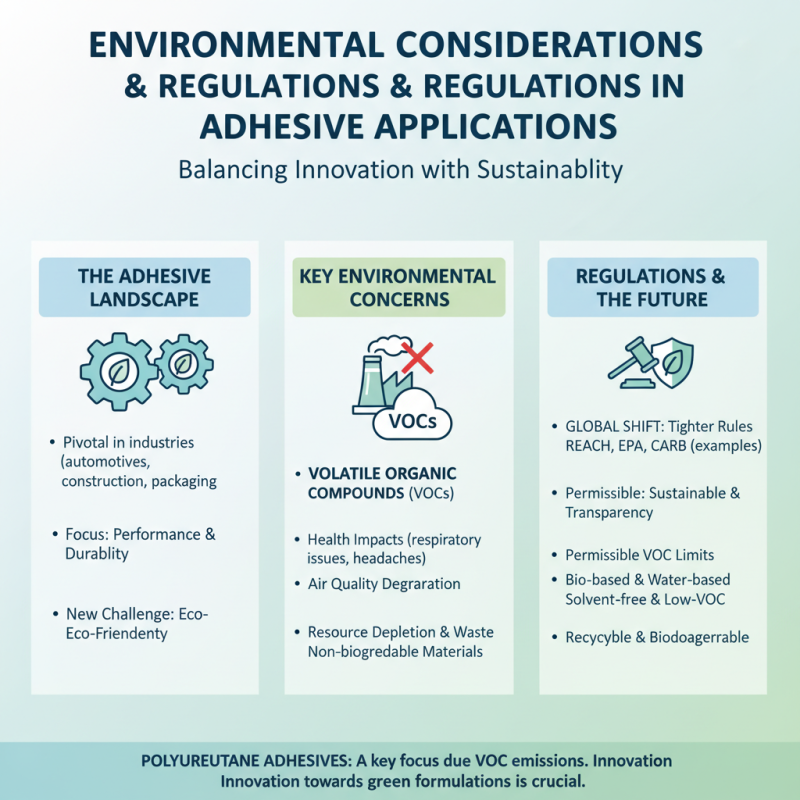
Environmental Considerations and Regulations in Adhesive Applications
Adhesives play a pivotal role in various industries, but environmental considerations are becoming increasingly important. The production and usage of polyurethane adhesives often raise concerns about volatile organic compounds (VOCs). These substances can have harmful effects on air quality and human health. As a result, regulations are gradually tightening. Companies must ensure compliance while also addressing sustainability issues.
To mitigate these challenges, manufacturers are exploring water-based adhesives. These options typically emit fewer VOCs and have a lower environmental impact. However, the shift to eco-friendly products is not without its challenges. Achieving the required bonding strength can sometimes be difficult with water-based alternatives. This initial transition may cause disruptions and require additional research and development.
Moreover, consumers are becoming more educated about the environmental footprint of products. They prefer sustainable options, which influences their purchasing decisions. Brands must strike a balance between meeting these demands and maintaining product performance. Companies that ignore these factors might face reputational risks in a rapidly evolving market. Reflecting on these dynamics is crucial for anyone involved in adhesive applications.
Future Trends and Innovations in Polyurethane Adhesive Technologies
The polyurethane adhesive industry is witnessing significant innovations. Recent market reports indicate a compound annual growth rate (CAGR) of around 6% from 2022 to 2028. This growth reflects advancements in adhesive formulations and applications across various sectors, including automotive, construction, and consumer goods.
One cutting-edge trend is the development of polyurethane adhesives with improved environmental profiles. Many companies are focusing on bio-based ingredients. These new formulations often enhance adhesive performance while reducing the carbon footprint. For example, studies show that bio-based adhesives can offer comparable bond strength and durability as traditional options. However, the challenge remains in consistent quality and supply chain logistics.
Another pivotal innovation involves smart adhesives. They can react to environmental changes, offering greater flexibility in applications. By incorporating nanotechnology, these adhesives can achieve targeted performance characteristics. This feature can optimize assembly processes. Nonetheless, research into their long-term reliability and cost-effectiveness is still ongoing. Industries need to balance innovation with practical implementation for sustainable growth.