Top 5 Beer Bottle Labeling Adhesives for Your Business Needs?
In the competitive world of beverage production, choosing the right Beer Bottle Labeling Adhesives is crucial. The market for bottled beer is expected to grow at a CAGR of 3.5% over the next five years. This growth underscores the need for effective labeling solutions that ensure brand visibility and product integrity. According to a recent report, up to 30% of consumers make purchasing decisions based on packaging. Thus, the adhesive used for labels can significantly impact consumer perception and brand loyalty.
Different types of Beer Bottle Labeling Adhesives are available, each tailored for specific needs. Water-based, hot melt, and pressure-sensitive adhesives offer unique benefits. However, selecting the best option isn’t always straightforward. Some adhesives may perform well under ideal conditions but fail in real-world scenarios. The struggle to find a balance between durability and cost-effectiveness is a common challenge among manufacturers.
Investing in reliable Beer Bottle Labeling Adhesives can lead to enhanced product presentation. However, businesses must also consider environmental impacts and compliance factors. An adhesive that works efficiently but lacks eco-friendliness could harm a brand's image. As the industry evolves, it's essential for companies to stay informed and adapt their labeling solutions accordingly.
Overview of Beer Bottle Labeling Adhesives
When selecting beer bottle labeling adhesives, understanding their unique properties is crucial. An ideal adhesive should adhere well to glass surfaces. It must also withstand various environmental conditions, including cold temperatures and moisture. Some adhesives can come off too easily after refrigeration, which is a concern for many breweries.
There are various types of adhesives used in the industry. Hot melt adhesives are popular for their quick bonding capabilities. They provide strong adhesion yet can be challenging to work with due to heat sensitivity. Water-based adhesives offer an alternative, as they are environmentally friendly and easy to clean. However, they may not perform as strongly in adverse conditions, leading to potential label peeling.
Experimenting with different adhesives helps businesses optimize their labeling process. Each option presents its pros and cons. It can be discouraging when labels don’t stick as intended, but this provides a learning opportunity. Finding the right adhesive may take time and testing. Ultimately, investing in quality materials can enhance brand presentation and consumer experience.
Key Properties of Effective Labeling Adhesives
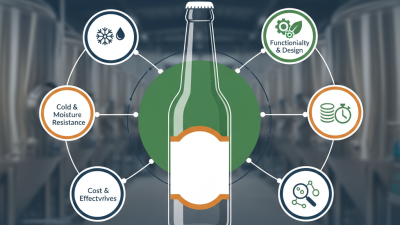
When selecting labeling adhesives for beer bottles, several key properties come into play. Adhesives must ensure that labels adhere firmly to glass surfaces. Research shows that around 30% of consumers judge a beer solely by its label. Therefore, a durable bond that withstands refrigeration and moisture is essential. Effective adhesives maintain their strength even in wet conditions, preventing label peeling and damage during transportation.
Another important property is the adhesive's ability to work with various label materials. Many breweries use unique papers or synthetic films, which can affect adhesion performance. A report from the Adhesive and Sealant Council highlights that improper adhesive selection can lead to up to 20% increase in production costs. This emphasizes the need for careful testing. The adhesive should also offer a good balance between tack and setting time. This ensures that labels are applied quickly without risking misalignment or bubbles.
Environmental impact is increasingly important in adhesive selection. Brewers are considering eco-friendly adhesives that minimize waste. Reports indicate that 40% of businesses are transitioning toward sustainable labeling solutions. However, not all eco-friendly options provide the same level of performance. This can lead to challenges in finding a reliable adhesive that meets both sustainability goals and consumer expectations. Testing and adjustments are often needed.
Top 5 Beer Bottle Labeling Adhesives - Key Properties
Top 5 Adhesive Options for Beer Bottle Labels
When it comes to labeling beer bottles, the choice of adhesive can significantly impact your operations. Understanding the various types of adhesives available is essential for ensuring effective branding and customer satisfaction. Here are some common options that could meet your business needs.
Water-based adhesives are often preferred. They are easy to work with and offer a quick set time, making them ideal for high-volume production. However, their sensitivity to moisture can be a drawback. On the other hand, solvent-based adhesives provide a stronger bond and better moisture resistance. Be cautious, though, as they can pose health risks if not handled properly.
Pressure-sensitive adhesives are another viable option. They are user-friendly and don’t require heat activation. This feature can save time and reduce labor costs. However, they may not adhere well under extreme temperatures. Finally, hot melt adhesives offer excellent initial tack and are great for fast application. Yet, their performance can diminish over time if exposed to certain environmental conditions. Each adhesive type has its strengths and weaknesses, requiring careful consideration based on your production environment and labeling needs.
Application Techniques for Beer Bottle Label Adhesives
In the beer industry, choosing the right labeling adhesive can improve production efficiency. Application techniques play a crucial role in ensuring labels adhere properly. An effective adhesive can create a solid bond, resist moisture, and enhance shelf appeal. According to a recent industry report, nearly 40% of breweries experience issues with label adhesion, leading to wasted materials and increased labor costs.
When applying labels, ensure the bottles are clean and dry. Any residue can affect adhesion. The ideal temperature for application is typically between 15°C and 25°C. This range optimizes the adhesive's effectiveness. A label that peels or bubbles can affect branding. It’s essential to test the adhesive on different bottle materials to avoid common pitfalls.
Consider using varying application methods. For small batches, manual application may suffice. However, automated systems work better for larger operations. Mind the curing time too. Adequate time allows the adhesive to develop its full strength. Many professionals overlook this step, risking label failure. Ensuring these techniques are applied can significantly boost overall productivity and quality.
Considerations When Choosing Adhesives for Bottling Needs
When selecting adhesives for beer bottle labeling, several factors must be considered. The adhesive type plays a crucial role in ensuring labels adhere properly during production and throughout the supply chain. According to industry reports, nearly 30% of labels fail due to insufficient adhesive qualities. Adhesives should withstand various environmental conditions, such as humidity and temperature fluctuations. This durability is key, especially during transportation and storage.
Another important consideration is the adhesive's compatibility with the bottle material and the label itself. Different substrates may require specific adhesive characteristics. Some adhesives might work well on glass but perform poorly on plastic. Research indicates that approximately 45% of labeling issues in the beverage industry stem from improper adhesive selection. Testing adhesive performance in practical applications is vital to avoid potential failures in the market.
Environmental impact has also gained attention. Many businesses are shifting towards eco-friendly adhesives, driven by consumer demand for sustainable practices. Around 40% of companies report having made changes in their materials for this reason. However, companies must balance environmental benefits with cost and performance. Finding the right adhesive means considering not only functionality but also environmental responsibility. This complex decision-making process highlights the need for a thorough understanding of adhesive properties and market demands.
Top 5 Beer Bottle Labeling Adhesives for Your Business Needs
| Adhesive Type |
Application Method |
Drying Time |
Temperature Resistance |
Water Resistance |
| Hot Melt Adhesive |
Roller or Spray |
Quick (30 seconds) |
Up to 180°F |
Moderate |
| Pressure-Sensitive Adhesive |
Label Applicator |
Immediate |
Up to 120°F |
High |
| Water-Based Adhesive |
Brush or Roller |
1-2 hours |
Up to 100°F |
Moderate |
| UV-Curable Adhesive |
UV Light |
1-5 seconds |
Up to 170°F |
High |
| Solvent-Based Adhesive |
Spray or Brush |
10-20 minutes |
Up to 200°F |
Very High |