Top 10 Uses of Polyester Hot Melt Adhesive for Effective Bonding Solutions?
In recent years, the demand for effective bonding solutions has surged significantly. Polyester Hot Melt Adhesive is at the forefront of this trend. According to industry reports, the global market for hot melt adhesives is expected to reach USD 10 billion by 2027, with significant growth driven by packaging and woodworking applications. This adhesive type boasts excellent properties such as high bond strength, quick setting times, and resistance to moisture, making it ideal for various industries.
Applications of Polyester Hot Melt Adhesive are diverse, ranging from automotive to consumer goods. In packaging, it offers durability and safety, essential for maintaining product integrity. However, some users may overlook the importance of proper application techniques. Inadequate surface preparation can lead to bonding failures. This highlights the necessity for continuous education in adhesive application methods. Overall, embracing Polyester Hot Melt Adhesive can provide innovative and effective bonding solutions, yet users must navigate the nuances to fully harness its potential.
Overview of Polyester Hot Melt Adhesives and Their Properties
Polyester hot melt adhesives are versatile bonding solutions known for their strong adhesion and durability. These adhesives typically consist of thermoplastic polymers that melt when heated and solidify upon cooling. Their excellent thermal resistance makes them suitable for various applications. They bond well to many substrates, including plastics, wood, and metals. This versatility makes them a popular choice in industries like automotive and packaging.
The properties of polyester hot melt adhesives are notable. They offer high tensile strength, which is essential for enduring stress. Additionally, they provide good flexibility, allowing them to adjust with materials that expand or contract. This adaptability helps in avoiding bond failure under changing conditions. However, while they perform well in many scenarios, consideration must be given to their application methods. Inadequate heating can lead to weak bonds. Also, ensuring cleanliness and proper surface preparation is crucial for optimal performance. It’s essential to note that while polyester hot melts excel in many areas, they might not be the best choice for all bonding situations.
Key Industries Utilizing Polyester Hot Melt Adhesive for Bonding
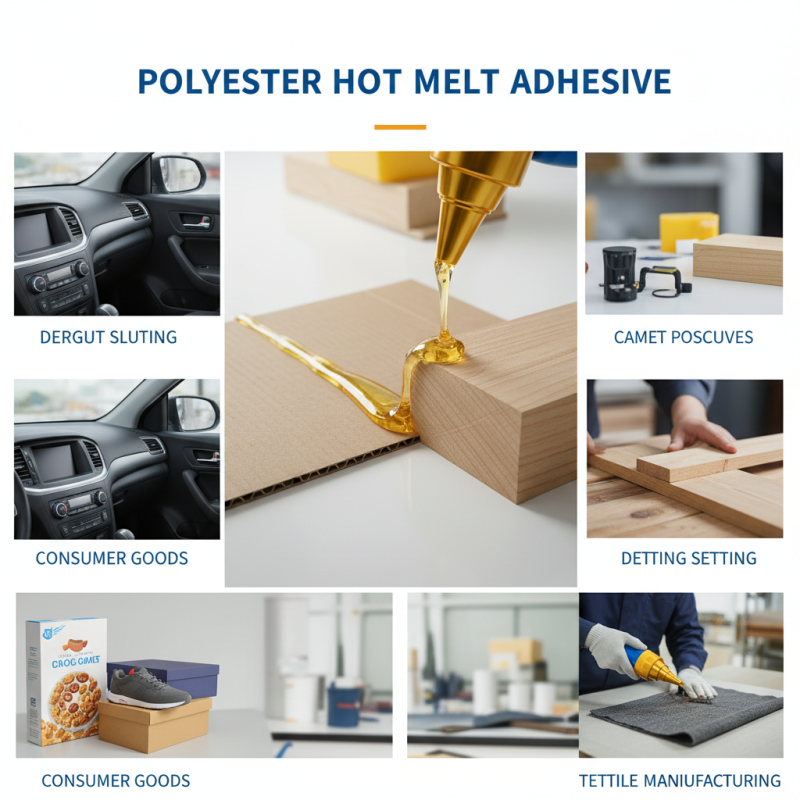
Polyester hot melt adhesives are gaining traction across various industries. These adhesives offer strong bonding solutions. They are especially popular in packaging, textiles, and automotive applications. In packaging, they ensure that boxes and containers remain sealed tightly. This is crucial for keeping products safe during transport. In textiles, the adhesive is used to bond fabrics with precision, enhancing durability.
Automotive manufacturing also benefits from polyester adhesives. They are utilized for assembling parts and securing components. This ensures structural integrity and longevity, which are vital for vehicle safety. However, there are challenges. Proper surface preparation is essential. Ignoring this can lead to weak bonds. In electronics, polyester adhesives are used for encapsulating components. They protect against moisture and dust. Yet, heat resistance can be an issue. Manufacturers must balance bonding strength with thermal stability.
In furniture production, these adhesives provide quick setting times which streamline the assembly process. They allow for immediate handling of products. Despite their advantages, the environmental impact of polyester should not be overlooked. There is a growing need for sustainable alternatives. This reflects a broader industry trend toward eco-friendliness.
Top 10 Uses of Polyester Hot Melt Adhesive for Effective Bonding Solutions
| No. |
Industry |
Application |
Key Benefits |
| 1 |
Packaging |
Sealing cartons and boxes |
Fast bonding, moisture resistance |
| 2 |
Textiles |
Fabric bonding |
Durable adhesion, flexible finish |
| 3 |
Automotive |
Interior trims assembly |
Heat resistance, strong bond |
| 4 |
Electronics |
Mounting components |
Electrical insulation, low odor |
| 5 |
Furniture |
Laminate bonding |
High strength, aesthetic finish |
| 6 |
Construction |
Insulation board attachment |
Weather resistance, quick setting |
| 7 |
Medical |
Device assembly |
Biocompatibility, safety |
| 8 |
Footwear |
Sole attachment |
Flexibility, high durability |
| 9 |
Aerospace |
Component bonding |
Lightweight, high strength |
| 10 |
Electronics Packaging |
Protective packaging assembly |
Shock absorption, eco-friendly |
Common Applications of Polyester Hot Melt Adhesive in Manufacturing
Polyester hot melt adhesives are gaining traction in various manufacturing sectors. These adhesives offer exceptional bonding strength for a range of materials.
In automotive manufacturing, they bond interior parts effectively. Reports highlight that nearly 60% of companies in this sector prefer polyester for its durability and resistance to temperature variations.
Another prominent application is in the packaging industry. Polyester hot melt adhesives are crucial for creating strong seals in food packaging. According to market data, around 30% of food manufacturers use these adhesives due to their moisture resistance. However, challenges remain. Some adhesive formulations may lead to limited shelf life, requiring manufacturers to regularly assess their stocks.
In the textiles sector, polyester adhesives enable efficient fabric bonding. They provide flexibility without compromising on strength. A recent industry analysis revealed that over 45% of textile producers have adopted these adhesives for their eco-friendly properties. Yet, the need for precise application techniques can complicate the process. Manufacturers must ensure proper temperatures are maintained during application to achieve optimal bonding.
Comparative Advantages of Polyester Over Other Adhesive Types
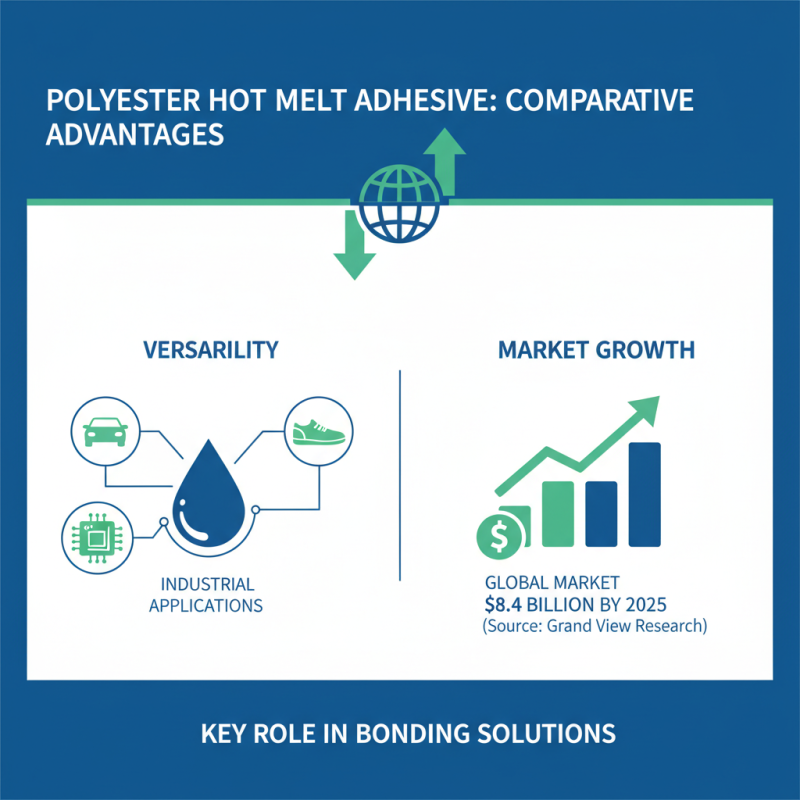
Polyester hot melt adhesive stands out in the bonding solutions market. Its versatility is noteworthy. Many industries utilize this type of adhesive for various applications. According to a report from Grand View Research, the global market for hot melt adhesives is projected to reach $8.4 billion by 2025. Polyester adhesives play a significant role in this growth.
One key advantage of polyester over other adhesive types lies in its thermal stability. With a high melting point, polyester adhesives withstand various temperature conditions. This property makes them suitable for use in automotive and construction sectors. Additionally, polyester hot melts offer excellent moisture resistance, enabling their use in packaging applications, where exposure to humidity can cause failure.
However, the application of polyester adhesives is not without challenges. Companies often face issues with initial tack and setting time. These factors influence production efficiency. Moreover, while polyester adhesives provide strong bonds, they may not perform well in highly flexible applications. Further research can enhance these adhesives to better meet industry demands. Addressing these limitations may lead to broader acceptance and improved performance in diverse applications.
Future Trends and Innovations in Polyester Hot Melt Adhesive Technology
The future of polyester hot melt adhesive technology is promising. These adhesives are evolving rapidly, driven by the need for stronger, more versatile bonding solutions. Innovative formulations are emerging that improve adhesion to various substrates. Manufacturers are focusing on enhancing heat resistance and mechanical properties. This offers users more options for different applications.
Sustainability is a significant trend. The demand for eco-friendly adhesives is on the rise. Many manufacturers seek to incorporate bio-based materials. This challenges the industry to reduce dependence on petroleum-based resources. Users should be aware of these changes, as they can impact performance.
The industry is also seeing advancements in application methods. Robotic technologies are becoming more common for precise application. This increases efficiency, but it also requires new skills. Companies must adapt to these innovations to stay competitive. The journey to improvement is ongoing, prompting reflection on current practices.