2026 Best PUR Hot Melt Adhesive Solutions for Your Projects?
In today's competitive manufacturing landscape, selecting the right adhesive is crucial. PUR Hot Melt Adhesive (Polyurethane Reactive) solutions have gained popularity, particularly in packaging, woodworking, and automotive sectors. A report by MarketsandMarkets predicts that the global hot melt adhesive market will reach $8.15 billion by 2025, illustrating the growing reliance on these versatile adhesives.
PUR Hot Melt Adhesive offers impressive bonding capabilities while serving as a more environmentally friendly option compared to traditional adhesives. Yet, despite their advantages, many users may overlook maintenance and application nuances, leading to suboptimal results. The adhesives require precise temperature management for optimal performance, something that many companies still struggle to master.
Navigating the vast array of PUR Hot Melt Adhesive options can be overwhelming. Users must evaluate factors such as bonding strength, drying time, and compatibility with substrates. Incorporating industry best practices can enhance performance, but the learning curve remains steep for many. Delving into the latest innovations in PUR technology will further empower professionals to make informed choices for their projects.
Overview of PUR Hot Melt Adhesives: Properties and Benefits
PUR hot melt adhesives have gained popularity for various projects due to their unique properties. These adhesives are known for their strong bonding capabilities. They bond quickly and can adhere to many materials, including plastics, metals, and wood. This makes them ideal for both industrial and everyday applications.
One of the key benefits of PUR hot melt adhesives is their temperature resistance. They maintain bond strength even in extreme conditions. Additionally, these adhesives are moisture-resistant, making them suitable for products exposed to water. However, proper surface preparation is critical. Surfaces must be clean and dry for the best results. Any contamination can weaken the bond.
Another aspect worth considering is the curing time. While PUR adhesives set quickly, they require full curing for optimal performance. This can lead to potential delays in manufacturing processes. It's essential to plan accordingly. Testing different types and formulations can help in selecting the most effective solution for specific projects. Balancing these factors can enhance the efficiency of your adhesive applications.
Key Applications of PUR Hot Melt Adhesives in Various Industries
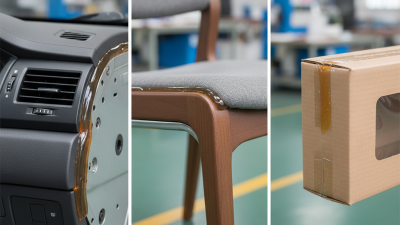
PUR hot melt adhesives have gained significant traction across various industries due to their strong bonding capabilities and versatility. In the packaging sector, these adhesives ensure that products remain secure during transportation. They bond materials like cardboard, plastic, and foil effectively. This is critical for maintaining product quality and reducing waste. However, it’s essential to monitor temperature conditions during application. Extreme heat may compromise the adhesive's integrity.
In the furniture industry, PUR adhesives are vital in producing durable and aesthetically pleasing items. They provide a clean finish, which is crucial for consumer appeal. Additionally, in the automotive industry, these adhesives play a role in assembly. They are used for attaching elements like trim and glass, contributing to vehicle performance. However, achieving the right bond strength requires testing various formulations, as not all applications yield the same results. Balancing performance with safety and environmental considerations remains a challenge for manufacturers.
Ultimately, while PUR hot melt adhesives offer impressive benefits, ongoing innovation is necessary. Some users may find that specific applications do not meet their needs. Feedback from real-world usage helps refine these adhesives for better performance across diverse applications.
Factors to Consider When Choosing the Right PUR Adhesive
Choosing the right PUR hot melt adhesive is crucial for project success. Numerous factors influence this decision. One significant aspect is bond strength. Reports indicate that high-performance PUR adhesives offer tensile strengths exceeding 2,500 psi, making them ideal for demanding applications. An understanding of how bond strength correlates with materials ensures a better selection.
Another critical consideration is application temperature. PUR adhesives can function in various climates, with optimal performance ranging between 35°F and 120°F. However, there are instances where temperature fluctuations lead to adhesive failure. There are times when users overlook these specifics, resulting in bond failures.
Viscosity also plays a vital role. Depending on your application method, the viscosity can impact the ease of use. Lower-viscosity adhesives flow readily, making them suitable for intricate designs. On the other hand, higher-viscosity products work well for thicker substrates. Balancing these factors can lead to more effective choices. It's important to foster a reflective approach toward selecting the right adhesive to avoid costly mistakes. Each project deserves careful assessment of these factors.
2026 Best PUR Hot Melt Adhesive Solutions for Your Projects
This bar chart illustrates the effectiveness of various PUR hot melt adhesives based on their tensile strength (measured in PSI) and heat resistance (measured in degrees Fahrenheit). The data helps you understand which adhesive might be the best fit for your projects.
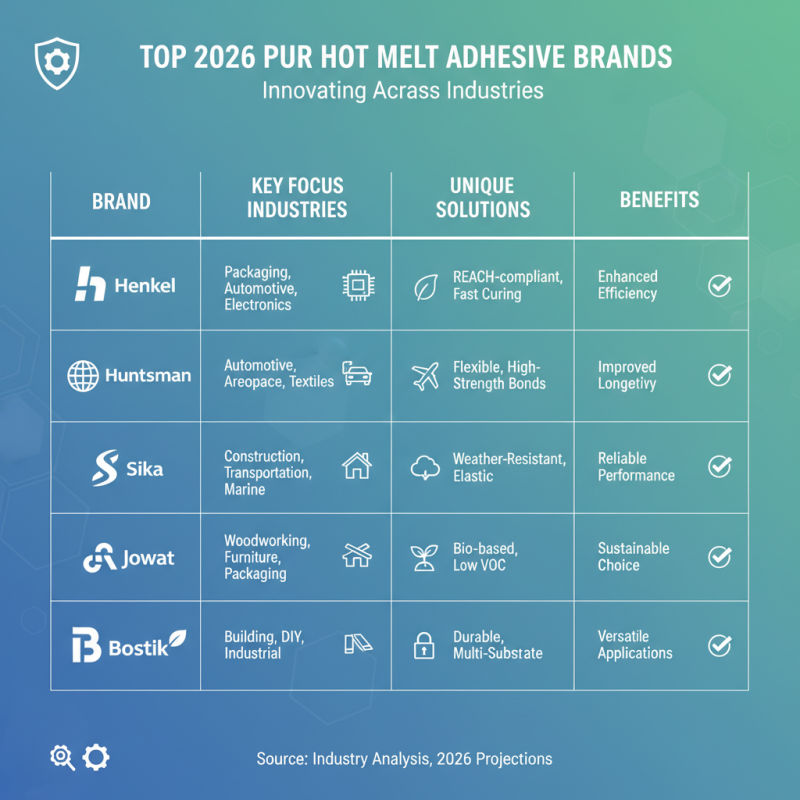
Top 2026 PUR Hot Melt Adhesive Brands and Their Unique Solutions
When selecting PUR hot melt adhesives, understanding the brands and their unique offerings is essential. The right adhesive can enhance project efficiency and longevity. Various brands excel in different applications, such as packaging, woodworking, or automotive industries. Each brand brings innovative solutions that can cater to specific needs.
Some brands prioritize quick setting times, which can be invaluable in high-speed production settings. Others focus on temperature resistance, ensuring bond strength in challenging environments. Not all solutions fit every project. An inefficient choice can lead to reduced performance and wasted resources. It’s vital to assess the requirements of your specific application before committing.
Additionally, some adhesive formulations may lack necessary certifications for certain industries. This oversight can lead to compliance issues later. Researching each brand’s offerings and understanding the unique characteristics is crucial. The selection process should involve careful consideration of performance data and application requirements, ensuring the right choice is made for successful outcomes.
Best Practices for Applying PUR Hot Melt Adhesive in Projects
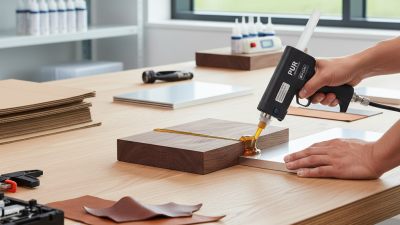
PUR hot melt adhesive is a versatile solution for various projects. Proper application is key to achieving strong bonds. Here are some best practices to ensure success with PUR adhesives.
Before application, prepare your surfaces well. Clean them to remove dust and grease. Roughening up smooth surfaces helps enhance adhesion. This simple step can make a huge difference. Pay attention to temperature as well; the adhesive works best within recommended temperature ranges.
Tips for effective application:
- Apply evenly and avoid excess adhesive. Too much can weaken the bond.
- Use the right nozzle size for your application. This improves precision.
- Work quickly, as PUR adhesive sets fast.
Remember,
practice is essential. Sometimes, things may not go as planned. Reflect on each project to identify areas for improvement. Adjust your technique based on feedback. This approach fosters growth and enhances your skills with PUR hot melt adhesives.