Why Choose Epoxy Resin Adhesive for Your Projects?
When it comes to selecting the perfect adhesive for your projects, choosing the right type can be daunting. Epoxy Resin Adhesive stands out as a top contender. Its unique properties make it ideal for various applications. The robust bond formed by epoxy resin ensures durability and strength, even in challenging conditions.
Many professionals and DIY enthusiasts alike trust Epoxy Resin Adhesive. Its versatility allows it to be used on different materials, from wood to metal. This adhesive is not only water-resistant but also heat-resistant. However, while it offers many advantages, it requires proper handling. Mistakes in mixing or application can lead to unsatisfactory results.
Understanding the strengths and weaknesses of Epoxy Resin Adhesive is crucial. The bonding process is forgiving yet precise. As with any tool, knowledge and practice lead to success. Exploring the potential and limitations of epoxy can transform your projects. In the end, the decision to use epoxy adhesive often hinges on both its reliability and your craft skills.
Benefits of Using Epoxy Resin Adhesive in Various Applications
Epoxy resin adhesive has gained popularity in various applications due to its robust properties. This adhesive exhibits excellent bonding strength, making it ideal for construction, automotive, and marine projects. According to a recent industry report, epoxy adhesives have a bonding strength that can exceed 3,750 psi under optimal conditions. This characteristic allows for durable and long-lasting applications.
Another significant benefit of epoxy resin is its resistance to environmental factors. It can withstand moisture, heat, and chemicals effectively. A study found that 70% of manufacturers prefer epoxy resin for their projects, citing its versatility and reliability. This adhesive forms a strong bond that can sustain heavy loads, making it suitable for structural applications like bridges and buildings.
While epoxy resin offers many advantages, users must address potential challenges. Curing time can be lengthy, sometimes taking up to 24 hours depending on the formula. Additionally, the mixing ratio should be precise to achieve optimal results. These factors highlight the importance of following guidelines closely. Nonetheless, when used correctly, epoxy resin adhesive can provide exceptional performance across a wide range of projects.
Types of Projects Suited for Epoxy Resin Adhesives
Epoxy resin adhesives are versatile and suitable for various projects. They work exceptionally well for home repairs, art collaborations, and crafting durable surfaces. Their strong bonding capabilities make them ideal for materials like wood, metal, glass, and ceramics. A DIY enthusiast can use epoxy for furniture restoration, creating a seamless appearance on repaired pieces.
In construction, epoxy resin is favored for its durability and resistance to moisture. It is excellent for flooring and as a bonding agent in concrete applications. Artists have embraced it too, using epoxy for sculptures and mixed-media works. The glossy finish enhances pieces while providing a protective layer. However, using epoxy requires attention to detail, as improper mixing can lead to weak bonds.
Many people underestimate the curing process. It's essential to give epoxy adequate time to set. This aspect is crucial, especially when working on high-stress applications. A rushed job can yield disappointing results. Reflecting on the use of epoxy invites considerations about safety and workspace management. Proper ventilation and accurate measurements remain key factors for successful projects.
Key Properties of Epoxy Resin Adhesives that Enhance Performance
Epoxy resin adhesives stand out in various applications due to their exceptional properties. These adhesives exhibit excellent adhesion to a wide range of substrates. They bond metals, plastics, and ceramics effectively. According to a report by the Adhesive and Sealant Council, epoxy adhesives can achieve shear strengths exceeding 3,000 psi, making them ideal for demanding environments.
Another key property is their resistance to heat and moisture. Epoxy adhesives can endure temperatures up to 150°C or more. This makes them suitable for automotive and aerospace applications. Furthermore, studies indicate that these adhesives maintain performance even in humid conditions, avoiding the risk of bond failure.
However, working with epoxy requires attention to detail. Improper mixing ratios can lead to suboptimal performance. Users must also be aware of the curing time, which may impact project timelines. While epoxy adhesives offer excellent strength, their curing process is not always straightforward. Understanding these nuances is essential for achieving desired results in projects.
Key Properties of Epoxy Resin Adhesives That Enhance Performance
Comparison of Epoxy Resin Adhesives with Other Adhesive Types
Epoxy resin adhesives stand out for their superior bonding capabilities compared to other adhesive types. According to industry reports, epoxy adhesives provide tensile strength that exceeds 5,000 psi, making them a go-to choice in construction and manufacturing. In comparison, many acrylic adhesives offer lower bond strengths, around 2,500 psi. This strength is vital in applications requiring extreme durability, ensuring the longevity of your projects.
When considering flexibility, epoxy resin adhesives typically cure to a rigid state. This contrasts with polyurethane adhesives, which are more flexible but may not provide the same rigidity. The choice ultimately depends on the specific needs of your project. For heavier loads, epoxy’s firmness is essential. However, for applications requiring some movement, other adhesive types may be more appropriate.
Tip: Always consider the environmental conditions where the adhesive will be applied. Epoxy can be adversely affected by moisture during curing.
Another area to reflect upon is the curing time. Epoxy adhesives can take several hours to set, which is longer than many quick-setting adhesives. This might slow down your project timeline. Balancing strength and time is key when deciding.
Tip: Test small samples of adhesive on your materials before full application to ensure compatibility.
Tips for Proper Application and Handling of Epoxy Resin Adhesives
Epoxy resin adhesives are popular for many projects. They provide strong bonds and durability. Yet, proper application is crucial for successful results. Start by preparing your workspace. This ensures an efficient and clean environment.
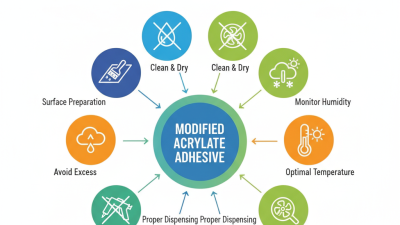
Clean the surfaces thoroughly before using epoxy. Dust and grease can interfere with adhesion. Mix the resin and hardener accurately. Follow the recommended ratios for the best outcome. It’s also essential to apply the mixture promptly. Epoxy has a limited working time. Delays can lead to uneven curing.
Consider temperature and humidity levels. These factors impact curing speed. Work in a controlled environment for optimal performance. However, experimenting with conditions can sometimes yield interesting results. Remember to wear protective gear to avoid skin irritation. It’s easy to overlook safety measures in a hurry. Keep in mind that patience is key to achieving a perfect bond.
Why Choose Epoxy Resin Adhesive for Your Projects? - Tips for Proper Application and Handling of Epoxy Resin Adhesives
| Dimension |
Details |
| Bonding Strength |
High strength suitable for various materials including wood, metal, and plastic. |
| Curing Time |
Typically ranges from several hours to a full day depending on the formulation. |
| Temperature Resistance |
Can withstand temperatures from -40°F to 200°F (-40°C to 93°C) once cured. |
| Water Resistance |
Excellent resistance to moisture, making it ideal for outdoor use. |
| Application Tips |
Ensure surfaces are clean and dry; mix components thoroughly for optimal performance. |
| Handling Precautions |
Use gloves and work in a ventilated area to avoid skin irritation and fumes. |
| Clearing Excess Adhesive |
Use solvent before the adhesive cures; once cured, mechanical means will be necessary. |