Why Choose PUR Hot Melt Adhesive for Your Next Project?
In the realm of adhesive technology, PUR Hot Melt Adhesive has emerged as a top choice for diverse projects. According to a recent report by the Adhesive and Sealant Council, the global market for hot melt adhesives is projected to reach $9.93 billion by 2024, with PUR adhesives driving significant growth. Experts highlight the superior performance of PUR adhesives, particularly in bonding applications requiring durability and resistance to environmental factors.
Industry expert Dr. Emily Thompson, a prominent figure in adhesive development, says, "PUR Hot Melt Adhesive offers unrivaled adhesion and flexibility, making it essential for advancing modern manufacturing processes." This is especially relevant for sectors like automotive and packaging where reliability is paramount. However, while the benefits are clear, some challenges remain in the application and curing processes, requiring careful attention from manufacturers.
Despite these hurdles, PUR Hot Melt Adhesive stands out for its exceptional strength and versatility. As the demand for sustainable and efficient bonding solutions continues to grow, embracing PUR technology may be crucial for staying competitive. Ultimately, the choice of adhesive can greatly impact project outcomes, making informed decisions critical in the industry.
Understanding PUR Hot Melt Adhesive: Key Features and Benefits
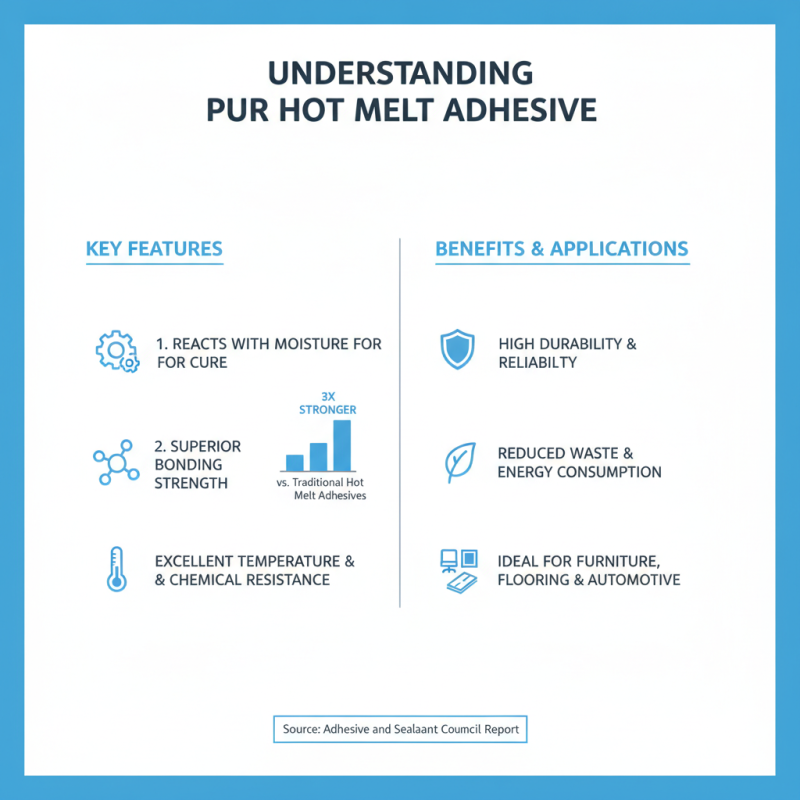
PUR hot melt adhesive is gaining popularity in various industries due to its unique features and benefits. One of its key advantages is its superior bonding strength. According to a report by the Adhesive and Sealant Council, PUR adhesives can provide bonding strength three times higher than traditional hot melt adhesives. This makes them ideal for applications requiring high durability, such as furniture and flooring.
Another significant benefit is their resistance to temperature and moisture. PUR hot melts can withstand temperature ranges from -40°F to 200°F without losing adhesion. This characteristic is crucial in industrial applications exposed to varying environmental conditions. Research shows that using PUR adhesives can reduce product failure rates by up to 30%, highlighting their reliability in demanding scenarios.
While PUR adhesives offer impressive benefits, they also require careful handling. Operators need proper training to avoid potential hazards associated with high processing temperatures. For those new to these materials, trial and error in initial projects may lead to a learning curve. It's important to consider these factors while planning your next project, ensuring that you maximize the advantages of PUR hot melt adhesives effectively.
Applications of PUR Hot Melt Adhesive in Various Industries
PUR hot melt adhesive has gained popularity across various industries due to its versatility and performance. This adhesive is ideal for packaging, woodworking, and automotive applications. It establishes strong bonds quickly, making it an efficient choice for production lines. In packaging, PUR adheres well to porous and non-porous surfaces alike. This ensures that products remain secure during shipping and handling.
In woodworking, PUR hot melt adhesive offers durability and resistance to moisture. It allows for structural bonding in furniture and cabinetry. The fast-setting nature reduces downtime, enhancing productivity. However, it is important to ensure surfaces are clean and properly prepared. Mistakes in application can lead to weak bonds or excess glue.
The automotive industry also benefits from PUR adhesives, particularly for interior assemblies. They provide a lasting bond that withstands temperature fluctuations. Yet, users should be cautious about temperature during application. Each industry requires specific considerations for optimal performance. This highlights the need for proper training and expertise in handling PUR adhesives.
Comparing PUR Hot Melt Adhesive to Other Types of Adhesives
When considering adhesives for your project, PUR hot melt adhesive stands out for its unique properties. Compared to traditional adhesives like PVA or EVA, PUR adhesives offer superior strength and durability. According to industry data, PUR adhesives can achieve bond strengths up to 50% greater than EVA. This increased adhesion is vital in applications such as woodworking and packaging where load-bearing performance is essential.
Furthermore, PUR hot melt adhesive is known for its moisture resistance. Studies indicate that it maintains bond integrity even under high humidity conditions, a significant advantage for outdoor or refrigerated applications. In contrast, water-based adhesives can lose effectiveness quickly when exposed to moisture, leading to product failure.
Although PUR offers significant benefits, there are considerations to keep in mind. Its application requires careful temperature control, and the initial investment may be higher than for other adhesives. For projects that demand precision and reliability, the long-term performance of PUR can justify these challenges. Factors such as curing time and equipment requirements should also be part of your decision-making process.
Comparison of PUR Hot Melt Adhesive with Other Adhesives
Factors to Consider When Choosing PUR Hot Melt Adhesive
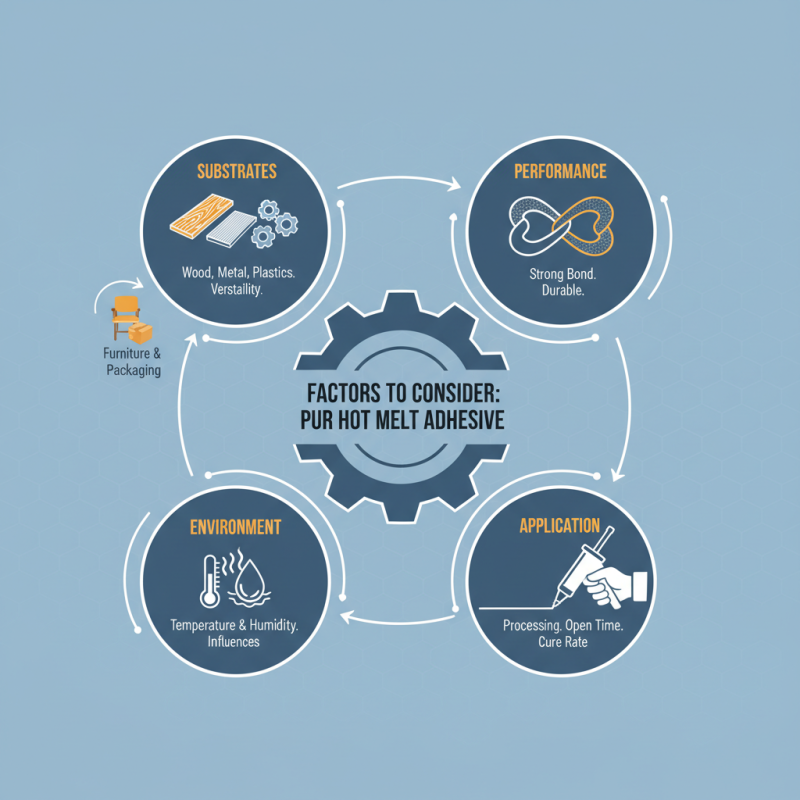
When considering PUR hot melt adhesive for your next project, it's essential to evaluate key factors. PUR adhesives are known for their strong bond and versatility. They perform well on various substrates, including wood, metal, and plastics. This makes them ideal for furniture and packaging applications. However, specific conditions, such as temperature and humidity, greatly influence performance. It's crucial to understand these variables.
Another factor to keep in mind is the application method. PUR adhesives can be applied through different techniques, including extrusion and spray. The choice of method affects the final bond strength and curing time. In some cases, adjustments may be needed during application to optimize performance. Additionally, the curing process can vary; some formulations require moisture to activate. This adds a layer of complexity.
Cost is also a significant consideration. PUR hot melt adhesives can be more expensive than traditional options. Ensure you evaluate the long-term benefits against the initial investment. While PUR provides excellent adhesion, it might not always be the most suitable choice for every project. Understanding these aspects can guide you to make informed decisions.
Best Practices for Using PUR Hot Melt Adhesive Effectively
When utilizing PUR hot melt adhesive, understanding best practices can significantly enhance the outcome of your project. PUR adhesives offer superior bonding strength, but their effectiveness hinges on proper application. According to a study by the Adhesive and Sealant Council, optimal strength can be achieved when the surface temperature is maintained between 70°F to 100°F. This temperature ensures that the adhesive flows properly, creating a robust bond.
Surface preparation plays a crucial role as well. Clean surfaces free of dust or grease lead to better adhesion. In fact, reports indicate that improperly prepared surfaces can decrease bond strength by up to 30%. Additionally, applying the right amount of adhesive is essential; too little can cause weak bonds, while too much may lead to oozing and uneven finishes. Many professionals recommend a bead width of 1/4 inch for accurate application.
It’s also worth noting that while PUR adhesive is moisture-reactive, humidity levels can impact curing time. A humid environment can accelerate the curing process, but too much humidity can be detrimental if not monitored. These conditions require constant evaluation during application to ensure optimal results. Mistakes can happen, especially for newcomers to PUR adhesives. Understanding these nuances is vital for success.