Top Modified Acrylate Adhesive Solutions for Global Buyers?
In the dynamic world of adhesives, Modified Acrylate Adhesives stand out for their versatility. Industry expert Dr. Jane Harper once stated, "Innovation in Modified Acrylate Adhesives can drive efficiency and enhance product performance." This highlights the significant role these adhesives play across various applications.
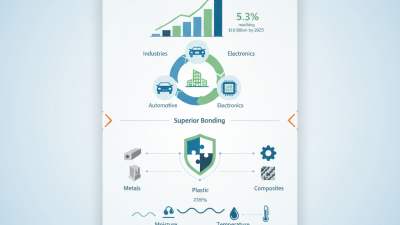
Modified Acrylate Adhesives are known for their superior bonding properties and resilience. They are widely used in automotive, construction, and electronics industries. Buyers must understand the nuances of these products to make informed choices. Factors like curing speed, adhesion strength, and environmental resistance can vary significantly among different formulations.
As the market evolves, the demand for advanced adhesive solutions is increasing. Many global buyers seek products that meet specific performance criteria. However, the wide array of options can be overwhelming. It requires careful consideration and expertise to navigate through available solutions. There’s always room for improvement in how these adhesives are formulated and marketed.
Overview of Acrylate Adhesives in the Global Market
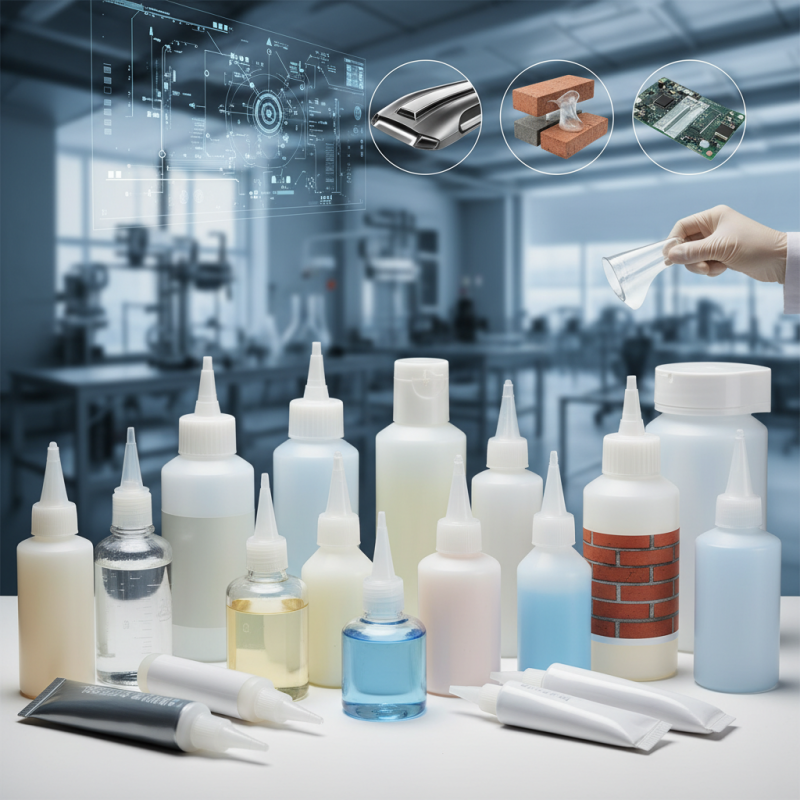
Acrylate adhesives have gained significant traction in various industries worldwide. Their versatility makes them suitable for electronics, automotive, and construction applications. These adhesives provide strong bonding while maintaining flexibility and chemical resistance. Global buyers seek solutions that meet specific requirements, such as cure time and environmental conditions.
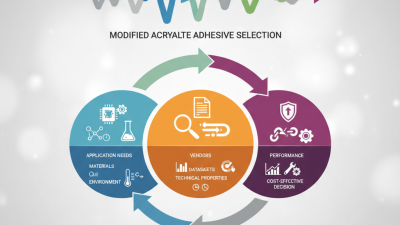
The market for modified acrylate adhesives continues to grow. Many manufacturers are innovating to enhance performance and sustainability. These developments often focus on reducing volatile organic compounds (VOCs), aiming for eco-friendliness. However, not all products meet these stringent standards, raising concerns about reliability. Buyers need to analyze technical data before making a decision.
Trends indicate that regional preferences are shifting. For example, some regions prioritize fast curing over strength, while others prioritize chemical resistance. This variation can lead to confusion for buyers. Understanding local market needs and regulations is crucial. Continuous improvement and adaptation are essential in this evolving landscape. Buyers must remain vigilant to ensure that the adhesives they choose are both effective and compliant.
Global Acrylate Adhesive Market Overview
Key Properties and Benefits of Modified Acrylate Adhesives
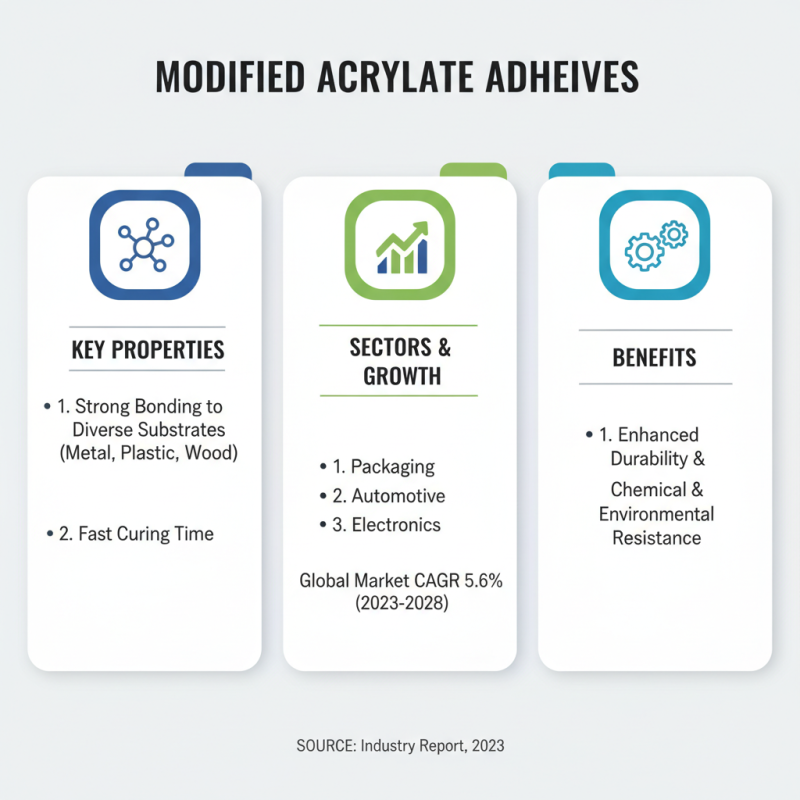
Modified acrylate adhesives are increasingly popular due to their superior performance in a variety of applications. These adhesives offer excellent bonding strength to different substrates, including metal, plastic, and wood. According to a recent industry report, the global market for modified acrylate adhesives is expected to grow at a CAGR of 5.6% between 2023 and 2028. This growth highlights their crucial role in sectors like packaging, automotive, and electronics.
Key properties of modified acrylate adhesives include high shear strength and temperature resistance. They also provide excellent UV stability, making them suitable for both indoor and outdoor applications. The flexibility of these adhesives is noteworthy; they can adapt well to environmental changes without losing their integrity. Despite these advantages, some users report challenges with curing times and surface preparation. It’s vital to understand each application’s requirements to avoid suboptimal results.
The benefits extend beyond mere bonding. These adhesives can improve production efficiency. With low odor and minimal VOC emissions, they align with environmental standards. However, careful handling and application techniques are essential to maximize performance. Industry experts emphasize the need for ongoing research to continue improving these materials, ensuring they meet evolving user demands and sustainability goals.
Top Manufacturers of Modified Acrylate Adhesives Worldwide
Modified acrylate adhesives are crucial in various industries, from automotive to electronics. Global demand is on the rise, driven by their excellent bonding properties and versatility. According to recent market analysis, the modified acrylate adhesives segment is expected to grow at a CAGR of 6.5% over the next five years. This growth highlights their increasing popularity among manufacturers worldwide.
Key players in the market are focusing on innovative solutions to address diverse application needs. Research indicates that eco-friendly formulations are gaining traction. These advancements are essential, given the industry's push towards sustainability. Companies are also investing in research and development to enhance adhesive performance. However, challenges remain in balancing performance and environmental impact, a reflection of the industry's constant evolution.
Recent studies have shown that consumer preferences are shifting towards customized adhesive solutions. This trend presents both an opportunity and a challenge for manufacturers. They must adapt quickly to meet diverse requirements, ensuring quality and reliability. As the market evolves, some manufacturers may struggle with scalability and maintaining consistency in product quality. The pathway forward must consider these complexities while leveraging technological advancements.
Top Modified Acrylate Adhesive Solutions for Global Buyers
| Region |
Market Share (%) |
Key Applications |
Adhesive Type |
Performance Features |
| North America |
25% |
Automotive, Electronics |
Two-Part Modified Acrylate |
High Strength, Fast Cure |
| Europe |
30% |
Construction, Aerospace |
UV-Curable Modified Acrylate |
UV Resistance, Flexible |
| Asia-Pacific |
35% |
Packaging, Textiles |
Water-Based Modified Acrylate |
Eco-Friendly, High Clarity |
| Latin America |
5% |
Furniture, Consumer Goods |
One-Part Modified Acrylate |
Easy Application, Good Adhesion |
| Middle East & Africa |
5% |
Construction, DIY |
Solvent-Based Modified Acrylate |
Durability, Water Resistance |
Applications of Modified Acrylate Adhesives in Various Industries
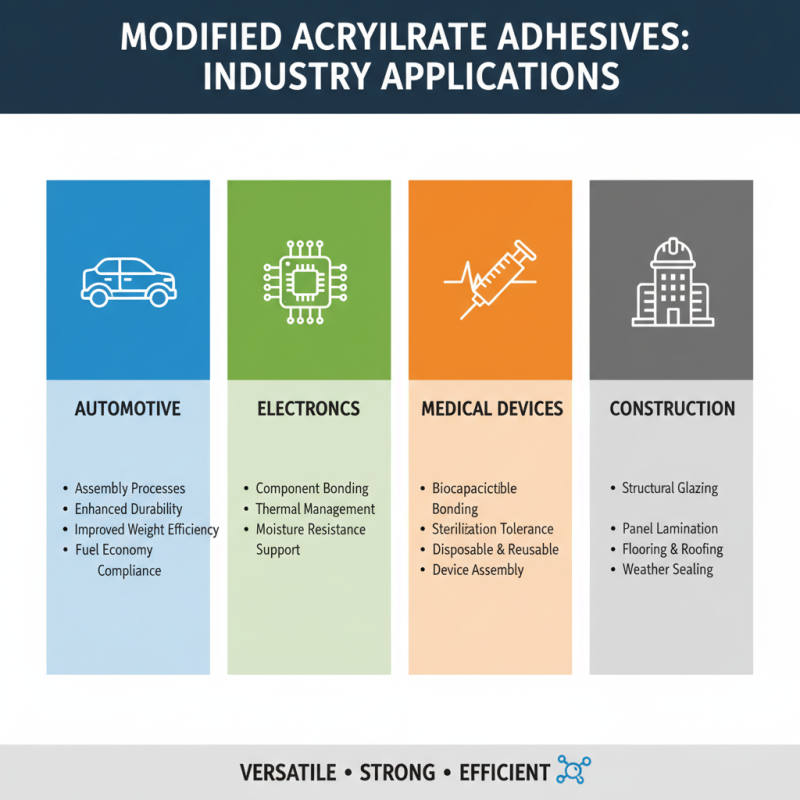
Modified acrylate adhesives are gaining traction across various industries due to their versatility and performance. They offer excellent bonding capabilities for both porous and non-porous substrates. In the automotive sector, modified acrylate adhesives are critical for assembly processes. According to a recent industry report, these adhesives enhance durability and improve vehicle weight efficiency, addressing stricter fuel economy regulations.
In the packaging industry, modified acrylate adhesives provide reliable seals for flexible and rigid packaging. A study indicated that the use of these adhesives could improve shelf life by as much as 30%. This benefit is vital for food and pharmaceutical products. However, the challenge lies in ensuring compatibility with various materials, which can sometimes lead to subpar adhesive performance.
Additionally, construction and woodworking industries are leveraging modified acrylate adhesives for their ability to withstand environmental stresses. They excel in applications requiring high shear strength. Yet, manufacturers still face hurdles. For instance, the curing time may vary significantly depending on environmental conditions, impacting production timelines. Monitoring these variables is key for achieving optimal results in real-world applications.
Trends Shaping the Future of Acrylate Adhesive Solutions
The trends shaping the future of acrylate adhesive solutions are driven by increased demand in various industries. According to a 2022 market research report, the global market for acrylate adhesives is projected to grow at a compound annual growth rate (CAGR) of 5.5% from 2023 to 2030. This growth is fueled by advancements in product formulations and the quest for more sustainable options.
One significant trend is the shift towards eco-friendly adhesives. Many manufacturers are reformulating their products to reduce volatile organic compounds (VOCs). This change aligns with stringent environmental regulations and consumer preferences for safer alternatives. However, transitioning to sustainable materials can present challenges in performance. There are concerns regarding adhesion strength and long-term durability that need addressing.
Moreover, the rise of automation in manufacturing is pushing the demand for high-performance adhesives. Industries are looking for solutions that can withstand extreme temperatures and harsh conditions. The increasing complexity of applications means that not all available adhesives are suitable. Testing and development require patience and investments. Adopting modified acrylate adhesives can help meet these rising expectations, but ongoing research is essential to ensure their reliability in diverse applications.