10 Essential Tips for Choosing Modified Acrylate Adhesive?
Choosing the right Modified Acrylate Adhesive can significantly impact project outcomes. Experts like Dr. Emily Carter, a leading figure in adhesive technology, emphasize the importance of compatibility and performance. “The right adhesive can make or break your project,” she says. Her insight underscores the need for careful consideration in selection.
Modified Acrylate Adhesives offer unique advantages, including strong bonding and flexibility. Each application has its requirements, which makes understanding these adhesives crucial. Users often overlook factors like temperature resistance and curing time. Deliberate evaluations can lead to better decision-making.
Potential users might feel overwhelmed by choices. Many adhesives promise strength and versatility but fall short in performance. Reflection on past projects using various adhesives can provide valuable lessons. By thoroughly assessing Modified Acrylate Adhesives and seeking expert advice, users can achieve more reliable results. The journey toward finding the perfect adhesive might not be straightforward, but it is certainly worth the effort.

Understanding Modified Acrylate Adhesives and Their Applications
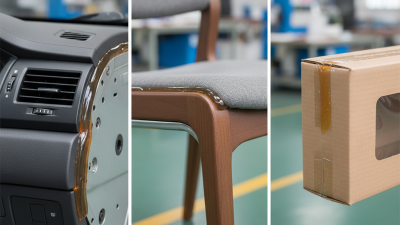
Modified acrylate adhesives are versatile materials widely used in various industries. These adhesives are known for their strong bonding capabilities and quick curing times. They serve as excellent solutions for applications like
automotive assembly, electronics, and construction. Understanding their unique properties can help users select the right adhesive for their specific needs.
One key feature of modified acrylate adhesives is their weather resistance. They can withstand extreme temperatures and moisture, making them suitable for outdoor applications. However, data shows that not all products perform equally in these conditions. Users should test different formulations to ensure reliability. The mixing process can be tricky, as incorrect ratios may lead to suboptimal adhesion or curing failures.
Moreover, consider the surface compatibility of the adhesive. Certain materials may require surface treatments for enhanced bonding. This aspect often gets overlooked. Experimenting with adhesion tests can reveal valuable insights. For instance, trials can help identify the best substrates and methods for application. Remember, even small changes in conditions can impact performance. Thus, thorough evaluations are essential for optimal results in your projects.
Key Properties to Look for in Modified Acrylate Adhesives
When selecting modified acrylate adhesives, certain key properties can significantly influence performance. The adhesion strength is critical. Studies show that high-performance modified acrylate adhesives can achieve bond strengths over 2,500 psi. This strength ensures durability in various applications, from automotive to electronics. Moreover, their resistance to environmental factors is noteworthy. Many formulations offer excellent resistance to UV light, moisture, and chemicals, making them suitable for outdoor or industrial environments.
Another essential feature is the cure speed. Fast-curing options can significantly reduce production times. Some adhesives cure fully within minutes, which is vital in high-volume manufacturing settings. It's also crucial to consider flexibility. Certain applications require adhesives that can withstand thermal expansion and contraction. Modified acrylates often provide the necessary elasticity, reducing failure risk under stress.
Lastly, cost-effectiveness remains a relevant concern. While high-performance adhesives may demand higher upfront investment, their long-term reliability can save costs related to repairs or replacements. A thorough evaluation of each property will help ensure that the chosen adhesive meets both current and future needs. However, it’s always wise to test different options. Sometimes, the best selection may not be the most obvious one.
Evaluating Environmental Resistance in Adhesive Selection
When selecting a modified acrylate adhesive, environmental resistance is critical. The adhesive must withstand different conditions like moisture, heat, and chemicals. Research shows that moisture exposure can reduce adhesive strength by up to 50%. This deterioration can lead to bond failure, affecting product longevity. Thus, it’s necessary to evaluate moisture resistance in real-world conditions.
Heat stability is another important factor. A study found that some adhesives lose half their strength at temperatures above 70°C. This temperature threshold can directly impact applications in automotive and construction industries, where heat exposure is common. Additionally, the adhesive should resist chemicals, including solvents and oils. Reports indicate that adhesives can weaken drastically when exposed to harsh chemical environments, sometimes losing over 30% of their bond strength.
Choose adhesives with documented performance in relevant environments. Look for laboratory tests that simulate the conditions a product may encounter. Not all adhesives are created equal, and those that may seem strong initially can falter under stress. Ignoring these factors could result in product failure. Always prioritize environmental resistance to ensure long-term performance.
Assessing Cure Times and Application Methodologies
When assessing cure times for modified acrylate adhesives, one must consider material properties and environmental factors. Reports indicate that cure times can vary significantly based on temperature and humidity levels. For instance, at room temperature, some adhesives may achieve initial bond strength within 30 minutes, while others may take several hours. This emphasizes the importance of testing adhesive performance under actual working conditions before full-scale application.
Application methodologies also play a crucial role in achieving optimal results. Spray application, for example, may be effective for large surface areas but requires careful technique to ensure even coverage. Conversely, manual application with a brush or roller allows for precise control but may lead to uneven layers if not executed properly. Both methods present unique challenges and necessitate a thorough assessment of project requirements.
The industry-standard data shows that improper technique can lead to reduced bond strength, significantly impacting product performance. Moreover, it’s common to encounter variations in cure times even among similar products. This inconsistency highlights the need for empirical testing and experience in selecting the right adhesive for specific tasks. Always consider the specific context and material compatibility when making your adhesive choice.
Cost Considerations for Modified Acrylate Adhesives in Projects
When selecting modified acrylate adhesives, cost is a key factor that often gets overlooked. Many projects have strict budgets. Understanding the pricing structure of modified acrylates can help avoid unexpected expenses. These adhesives vary in cost based on formulation, performance, and application method. A cheaper option might seem appealing. However, it could lead to higher costs due to failures or repairs later.
Investing in quality should not be underestimated. While initial pricing may be higher, long-term reliability may save money. Take into account the specific requirements of your project. A complex application might necessitate a premium adhesive that adheres better and lasts longer. Proper research is essential to ensure you choose wisely.
It’s crucial to consider the total cost of ownership. This includes not only the upfront price but also potential maintenance and repair costs. Don't just compare prices on paper. Ask about performance guarantees and warranties. Real-life performance might differ from expectations. Always request samples to test under actual project conditions, as this can provide insight into the true value of an adhesive option.
Cost Considerations for Modified Acrylate Adhesives in Projects