
What Is Polyester Hot Melt Adhesive and How Does It Work?

Polyester Hot Melt Adhesive is a solvent-free bonding material used in textiles, automotive interiors, electronics, packaging, and technical laminates. It arrives as pellets, films, or powder. Heat changes it from a solid into a flowing melt. Pressure then helps the adhesive wet the surface. Cooling creates the bond.

Industry data shows why this technology matters. Grand View Research reports that the global hot-melt adhesives market was valued at approximately USD 10 billion in 2023, with continued growth expected through 2030. MarketsandMarkets also identifies packaging, transportation, and nonwoven products as major demand sectors. These reports usually combine several polymer families, so their figures do not represent polyester grades alone. That distinction matters.

Adhesive technologist Dr. Johannes Karl Fink describes the operating principle clearly: “Hot-melt adhesives are applied in the molten state and solidify on cooling.” Polyester chemistry adds more detail. Its polar ester groups can support adhesion to fabrics, films, metals, and selected plastics. Some grades also develop useful crystallinity, improving heat resistance after cooling. The bond forms quickly.

But speed is not everything. Excessive heat can damage sensitive fabrics. Poor surface preparation can cause peeling, even when the adhesive looks strong. Humidity may also alter performance over time. Laboratory data can differ from factory results. Real production conditions deserve careful testing.

This guide explains what Polyester Hot Melt Adhesive is, how its bonding cycle works, and where its limits appear. It examines temperature, viscosity, open time, substrate compatibility, and durability. The goal is practical understanding, not a perfect promise.

What Is Polyester Hot Melt Adhesive and How Does It Work?

What Is Polyester Hot Melt Adhesive?

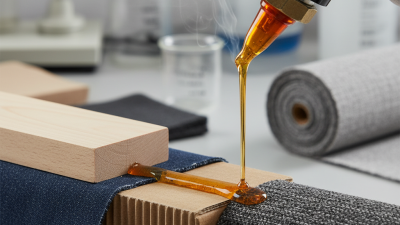
Polyester hot melt adhesive is a solid thermoplastic bonding material made from polyester-based resin. It contains no solvent that must evaporate. When heated, the resin softens and flows across fabric, film, foam, or metal surfaces. Cooling creates a firm bond within seconds.

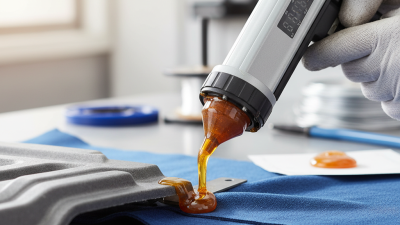
The process is direct. A heated nozzle or roller applies the adhesive at a controlled temperature, often between 120°C and 200°C. Pressure helps it wet the surface. As the adhesive cools, its polymer chains lose movement and form a solid connection. The bond can soften again under heat. That feature supports clean processing, but it may reduce performance in high-temperature service.

120°C–200°C

A controlled application temperature range

A 2024 Grand View Research assessment valued the global hot melt adhesives market at roughly USD 10 billion in 2023. A separate 2024 MarketsandMarkets report also forecasts steady growth through 2029, driven partly by packaging, textiles, and transportation materials. These figures cover several hot melt chemistries, not polyester alone. That distinction matters.

Polyester grades are valued for adhesion to synthetic fabrics, dimensional stability, and resistance to many oils. They are used in seam bonding, laminate construction, filters, and selected automotive interiors. Still, surface contamination can weaken the bond sharply. In practical production, temperature alone is not enough. Open time, pressure, substrate moisture, and cooling speed must be checked together. I would not assume a strong peel result proves long-term durability. Testing under heat, humidity, and repeated flexing often reveals the less comfortable truth.

What Materials and Properties Define Polyester Hot Melt Adhesives?

Polyester hot melt adhesive is a thermoplastic bonding material made from polyester polymers. Its backbone commonly combines diols with aromatic or aliphatic dicarboxylic acids. Some grades also use PET-derived raw materials. The formulation controls crystallinity, flexibility, softening temperature, and open time. In practice, the adhesive melts between roughly 100°C and 200°C, depending on its chemistry.

Its material range explains its broad use. It can bond polyester fabrics, polyamide textiles, films, foams, metals, and selected plastics. Crystalline grades usually provide stronger heat resistance and faster setting. Amorphous grades remain softer and can wet uneven surfaces more effectively. Moisture resistance and chemical stability are useful in laminated fabrics and technical filters. However, surface energy still matters. A smooth polypropylene film may need surface treatment or a primer.

Market data supports continued interest. Grand View Research valued the global hot melt adhesives market at about USD 10.5 billion in 2023 and projected growth through 2030. Smithers’ analysis of hot melt adhesives also identifies packaging, textiles, and hygiene products as important demand areas. These figures describe the wider category, not polyester alone. That distinction is easy to miss. A practical evaluation should measure peel strength, shear resistance, melt viscosity, and aging performance under real humidity and temperature cycles. I have seen attractive laboratory bonds weaken after repeated washing. The chemistry was not necessarily wrong. The test conditions were too gentle.

How Does Polyester Hot Melt Adhesive Work?

What Is Polyester Hot Melt Adhesive and How Does It Work?

Polyester hot melt adhesive is a solid thermoplastic bonding material. It contains no liquid carrier that must evaporate. When heated, it softens and flows across the joining surfaces. Pressure helps it fill small gaps and improve contact. As it cools, the adhesive becomes solid again and holds the materials together. The bond forms through surface wetting, cooling, and mechanical interaction. Depending on its formulation, it can join fabrics, films, plastics, metals, and coated substrates. Performance still depends on surface energy and heat resistance.

How does it work in practice? A heated roller, press, or nozzle activates the adhesive. The temperature must suit both the adhesive and the substrate. Too little heat leaves dry spots. Excessive heat may discolor fabric or distort thin film. In production trials, operators usually check melt flow, pressure, dwell time, and cooling speed. Peel testing then shows whether the bond is reliable. This matters because a strong-looking seam can fail after washing, flexing, or thermal cycling. The process is efficient, but it is not magic.

Tips: Clean dust, oil, and moisture from both surfaces. Apply even heat and steady pressure. Test a small sample first. Record the actual temperature, not only the machine setting. Let the joint cool before stressing it. Question the first successful result; one good sample cannot prove long-term durability.

How Does Polyester Hot Melt Adhesive Work?

Polyester hot melt adhesive is a thermoplastic material. It is solid at room temperature, softens when heated, flows to wet the surfaces, and forms a bond as it cools and solidifies.

The temperature bands below are representative ranges. The exact softening and application temperatures vary according to the polyester formulation and adhesive grade.

What Are the Main Application Methods and Uses?

Polyester hot melt adhesive is a thermoplastic bonding material. It stays solid at room temperature, then softens when heated. During bonding, the melted adhesive wets the substrate surface and fills small gaps. Cooling creates a firm connection without solvent evaporation.

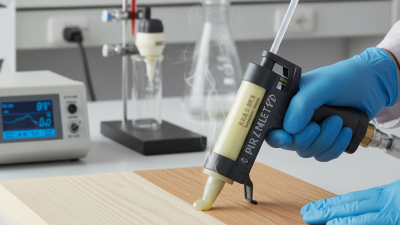
Application method strongly affects performance. Adhesive film or web is placed between fabrics, foams, films, or thin composites, then pressed with controlled heat and pressure. This method suits garment interlinings, shoe uppers, labels, and textile panels.

Powder coating offers another option. Fine powder is scattered over a surface, heated until it melts, and pressed onto the second material. Dot coating can reduce adhesive weight and preserve fabric flexibility. For continuous production, hot melt extrusion or slot-die coating applies a measured layer across wide rolls.

Polyester hot melt adhesives also appear in automotive interiors, filtration materials, protective covers, and some electronic assemblies. They can provide clean processing and good resistance to many oils and chemicals. However, they are not a universal fix. A clean-looking bond can still fail. Surface energy, fabric finish, heating speed, pressure, and cooling time all matter. Excessive heat may damage foam or discolor fabric. Insufficient heat may leave unmelted areas.

A small trial panel should be tested for peel strength, wash resistance, flexibility, and aging before full production. That step is easy to skip. It should not be.

What Benefits and Limitations Should Users Consider?

Polyester hot melt adhesive is a solid bonding material that melts under heat, wets the joining surfaces, and hardens as it cools. It contains no liquid carrier, so application is usually clean and fast. In production trials, a heated bead can bond fabric, films, foams, and selected plastics within seconds. The joint often looks neat, with little visible residue.

Its main benefit is processing efficiency. Users can avoid drying ovens and reduce waiting time between assembly steps. The adhesive also offers good resistance to moisture, oils, and many cleaning chemicals. Polyester-based grades can provide strong flexibility after cooling. This matters when bonded materials bend, fold, or experience light vibration. Storage is simple, too. The solid form is easier to handle than many liquid systems.

Limitations deserve equal attention. The bond needs enough heat to flow, and uneven heating may create weak areas. Thin fabrics can scorch or distort. Some heat-sensitive plastics are unsuitable. Performance also depends on pressure, surface cleanliness, open time, and cooling speed. A bond that feels strong after one minute may weaken after repeated heat exposure. I would not approve a formula from a small sample alone. Different polyester adhesives vary in melting range, viscosity, hardness, and aging resistance. Testing under real humidity, temperature, and movement is essential. Even then, results may change with production speed.

What Is Polyester Hot Melt Adhesive and How Does It Work? - What Benefits and Limitations Should Users Consider?

Dimension Description Typical Information or Range Practical Consideration
Definition A thermoplastic adhesive made primarily from polyester resin. It is solid at room temperature and becomes flowable when heated. Usually supplied as pellets, granules, powder, film, web, sticks, or preformed shapes. The adhesive does not normally require a chemical curing reaction after cooling.
How It Works Heat melts the polyester adhesive, allowing it to wet the surfaces. Pressure brings the substrates into close contact, and cooling solidifies the bond. Bond formation generally occurs within seconds to several minutes, depending on adhesive grade, coating weight, substrate, and cooling conditions. Good surface contact and controlled temperature are essential for reliable wetting and adhesion.
Typical Melting or Processing Temperature The softening and application temperatures depend on the polymer composition and product form. Many grades are processed approximately between 120°C and 200°C (248°F and 392°F); some specialty grades fall outside this range. Always follow the technical data sheet. Excessive heat can damage the adhesive or heat-sensitive substrates.
Main Bonding Mechanism The adhesive bonds through surface wetting, mechanical interlocking, and physical solidification. Some formulations also develop specific chemical interactions with compatible surfaces. Performance varies with surface energy, cleanliness, roughness, temperature, and formulation. Contamination from oil, dust, moisture, or release agents can substantially reduce bond strength.
Suitable Substrates Often used with textiles, polyester fabrics, nonwovens, films, foams, paper, wood-based materials, and selected plastics or metals. Best results are usually achieved on clean, dry, compatible surfaces with adequate surface energy. Low-surface-energy plastics may require surface treatment, a primer, or a specially formulated adhesive.
Application Methods Common methods include hot-melt coating, slot-die application, roll coating, spray application, powder scattering, film lamination, and transfer bonding. The suitable method depends on adhesive form, required coat weight, line speed, and substrate geometry. Process equipment must maintain stable temperature and uniform adhesive distribution.
Setting Speed The bond sets as the molten adhesive cools, enabling rapid handling and high-speed production. Initial handling strength may develop in seconds, while final performance can depend on complete cooling and assembly design. Cooling time, pressure, adhesive thickness, and substrate heat capacity affect the actual production cycle.
Bond Strength Polyester hot melt adhesives can provide strong bonds and good resistance to flexing when the formulation and substrates are well matched. Strength is not a single fixed value; it must be measured for the specific substrate combination and test method. Peel, shear, tensile, and fatigue results may differ significantly, so application-specific testing is recommended.
Temperature Resistance Polyester chemistry can provide useful resistance to elevated temperatures, but the bond may soften as it approaches its softening or melting range. Usable service temperature varies widely by grade and construction; the application-specific technical data sheet should be used. Do not use the application temperature as the continuous service-temperature limit.
Moisture and Chemical Resistance Many polyester hot melt formulations offer useful resistance to water and selected chemicals, but performance depends on resin structure, additives, exposure time, and temperature. Resistance should be verified against the actual liquid, concentration, temperature, and exposure duration. Long-term immersion, high humidity, strong solvents, or hydrolysis-prone conditions may reduce performance.
Flexibility Formulations can range from relatively flexible to comparatively rigid, allowing selection for films, textiles, laminates, and structural components. Flexibility is influenced by polymer composition, crystallinity, additives, adhesive thickness, and temperature. A stiff adhesive may crack under repeated bending, while an overly soft adhesive may have lower shear resistance.
Key Benefits Solvent-free bonding, fast setting, low or no drying time, clean application, and suitability for automated processing. Solid content is effectively 100% for a conventional hot melt adhesive because the bond forms without evaporating a solvent. Reduced solvent emissions can simplify workplace controls, although heating equipment and ventilation may still be required.
Key Limitations The adhesive requires heat, may lose strength at elevated temperatures, and can have limited compatibility with certain low-energy or heat-sensitive materials. Thermal performance, open time, viscosity, and substrate compatibility vary by grade. Equipment investment, burn hazards, thermal degradation, and process-window control should be considered.
Rework and Reversibility Because it is thermoplastic, the adhesive may soften again when reheated. Reworkability depends on adhesive grade, bond design, substrate heat resistance, and contamination. Reheating can enable separation or repair, but it may also damage coatings, fabrics, films, or finished surfaces.
Storage Store in a cool, dry, well-ventilated area and protect from contamination, excessive heat, and moisture. The exact storage temperature and shelf life are product-specific and should be taken from the supplier’s technical documentation. Poor storage can change moisture content, appearance, flow behavior, or application consistency.
Safety Considerations The main process hazards are hot adhesive, heated equipment, fumes or decomposition products from overheating, and moving machinery. Use suitable protective gloves, eye protection, guarding, ventilation, and documented operating procedures. Consult the safety data sheet and avoid exceeding the recommended processing temperature.
Best-Fit Applications Common application areas include textile lamination, garment interlinings, automotive interiors, filtration media, packaging components, electronics assembly, and composite or film bonding. Suitability depends on required durability, flexibility, heat resistance, wash resistance, appearance, and production speed. Prototype testing should include the real substrates, process conditions, environmental exposure, and expected service life.

Note: The ranges and performance descriptions above are general industry guidance. Actual values depend on the specific polyester hot melt formulation, adhesive form, application equipment, substrate combination, and test method.