Best Beer Bottle Labeling Adhesives for Global Buyers Guide?
In the competitive beer market, the significance of effective labeling cannot be underestimated. Beer Bottle Labeling Adhesives play a crucial role in ensuring that labels remain intact throughout the beer's transport and storage. According to a recent industry report from IBISWorld, the bottled beer market has shown steady growth, increasing by approximately 5% over the past five years. This growth emphasizes the need for reliable and high-performance adhesives that can withstand various environmental conditions.
Experts assert that choosing the right adhesive is not merely a technical decision but also a branding strategy. A poorly adhered label can tarnish a brand’s reputation in an instant. Research from the Adhesive and Sealant Council indicates that about 30% of consumer decision-making is influenced by label presentation. Therefore, beer manufacturers must consider the durability and aesthetic appeal of their labels. Reflection on such data reveals a gap; many brands still overlook the importance of a well-chosen adhesive. As demand rises, so does the expectation for quality in labeling solutions.
Understanding these nuances is essential for global buyers looking to make informed decisions. Selecting the right Beer Bottle Labeling Adhesives can enhance not only label performance but also overall brand image.
Understanding Beer Bottle Labeling Adhesives: Types and Functions
When considering beer bottle labeling adhesives, understanding their types and functions is vital. Adhesives play a crucial role in ensuring labels adhere perfectly under various conditions. Key types include pressure-sensitive, water-based, and heat-activated adhesives. Each of these serves a different purpose. Pressure-sensitive adhesives are common for their ease of use. They provide quick application and are cost-effective.
Water-based adhesives have gained popularity in recent years. The market for water-based adhesives is projected to grow at a CAGR of around 5% from 2023 to 2030, according to industry reports. These adhesives are environmentally friendly and feature good bonding properties. However, their performance can be inconsistent in humid climates. Heat-activated adhesives are primarily used for labels that must endure extreme conditions. While they offer strong adherence, their application is often more complex.
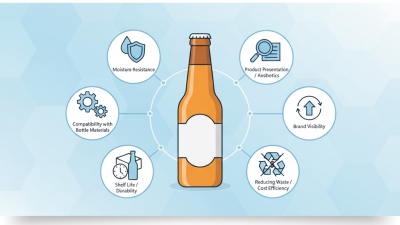
Labeling adhesives must meet specific functional requirements. This includes resistance to moisture and temperature fluctuations. Reliable adhesives ensure that labels remain intact during transportation and storage. The choice of adhesive impacts the brand's image and can influence drinkers' perceptions. Flawed adhesion in humid weather can tarnish branding efforts. Understanding these nuances can help manufacturers choose the right adhesive for their beer products.
Key Factors in Selecting the Right Adhesive for Beer Labels
When selecting the right adhesive for beer bottle labeling, several factors come into play. One critical aspect is the adhesive's ability to withstand various environmental conditions. Many breweries use products that can endure moisture and cold temperatures. Labels should remain intact during storage and chilling without peeling away.
Another significant factor is the drying time of the adhesive. Some adhesives dry quickly, allowing for efficient production. However, quick-drying solutions may not always bond perfectly with all label materials. It's essential to test various adhesives to find the right balance between speed and adhesion strength.
The choice of adhesive can also impact the appearance of the beer label. An excess amount may leave residues, while insufficient application might lead to lifting corners. Careful consideration of application methods and adhesive types can help achieve a professional look. Experimentation may lead to unsatisfactory results, highlighting the importance of thorough testing. Each brand might encounter unique challenges that demand tailored solutions, emphasizing the need for expertise and experience in the industry.
Top Manufacturers of Beer Bottle Labeling Adhesives Worldwide
When selecting beer bottle labeling adhesives, understanding the leading manufacturers is essential. Many top companies specialize in creating high-quality adhesives designed specifically for bottle labeling. These manufacturers often focus on water-resistance, temperature tolerance, and quick-drying properties. This ensures labels remain intact throughout the distribution process.
Tips: Always consider the environmental impact of your adhesive choices. Look for manufacturers that prioritize sustainability in their products. Additionally, testing adhesives under actual storage and handling conditions can yield better results. This simple step can help avoid costly errors.
Another factor to consider is the adhesive's compatibility with different bottle materials. Some adhesives work better on glass, while others may be formulated for plastic. Evaluating your product's needs will lead to better labeling adhesion. Pay attention to the performance claims of each adhesive and seek certifications that demonstrate their reliability.
Comparative Analysis of Popular Adhesive Products for Beer Labels
When choosing adhesives for beer labels, a few critical factors come into play. The first is water resistance. A report from the Beverage Marketing Corporation indicates that labels exposed to moisture often face peeling or smudging. In contrast, high-quality adhesives maintain their adhesion under humid conditions, ensuring that your product remains presentable on shelves.
Another factor is temperature fluctuations. Research conducted by the Adhesive and Sealant Council shows that adhesives need to perform well under a range of temperatures. Labels that withstand cold storage are essential for breweries that distribute products in chilled environments. Inconsistent sticking can lead to consumer dissatisfaction and presentation issues.
It's also important to consider the application process. Not all adhesives are easy to apply, and some may require specific conditions for optimal performance. Some breweries report challenges with adhesives that are too thick or require complicated machinery. Testing different adhesive products can provide insights and streamline production. While some adhesives may excel in one category, like speed or durability, they may falter in others. Balancing these factors is crucial for creating effective beer labels.
Best Beer Bottle Labeling Adhesives - Comparative Analysis
Application Techniques for Optimal Beer Label Adhesive Performance
In the beer bottling process, adhesive performance plays a crucial role. Proper application techniques can significantly enhance label adhesion, ensuring a fresh and appealing look for products. According to industry studies, up to 15% of labels fail due to inadequate adhesion, affecting branding and sales. Understanding how to properly apply adhesives can mitigate this issue.
One effective technique is maintaining optimal temperature and humidity during application. Studies suggest that adhesives perform best in environments where temperatures range from 20°C to 25°C. This helps in achieving a strong bond between the label and the bottle. Additionally, surface preparation is critical. Clean, dry surfaces promote better adhesion, while any dust or oil can lead to failure.
Regular maintenance of labeling machines is essential. A study by the Adhesive and Sealant Council indicates that poorly maintained equipment can increase label application errors by over 20%. Operators must stay vigilant about potential issues, as minor adjustments can greatly improve efficiency. Each technique may have its unique challenges, but awareness and adaptability are key to achieving optimal results.