How to Choose the Right PUR Hot Melt Adhesive for Your Needs?
Choosing the right PUR Hot Melt Adhesive can be a daunting task. With so many options available, understanding your specific needs is crucial. PUR Hot Melt Adhesive offers exceptional bonding capabilities, making it popular in various industries, from packaging to furniture manufacturing.
Consider the materials you are working with. Different adhesives perform better on different surfaces. Temperature resistance is also essential. Some applications may require adhesives that withstand heat, while others may need flexibility. Each choice should reflect the unique demands of your projects.
This decision isn't just about bonding; it's about ensuring durability and performance. Reflect on your past experiences with adhesives. Were there instances where an adhesive failed? What could have been done differently? Engaging with these questions can guide you to a more suitable PUR Hot Melt Adhesive for your future needs.
Understanding the Basics of PUR Hot Melt Adhesives
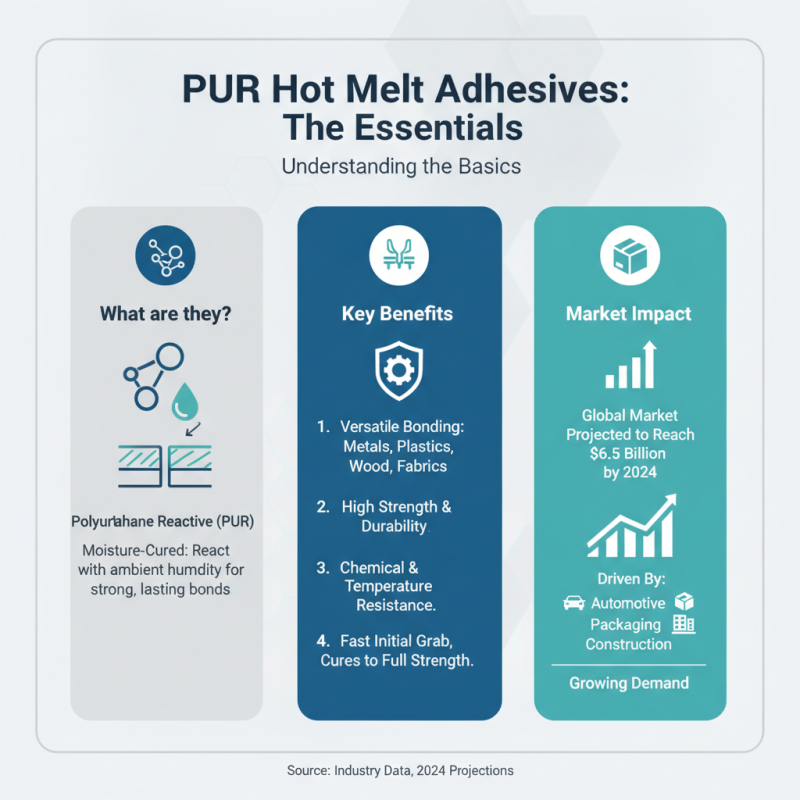
PUR (Polyurethane Reactive) hot melt adhesives are known for their versatility and performance. These adhesives are moisture-cured, which means they can provide strong bonding in various applications. Industry data shows that the global polyurethane adhesive market is projected to reach USD 6.5 billion by 2024, driven by increasing demand across automotive, packaging, and construction sectors.
Understanding the composition of PUR adhesives is fundamental. They consist of isocyanates and polyols, which react upon exposure to moisture. This unique reaction allows for enhanced durability and flexibility compared to standard hot melts. In a recent study by the Adhesive and Sealant Council, it was reported that PUR adhesives can improve bond strength by up to 50% compared to traditional options under similar conditions.
Choosing the right PUR adhesive involves evaluating specific needs. Factors such as application temperature, substrate materials, and environmental resistance are crucial. The complexities of various formulations can lead to challenges, and not all PUR adhesives perform equally. Some users have reported issues with curing time and bond integrity in high-humidity environments. Understanding these nuances will help in making informed decisions that enhance product performance and overall satisfaction.
Identifying Your Specific Application Requirements
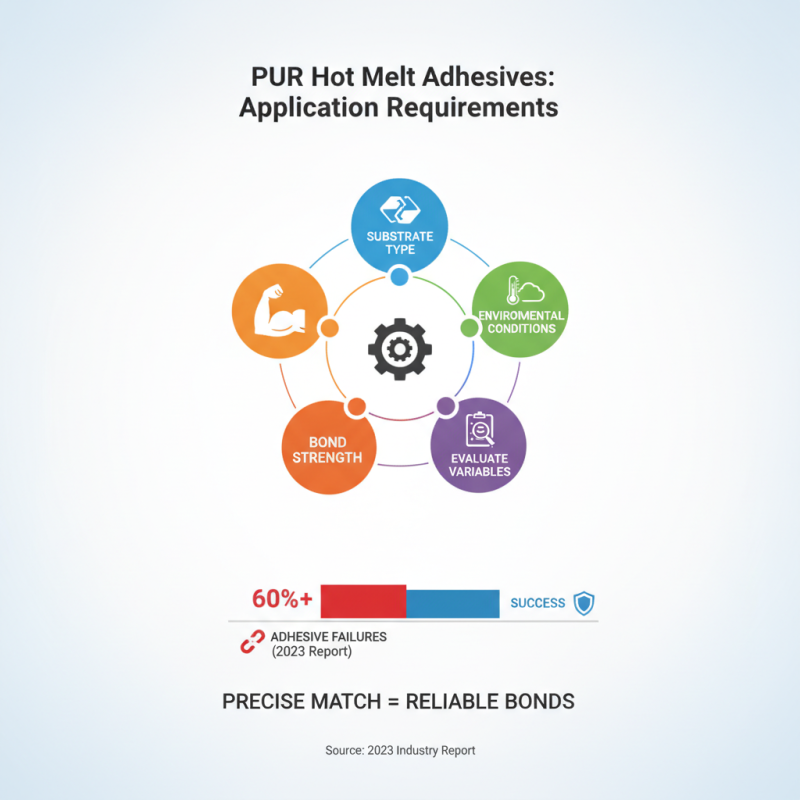
Choosing the right PUR hot melt adhesive hinges on a precise understanding of your application requirements. Factors such as substrate type, environmental conditions, and expected bond strength play pivotal roles. According to a 2023 industry report, over 60% of adhesive failures stem from misalignment between adhesive properties and application needs. It's essential to evaluate these variables carefully to avoid potential losses.
Consider substrate characteristics. Different materials react uniquely with adhesives. For instance, porous surfaces often require specific formulations to ensure optimal bonding. A 2022 survey revealed that 70% of manufacturers experienced challenges when aligning adhesive types with substrates, leading to costly rework or product defects.
Additionally, environmental factors significantly affect adhesive performance. Humidity and temperature can alter bond effectiveness. A study reported that bonds exposed to extreme conditions can lose up to 30% of their strength over time. Testing under real application conditions is vital, yet often overlooked. Addressing these factors can enhance reliability and performance in the long run.
Evaluating Adhesive Performance Characteristics
When selecting a PUR hot melt adhesive, evaluating adhesive performance characteristics is essential. These characteristics include bonding strength, temperature resistance, and moisture resistance. According to industry reports, over 30% of adhesive failures are due to poor performance under temperature fluctuations. A reliable adhesive should maintain its bonding capability in varied environments.
Bonding strength is a crucial factor. Test data shows that adhesives with a higher tensile shear strength can withstand more stress. For instance, adhesives with tensile strength exceeding 1,000 psi are optimal for heavy-duty applications. However, choosing an adhesive that is too strong may lead to brittle fractures under certain conditions.
Temperature and moisture resistance are also critical in the selection process. Reports indicate that PUR adhesives can perform well in temperatures up to 200°C. However, if the adhesive’s formulation does not suit the specific application, you could experience adhesive failure. Testing under actual conditions is advisable to ensure optimal performance.
Considering Environmental and Safety Factors
When selecting a PUR hot melt adhesive, safety and environmental factors are paramount. Many adhesives contain volatile organic compounds (VOCs), which can harm indoor air quality. It is essential to choose products with low VOC emissions. Look for certifications or labels that indicate compliance with safety standards.
Consider the specific application of the adhesive. For instance, if it's used in food packaging, using non-toxic adhesives is critical. Evaluate the product's resistance to temperature and moisture. How will it perform in different conditions? Always review the Material Safety Data Sheet (MSDS) for guidance on handling and potential hazards.
Engaging with suppliers directly can provide insights into the environmental impact of adhesives. Ask about production processes and disposal methods. Not all adhesives are created equally, and some have a smaller ecological footprint. While many options are available, not all are suitable for every application. Reflect on the long-term implications of your choice. Choosing wisely now can lead to safer work environments and a healthier planet.
How to Choose the Right PUR Hot Melt Adhesive for Your Needs? - Considering Environmental and Safety Factors
| Adhesive Type |
Application Area |
Curing Time |
Temperature Resistance |
VOC Emissions |
Safety Rating |
| PUR Adhesive A |
Wood & Furniture |
30 minutes |
-40°C to 80°C |
Low |
Safe |
| PUR Adhesive B |
Packaging |
20 minutes |
-20°C to 70°C |
Moderate |
Needs Precautions |
| PUR Adhesive C |
Automotive |
1 hour |
-30°C to 100°C |
Very Low |
Very Safe |
| PUR Adhesive D |
Construction |
45 minutes |
-10°C to 90°C |
Low |
Safe |
Matching Adhesive to Substrate and Surface Conditions
Choosing the right PUR hot melt adhesive requires careful consideration of the substrate and surface conditions. Different materials interact uniquely with adhesives. For instance, porous surfaces may absorb more adhesive, impacting bond strength. Conversely, smooth, non-porous materials may necessitate a different formulation for optimal adhesion.
Surface conditions like temperature and humidity also play a crucial role. High humidity can weaken adhesion, while low temperatures may hinder adhesive flow. Testing on small areas helps determine the best conditions. It's not just about the adhesive; it’s about understanding the environment in which it will be used.
Some adhesives may not perform as expected. This can lead to unexpected failures or reduced productivity. Regular testing and evaluation are essential. Understanding the specific needs of your project will aid in selecting an appropriate adhesive. Refinement over time is often necessary to achieve the best results.
Choosing the Right PUR Hot Melt Adhesive